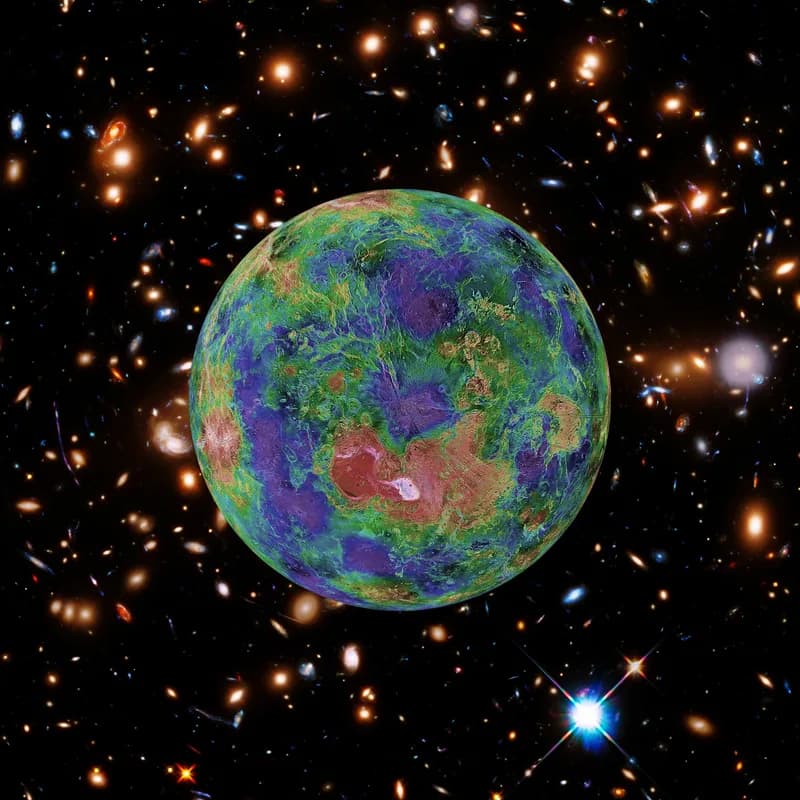
GJ 523b, a rocky mega-Earth, defies planet formation models
The Wisconsin-led team measured a world 2.55 times Earth's width but 23.5 times its mass, with almost no atmosphere.
Space, climate, health research, and discoveries that matter.
7 stories on the wire
The Wisconsin-led team measured a world 2.55 times Earth's width but 23.5 times its mass, with almost no atmosphere.
An 11-year-old boy retrieved an intact megalodon tooth from a rock jetty at Sea Isle City, New Jersey, a find experts called extraordinarily rare.
Hubble and Gaia data show the Milky Way absorbed a dwarf galaxy called LKH about 11.8 billion years ago, its earliest known merger, researchers report in Nature Astronomy.
Researchers say the Moon's radio-quiet far side could host telescopes to read faint dark ages signals and settle the nature of dark matter.
Cognitive neuroscientist Yousuf Aslam told Newsweek that the brain must feel safe before it can fall asleep, shifting from beta to alpha brain waves.
A dark bordered beauty moth colony has been found at Wallington Estate in Northumberland, the first sighting there since 1952 and only the second surviving English site.
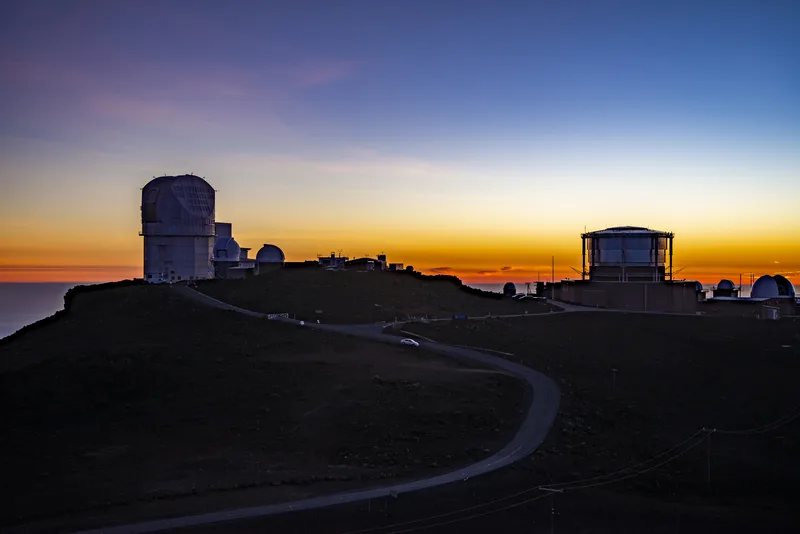
Scientists using the Inouye Solar Telescope directly observed swirling Kelvin-Helmholtz vortices on the Sun's surface, a possible key to coronal heating.