Drones hit Moscow region as Putin's public schedule shifts east
Russia's defense ministry says it downed 791 drones overnight; Moscow's mayor put 620 over the capital region.
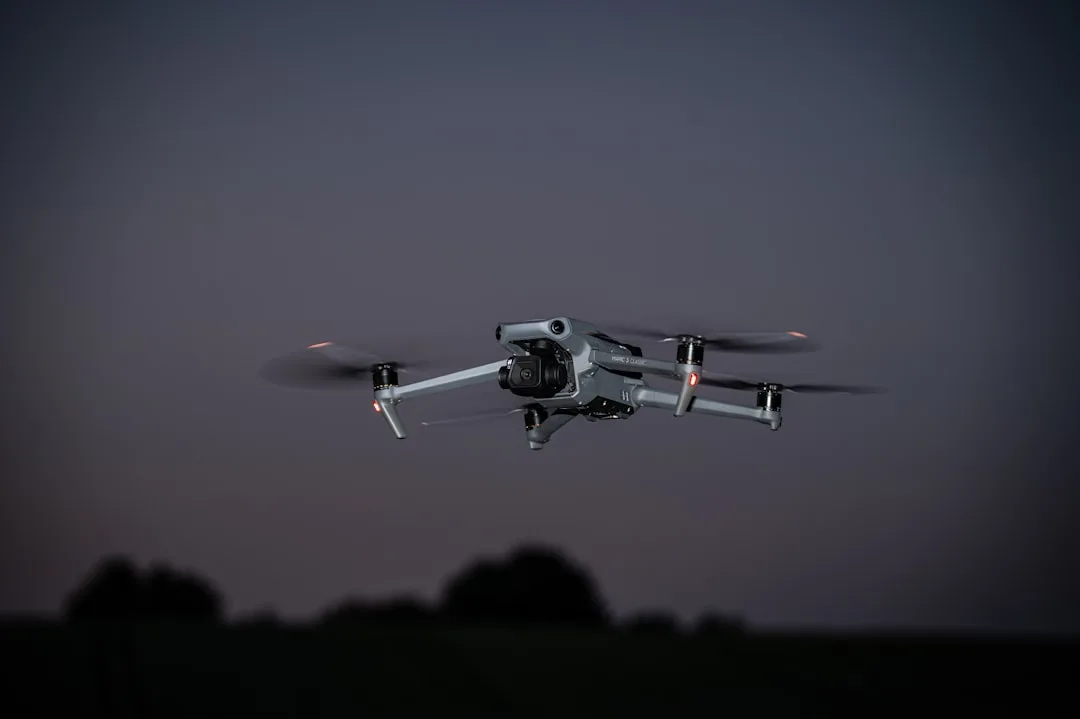
About 620 drones flew toward Moscow and the surrounding region between the evening of Monday, August 17 and the early hours of Tuesday, August 18, Mayor Sergei Sobyanin said, in one of the largest air assaults on the Russian capital since the start of the war. The barrage landed as independent Russian outlets renewed a charge that has followed Vladimir Putin for months: that the president has moved his public schedule east, to Siberia and the Far East.
Russian forces downed 180 of the drones over the Moscow region by 5am on August 18, Sobyanin said. The Defense Ministry, which issues the national count, reported 791 drones intercepted across Russian regions and occupied Crimea and over the Azov and Black seas that night. Drones struck a Wildberries warehouse in the Bogorodsky district and other sites near the capital, regional Governor Andrei Vorobyov said. At least three people, including a 10-year-old girl, were injured across the region.
Wildberries confirmed that falling drone debris caused minor damage to the wall of its warehouse in the Moscow region, and said staff had been evacuated in advance. A fire broke out at a construction site in Kotelniki after a drone attack on August 18, according to The Moscow Times.
The charge that Putin left Moscow
The framing that Putin has fled comes from an August 16 post on Mozhem Obyasnit, an exile-run Telegram channel, published as a trailer for one of its video episodes. The post said the president's public route had shifted toward Siberia and the Far East after Ukrainian attacks intensified, even as the Kremlin continued to label closed-door meetings Moscow. The Daily Beast translated and carried it, and other outlets followed. The travel pattern itself was documented earlier and independently: the Russian outlet Agentstvo compiled the eastward itinerary, and the New York Times reported on August 12 that Putin was moving by armored train with decoy motorcades. The Kremlin has not responded to the August 16 post.
The channel also said that for a trip to Novosibirsk in August Putin flew on an Ilyushin Il-96 that had once been the main presidential aircraft and later became the backup. Viktor Yagun, a retired Ukrainian intelligence general, told the outlet Charter97 that the switch most likely reflected a change in security protocols, though he could not rule out routine rotation or maintenance, and he called his reading a theory rather than a proven fact. Residents of two buildings on the motorcade route were asked to stay indoors during the visit, Novaya Gazeta Europe reported.
The Kremlin has made no official announcement about several of the trips and has tried to project an image of normalcy while Putin stays largely out of public view. RFE/RL's Systema unit reported in November 2025 that he was using three nearly identical offices, at Novo-Ogaryovo, Sochi and Valdai, a practice the outlet Proekt first uncovered in 2020.
| Date | City | Purpose |
|---|---|---|
| June 17, 2026 | Kazan | Russia-ASEAN summit |
| July 24, 2026 | Irkutsk | Toured the Irkutsk Aviation Plant |
| July 25, 2026 | Omsk | Met Kazakh President Tokayev |
| August 3, 2026 | Krasnoyarsk | Unannounced visit |
Source: Kremlin schedule releases, compiled by Defence Express
The trips trace a route that hugs the far side of the country. Until June 2026, Putin had rarely traveled beyond Moscow, St. Petersburg and Valdai, where his main residences sit. His last major regional trip before a long pause was to Samara on November 6, 2025, and the break lasted 223 days, according to the Russian outlet Agentstvo.
Why he is staying east
Since resuming regional travel in June, Putin has steered clear of areas in European Russia that Ukrainian drones now reach regularly. He returned to public travel on June 17 with a visit to Kazan for the Russia-ASEAN summit, his only stop in European Russia apart from his residences after the pause ended, according to Defense Express. A source close to the Kremlin, quoted by Agentstvo, said concerns over his personal security increased after Foreign Minister Sergei Lavrov said in December 2025 that Ukrainian drones had attacked the Valdai residence. Ukraine called that claim a fake, and the Institute for the Study of War said no evidence supported it.
Kazan was placed under heavy security. Forces were brought in from other regions, restrictions were imposed on electric scooters, and residents were warned about possible communications disruptions. Tatarstan was the only region on his post-pause itinerary that regularly experiences drone strikes, according to the outlet United24 Media. A strike on Nizhnekamsk, in Tatarstan, killed 13 people on August 10.
Putin has fled beyond the Urals ... Following an intensification of Ukrainian attacks, his public itinerary has increasingly shifted toward Siberia and the Russian Far East, even as the Kremlin continues to present closed-door meetings with a 'Moscow' dateline.
After Kazan, his schedule shifted east, with a stop in Irkutsk on July 24, where he toured an aircraft plant, and Omsk on July 25, where he met Kazakh President Kassym-Jomart Tokayev. The tour ran on through Krasnoyarsk on August 3, Ulan-Ude, Novosibirsk and Sakhalin, and on August 13 he visited Iturup in the Kuril Islands, the first Russian leader to do so. Gasoline prices in Krasnoyarsk fell by about a quarter on August 2, the day before his unannounced visit there, as stations that had been out of stock reopened, Meduza reported. The operator said prices would rise again once the extra stock ran out.
Fears of assassination and a coup
Putin's retreat predates the latest Moscow barrage. On May 4, the Financial Times, CNN and the Russian outlet IStories published the contents of the same leaked European intelligence document, passed to them by a state they agreed not to name. It said Putin had been using renovated bunkers amid fears of assassination, among them one in the Krasnodar region, and that he and his family had stopped visiting their residences around the country. Meduza's Andrey Pertsev disputed the account the next day, noting that Putin's published schedule at the time showed several events a week.
The same document said Kremlin staff were dissuaded from using public transport, that face-to-face meetings were reduced and security checks increased, and that from early March the Kremlin and Putin himself had been concerned about leaks of sensitive information and about the risk of a plot or coup attempt. IStories reported that the assessment named Sergei Shoigu and described a risk, not a detected plot. CNN said it carried no evidence for that.
Putin has tacitly acknowledged that he is no longer able to guarantee security in his own capital city.
Dickinson was speaking in May, after a scaled-back Victory Day parade and the reports of bunker use, and he drew a direct line between the intensity of Ukrainian strikes and Putin's movements. The psychological and symbolic impact of attacks near the Kremlin, he argued, has been as strategically important as any physical damage, and Putin's credibility as a wartime leader is undermined each time he retreats further from view. Security fears inside the Kremlin rose after the killing of Lieutenant General Fanil Sarvarov, head of the General Staff's operational training directorate, in southern Moscow on December 22, 2025, when a device fixed under his car detonated. Russian investigators named Ukraine as one line of inquiry; Kyiv has not claimed the attack.
The first trips after the pause
Putin flew to Irkutsk in Siberia for an unannounced visit to the Irkutsk Aviation Plant, his first trip to a Russian region for domestic issues in more than eight months. Kremlin photographs show him inspecting the Yak-130M trainer prototype and the MC-21 passenger jet, whose certification and first deliveries have slipped to 2027 at the earliest.
The next day in Omsk, the 73-year-old president met Tokayev at the 22nd Russia-Kazakhstan interregional forum. In the Kremlin's published transcript, Tokayev suggested the conflict might be frozen and talks resume on what he called the Istanbul formula 2.0, and declined to mediate. Putin replied that freezing the war was impossible given Kyiv's position.
Drones now reach beyond the Urals
Ukraine has pushed its strike range deep into territory Putin once described as untouchable. On June 20, a Ukrainian drone hit an oil refinery in Tyumen, in western Siberia, about 2,070 kilometers from the Ukrainian border. It was then the deepest confirmed Ukrainian strike of the war, and President Volodymyr Zelensky acknowledged it that evening. A strike on an Omsk refinery on July 6 reached farther still.
In February 2022, Putin told Russians that invading Ukraine was an act of self-defense. NATO aircraft based there, he said, would be able to strike Russian territory to the depth of a Volgograd, Kazan, Samara and Astrakhan line, and NATO radars on Ukrainian soil would let it control Russian airspace up to the Urals. The Tyumen refinery strike required no NATO basing, only Ukrainian drones and engineers, four years after that speech.
The investigative outlet Proekt counted 37,700 Ukrainian drones reported shot down over Russia and occupied Crimea in the first half of 2026, against 32,800 for 2023 to 2025 combined, in a tally of governors' statements that it says is incomplete. Omsk region recorded its first Ukrainian drone attack on July 6, when airport operations were briefly halted and an oil refinery was targeted.
How far Ukraine's drones can strike
Ukraine sharply expanded its long-range capabilities in 2026, and Kyiv's strikes have reached far into Siberia. The ranges that follow are manufacturers' claims rather than demonstrated performance. Fire Point puts the range of its upgraded FP-1 drone at 2,700 kilometers and of its FP-5 Flamingo cruise missile at 3,000. Ukroboronprom gives the Liutyi about 1,000 kilometers, though strikes attributed to it have flown farther. Ukrainian strikes have been reported as far east as Omsk, Tyumen and Yekaterinburg.
- Tyumen refinery hit June 20, about 2,070 kilometers from the Ukrainian border
- Omsk region struck for the first time on July 6, further east again
- FP-1 drone up to 2,700 kilometers, Liutyi about 1,000, both manufacturer claims
- FP-5 Flamingo cruise missile, 3,000 kilometers
Zelensky has said the range should eventually reach 3,000 kilometers. Dickinson wrote that Kyiv's strategists might encourage the Kremlin to concentrate Russia's limited air defenses around Moscow, creating vulnerabilities elsewhere that Ukraine would then seek to exploit.
The attacks on Wildberries, Russia's largest online retailer, have become symbolic of Ukraine's effort to damage Russian economic infrastructure. Zelensky accused the company on July 24 of selling supplies that aid Russia's military, and Ukraine's defense ministry said on August 17 that Ukrainian strikes had hit seven of Wildberries' ten biggest logistics hubs. In the barrage of August 15 and 16, Vorobyov said an 83-year-old man was killed in Ramenskoye and several people were injured in Podolsk.
Whether the eastward schedule is a temporary security measure or a lasting change in how he governs remains unclear. The leaked document said Russian state media had kept up public communication with pre-recorded footage. Putin appeared in Moscow on August 20, visiting the Cathedral of the Archangel inside the Kremlin. For now, the war he promised would never reach Russia is landing on the capital.
Sources
- thedailybeast.com: Putin Accused of Fleeing as Drones Torch Moscow
- yahoo.com: Report Says Putin Shifted Travel East as Ukrainian Drones Hit Moscow
- thedailybeast.com: Paranoid Putin's Hiding Place Revealed as He Vanishes for Weeks
- wonderwall.com: Vladimir Putin hiding out in bunker as assassination fears grow
- en.defence-ua.com: From Moscow to Siberia: Putin Is Avoiding European Russia as Ukraine's Long-Range Drones Strike Deeper
- thedailybeast.com: Putin Gets Spectacularly Ambushed After Leaving His Bunker
- themoscowtimes.com: Over 600 Ukrainian Drones Target Moscow Region in Major Air Assault
- forbes.com: Ukraine drone strikes are driving Vladimir Putin into bunker hideaways
- united24media.com: Why Putin Is Avoiding Western Russia on His Latest Regional Trips
- washingtonexaminer.com: The war Putin promised would never reach Russia has reached Siberia