CIA director Ratcliffe flew to Moscow to warn Russia off NATO
Kremlin insiders told Bloomberg that Putin is weighing heavier missile strikes on Ukraine as every route to talks has closed.
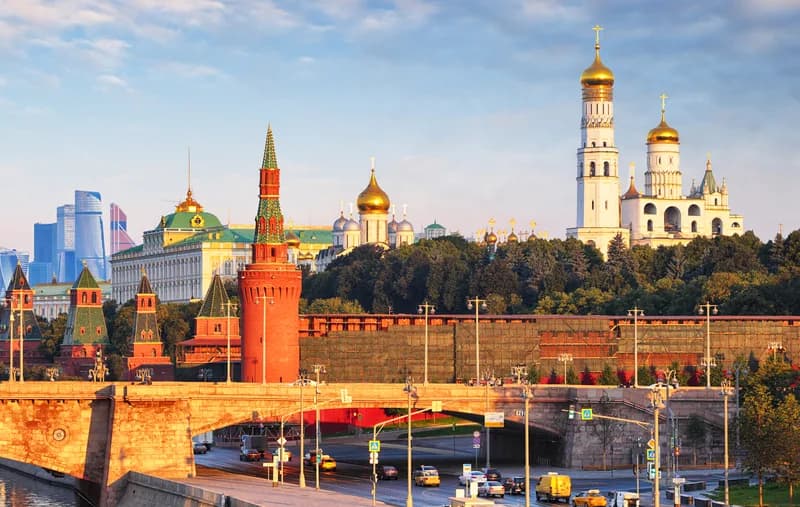
CIA Director John Ratcliffe made an unannounced trip to Moscow on August 25 to warn Russia against staging an attack on NATO territory, his first known visit to Russia since he took over the agency. The warning, first reported by the Wall Street Journal, followed a U.S. intelligence assessment that President Vladimir Putin could move to test the alliance within the next few years while his war in Ukraine grinds on without resolution.
Officials in Washington and Europe fear that test could come against one of Moscow's neighbors, most likely a Baltic state or Poland, and could range from a cyberattack to a small-scale incursion, CNN reported. Ratcliffe also pressed Russia to cut its economic and military support for Iran and warned of fresh sanctions if the Strait of Hormuz, closed to shipping since February, does not reopen.
Kyiv was told a U.S. delegation would travel to Moscow and was asked to hold off on strikes for the length of the visit, a senior Ukrainian official said. The trip surfaced only after a U.S. Air Force jet was spotted landing at a Moscow airport and a diplomatic motorcade was seen moving through the city.
A warning carried in person
Ratcliffe flew to Moscow aboard a C-17 Globemaster III military transport that lifted off from Joint Base Andrews in Maryland and transited through Riga, Latvia, before landing at Vnukovo airport, CNN reported. Kremlin spokesperson Dmitry Peskov confirmed that Ratcliffe met Russian intelligence officials but did not see Putin, putting the contact 'more or less at the level of the special services.' Sergey Naryshkin, who heads Russia's Foreign Intelligence Service, confirmed the meeting. The New York Times reported that Ratcliffe delivered a bleak assessment of the war to FSB chief Alexander Bortnikov and made no threats of consequences, urging Moscow to settle before its position worsens.
A lot of such scare stories are being published right now. Of course, they have nothing to do with reality.
President Donald Trump confirmed the visit but played down its purpose, describing it on August 26 as a 'semi-routine' trip and saying 'something may come out of' it, a reference to his stalled effort to end the war. He rejected the idea that Putin was preparing to move against the alliance. 'He's not going to be attacking a NATO territory,' Trump said the following day.
The mission echoed a late 2021 trip by William Burns, then the CIA director, who went to Moscow to warn Putin against invading Ukraine, a warning the Russian leader ultimately ignored. Putin launched the full-scale invasion three months later, in February 2022. This was the first known visit to Moscow by a sitting CIA director since then.
After Ukraine, a turn toward Europe
Having failed to defeat Ukraine on the battlefield for more than four years, Putin has moved to what Christian Caryl, writing in Foreign Policy on August 26, calls 'plan C,' an intensified effort to erode European support for Kyiv through subversion, intimidation and influence operations. Ukrainian drones and missiles now hit oil refineries and military sites deep inside Russia, and the Kremlin's hope that Washington would strong-arm Kyiv into accepting Russian war aims has petered out.
- Cutting undersea cables and jamming GPS signals
- Sabotage carried out by locals recruited over the internet
- Drone incursions along the alliance's eastern borders
On August 12, Putin pledged unspecified retaliation against any country interfering with Russia's shadow fleet of oil tankers, a response to an EU decision allowing confiscation of Russian oil from sanctioned vessels. Two days later, Foreign Minister Sergey Lavrov widened the threat to any country backing Ukraine. Moscow has also said it could strike British military targets, inside and outside Ukraine, over London's support for Kyiv.
Putin's 16 years in the KGB gave him grounding in the sabotage, subversion and targeted killings now aimed at Europe. Russia is weaponizing migration as another pressure tool and has built up a military presence in Libya. Germany has made no formal attribution for the explosive-laden drone found at Leipzig airport on August 5, though a U.S. defense official told CNN it bore the hallmarks of Russian intelligence.
- Poland and the Baltics guarding power plants, dams and sensitive sites
- Warnings over false-flag attacks Russia could blame on Ukraine
- Border states raising military readiness across NATO's eastern flank
The wave of hybrid attacks on Europe is something Washington also wanted to raise in Moscow, said Katia Glod of the New Eurasian Strategies Centre, who called Ratcliffe's mission 'quite an unusual visit.' NATO officials have described the drone incursions as a deliberate effort to map how the alliance's air defenses react, information that would be valuable to any future attacker.
Kremlin insiders weigh a wider war
Russia is weighing heavier conventional ballistic missile strikes on Kyiv, including the city center, and on infrastructure in other Ukrainian cities, Bloomberg reported, citing people close to the Kremlin. Despite mounting economic pressure, a domestic fuel crisis and Ukrainian attacks on his oil and energy networks, Putin has no plans to end the war, those people said, and every mechanism for peace talks has collapsed, leaving both sides where they began.
| Date | Nuclear signal from Moscow |
|---|---|
| February 2022 | Putin places Russia's nuclear forces on heightened alert |
| March 2024 | Naryshkin warns Europe is pushing the world toward nuclear war |
| November 2024 | Doctrine revised so a backed non-nuclear attack can count as joint |
| May 2026 | Russia and Belarus hold joint drills rehearsing nuclear weapons use |
Intensifying Ukrainian strikes have led a growing number of Russian officials to believe Putin could eventually take the extreme step of using a tactical nuclear weapon in Ukraine as a last resort, according to Bloomberg. The current exchange of strikes, those sources stressed, does not represent the peak of what Russia is willing to do. The same reporting found no signs Russia is now preparing such a strike.
Alexander Gabuev, director of the Carnegie Russia Eurasia Center in Berlin, said the risk of Russia using tactical nuclear weapons remains 'extremely low' because their military effectiveness on today's dispersed battlefield is limited, while the political cost of breaking the nuclear taboo would be high. 'As long as Moscow has room to escalate with conventional weapons, including by intensifying missile strikes, it has little incentive to cross the nuclear threshold,' he said.
Fiona Hill, a former adviser to three U.S. presidents now at the Brookings Institution, said the Biden administration had effectively told Russia there would be a massive U.S. conventional response to any nuclear use, though she doubted Trump would issue the same warning. China and India have both warned the Kremlin against a nuclear move.
Europe short of the missiles it needs
The U.S. military is facing a 'beyond critical' shortage of advanced missile interceptors in Europe, driven largely by Trump's war with Iran, the Associated Press reported, citing a U.S. defense official and a NATO official, both unnamed. The sharpest gap is in Patriot interceptors, the weapons capable of knocking down the high-speed ballistic missiles Russia would use against the alliance. NATO military spokesman Col. Martin O'Donnell said that account is 'simply not the case,' and Pentagon spokesman Sean Parnell said claims of U.S. munition shortages 'are false.'
Poland took delivery this month of 28 South Korean K2 Black Panther tanks for its 16th Mechanized Division near the border with Russia's Kaliningrad region, the defense ministry announced on August 25. Poland received its first K2s in December 2022, and the latest batch falls under a second contract signed in August 2025. 'We are preparing for war, hoping that it will never begin,' Deputy Defense Minister Cezary Tomczyk told Polsat News on August 17.
Three unpublished decrees, numbered 605, 606 and 607, were signed on August 25, the same day as Ratcliffe's visit. Their existence is inferred from a gap in the sequence on Russia's official legal portal, and their contents have not been made public. On August 12 Putin was photographed aboard the guided-missile cruiser Varyag as he oversaw the final stage of Pacific Fleet drills off Sakhalin Island, a show of reach far from the Ukrainian front.
Ukrainian strikes on Russian refining have intensified through August, hitting the Taneco plant in Tatarstan on August 20 and the Afipsky and Novoshakhtinsky refineries on August 25. People close to the Kremlin told Bloomberg that Putin remains confident in his strategy despite the mounting economic pressure at home.
Diplomacy at a standstill
Moscow increasingly casts Ukrainian strikes as attacks by NATO members themselves, on the logic that the alliance supplies Kyiv with the weapons, intelligence and targeting behind them, according to Bloomberg. The Kremlin believes the concessions it made earlier in the war each weakened its position, and with talks dead it sees few routes to its military goals short of further escalation.
Russian officials still hold slim hopes that Steve Witkoff, Trump's special envoy, and Jared Kushner, the president's son-in-law, might carry new proposals to Moscow, though expectations for a breakthrough remain low.
Ivana Stradner of the Foundation for Defense of Democracies, writing in the Kyiv Post, describes the nuclear signaling as an old Soviet technique known as 'reflexive control,' flooding an adversary with fear until it starts making decisions that serve Moscow's interests. Whether the unpublished decrees, the naval drills off Sakhalin and the reported plans for heavier strikes point to a genuine escalation or one more round of pressure is the question Ratcliffe carried into the Kremlin, and it is the question no one outside a small circle in Moscow can yet answer.
Sources
- CNN: Ratcliffe's unannounced Moscow visit to warn Russia against attacking NATO
- CBS News: CIA Director John Ratcliffe warned Russia not to attack NATO
- Foreign Policy: After Failing in Ukraine, Putin Is Now Targeting Europe
- Meduza: Kremlin sources tell Bloomberg Putin is preparing to escalate the war
- United24 Media: Kremlin insiders warn Putin weighing war escalation
- Kyiv Post: Putin's default mode of nuclear saber-rattling
- Irish Times: CIA director's Moscow trip and Europe's Patriot shortfall