Lily Hooper found dead after police wrongly told family she was alive
The 18-year-old vanished on a solo hike; her body was recovered after an eight-day search southwest of Sydney.
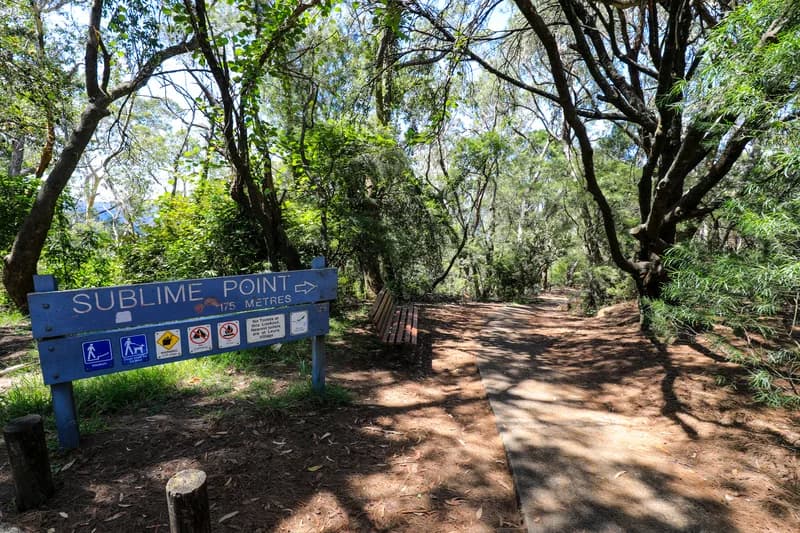
An 18-year-old hiker who vanished on a solo walk in Nattai National Park was found dead in dense bushland on August 20, ending an eight-day search southwest of Sydney that drew almost 1,000 people. New South Wales Police said the body of a woman, believed to be Lily Hooper, was located at about 11:30am in steep, cliff-lined terrain. Formal identification had not taken place.
The family learned of her death minutes after being told she had survived. NSW Premier Chris Minns told a budget estimates hearing in the state parliament that the teenager had been found alive, and her relatives were seen celebrating at the search command point where they had waited for days. Minns returned to the microphone to correct himself, and police said the family held that belief for eight to 10 minutes.
Police apologize for the miscommunication
An SES volunteer found Hooper and reported it up the chain following protocol, NSW Police said, and the wrong account spread through the family and into a live broadcast of a parliamentary hearing. Police Commissioner Mal Lanyon said the false report was passed on when she was located. Assistant Commissioner Joseph Cassar issued an unreserved apology to the Hooper family.
This is obviously devastating, and I'm just profoundly sad for her family and all those concerned.
Lily's mother, Kirrily, said she had washed her hair and 'put my good sneakers on' after hearing the initial update, expecting to be reunited with her daughter. Cassar told reporters he did not know exactly what had been said to the family in those moments, but that if he could turn the clock back, he certainly would. Police said the mistake was born out of elation that she had been spotted.
Hooper's body was found in bushland in the NSW Southern Highlands, in country too dense for a helicopter retrieval. Lanyon said crews were unable to lift her out because of the terrain and the canopy, forcing a manual, on-foot recovery through steep drops and complex cliff lines. The same conditions had slowed searchers throughout the week and made every phase of the operation harder.
Authorities have not determined or released a cause of death. A report will be prepared for the coroner, who will establish how Hooper died. Police and the State Emergency Service are separately reviewing how the wrong account reached the family, and the state government has announced a review of the search.
Hooper left her home in Oakdale on the morning of Wednesday, August 12, to hike alone in the park, and was reported missing that evening after she failed to return. Her car was found the same night on Wanganderry Road, near the start of the Bonnum Pic walking trail, prompting a large-scale, multi-agency search across the rugged terrain.
Almost 1,000 searchers combed the bush
The operation ran for eight days and involved almost 1,000 people. Nearly 100 Australian Defence Force personnel joined about 280 NSW State Emergency Service volunteers, alongside police and civilian searchers who combed dense undergrowth and steep drops. Police deployed a thermal-imaging helicopter and examined telecommunications data in an effort to trace Hooper's last movements across the park, working through cold, windy conditions that slowed progress by the day.
| Detail | Figure |
|---|---|
| Reported missing | August 12, 2026 |
| Body found | August 20, 2026 |
| Search duration | Eight days |
| People involved | Almost 1,000 over eight days |
| ADF personnel | Nearly 100 |
| SES volunteers | 280 |
Hooper was an experienced hiker who had set out on the 16-kilometre Bonnum Pic trail, a route rated difficult and described as barely visible in sections. During the final week of the search, the park was struck by winds and cold overnight temperatures, conditions that compounded the difficulty for crews already working through steep, tangled scrub.
Nattai National Park sits about 90 kilometres south-west of Sydney and is known for its rugged hiking, giant sandstone cliffs and vast stretches of unspoiled bushland. Its steep, sometimes obscured cliff edges and thick regrowth repeatedly hampered the effort to reach Hooper, and stretches of the park have little or no mobile phone coverage.
A father who holds no anger
Lily's father, Jim Hooper, has spoken publicly about the mix-up, forgiving police and everyone involved. He told 7NEWS that he holds no anger toward NSW Police or the State Emergency Service, and said he is grateful for the lengths that rescue parties, officers and volunteers went to in trying to bring his daughter home.
During the brief window when his family thought Lily had survived, Jim told Channel Seven: 'They're going to get her now by the sound of it... she might be going straight to hospital I'd say.'
Hooper praised the diligence of the emergency workers who searched for his daughter across eight days. He said their hearts and their efforts could not be faulted, and thanked the police, the SES and the civilian volunteers who refused to give up on recovering her from the bush and bringing her home to the family.
The Hooper family had remained at the search command point since Lily went missing, holding on to hope as hundreds of searchers worked the terrain around them. Their days-long vigil collapsed into grief within minutes of the premature word that she had been rescued.
National tributes and a moment of silence
Prime Minister Anthony Albanese and Opposition Leader Angus Taylor led a moment of silence in Federal Parliament, and Albanese called Hooper's death an unspeakable tragedy. He said the loss of a young person was a tragedy no parent should have to face, and said Lily had so much more to offer the world. His remarks were echoed in tributes across New South Wales.
In Hooper's home region, buildings including the Wollondilly Performing Arts Centre and the shire library were lit purple in her memory for the rest of the week, and flags flew at half-mast. The tributes came as the community took in both her death and the confusion over a message that had briefly suggested she was alive.
Inside the search for a missing teenager
Lily Hooper, an 18-year-old from Oakdale, southwest of Sydney, disappeared on August 12 after setting out alone to hike in Nattai National Park. Her body was found in dense bushland eight days later, on August 20. Police have not released a cause of death, and a coronial inquiry will investigate how she died and how she became lost.
The investigation into what went wrong
Two reviews are running alongside the coronial process. A coroner will determine how Hooper died and how she came to be lost in the park. Police and the SES are examining the communication breakdown, which they described as born out of the elation of a searcher who believed she had been found alive.
Investigators had spent days analyzing telecommunications data and using thermal-imaging equipment to trace Hooper's last known movements. The steep drops, complex cliff lines and thick scrub that defeated those efforts were the same conditions that later prevented an aerial recovery of her body, forcing crews to carry her out on foot from the park.
The NSW National Parks and Wildlife Service warns that cliff edges in its parks can be unstable or hidden by vegetation, that conditions can change rapidly, and that many parks have limited mobile phone coverage. It advises walkers heading into remote areas to carry a personal locator beacon as an added safety precaution in case they become stranded beyond phone signal.
Hooper's death was one of several fatal hiking and climbing incidents reported in recent months. Rock climber Jake Whisenant, 30, died after a fall in the Sequoia and Kings Canyon wilderness in California in early August; the Tulare County Sheriff's Office recorded blunt-force trauma and ruled it an accident. In June, an 18-year-old hiker died on the Grand Canyon's Bright Angel Trail in what the National Park Service described as heat-related illness.
Safety in remote national parks
For hikers venturing into areas like Nattai, the parks service recommends carrying a personal locator beacon as an added precaution. The devices can transmit a location to rescuers when a phone signal fails, a factor in searches across remote terrain where mobile coverage is patchy or absent.
- Cliff edges can be unstable or hidden by vegetation
- Weather and conditions can change rapidly
- Many NSW national parks have limited mobile coverage
- Carry a personal locator beacon in remote areas
Hooper had been walking the 16-kilometre Bonnum Pic trail, a difficult route that is barely visible in places, when she disappeared. Her family's eight-day wait ended on August 20, and the coroner's findings on how the teenager died have yet to be released. Her father said he wanted people to remember the effort to find her rather than the mistake at the end.
Sources
- ABC News: Body believed to be missing hiker Lily Hooper found after eight-day search
- CNN: Lily Hooper found dead in Australia, police apologize for miscommunication
- Fox News: Missing hiker Lily Hooper found dead in Nattai National Park after 8-day search
- LADbible: Father of Lily Hooper sends message to police after mix-up
- UNILAD: Dad of Lily Hooper sends message to police after she was mistakenly reported alive
- Sunday Guardian: Tragic mix-up as missing hiker Lily Hooper found dead in Australia