Mexican navy rescues two fishermen adrift five days on a cooler
Daniel Guerrero Martínez and José Luis Portelas Villegas were located more than 240 kilometers off the coast of Chiapas.
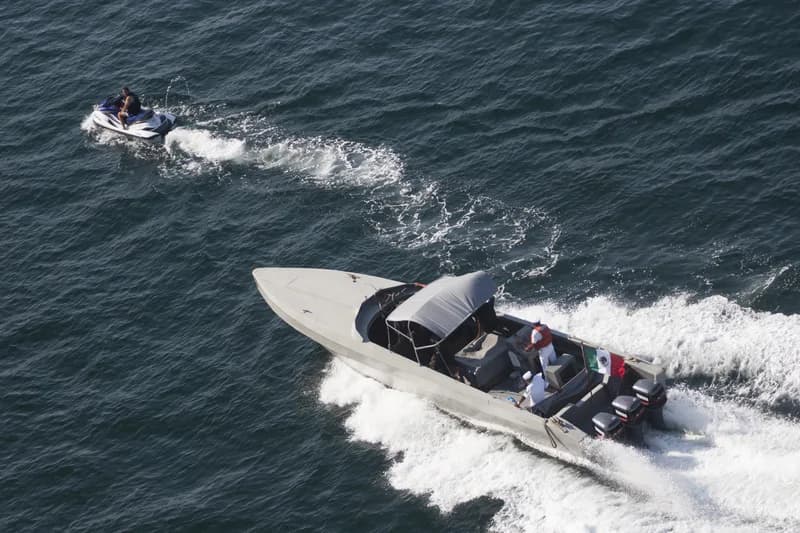
Two fishermen who spent five days adrift in the Pacific Ocean were found alive sitting on a blue cooler roughly 150 miles off the coast of Chiapas, the Mexican navy said on Wednesday. Naval personnel pulled the pair from the water more than 240 kilometers from shore, ending a search that had begun five days earlier when the men stopped answering calls from their fishing cooperative and were feared lost at sea.
Video released by Mexico's Secretariat of the Navy shows the cooler bobbing on open water as an ocean patrol vessel closes in, the two men perched on the container. Rescuers carried out maneuvers to bring both aboard, and naval medical staff examined them at the scene before they were flown by helicopter to port and handed back to relatives.
The men, aged 53 and 32, had set out aboard a shrimp boat that Chiapas outlets identified as the Inmensa. Excélsior, which named the two men while they were still missing, reported that they are Daniel Guerrero Martínez and José Luis Portelas Villegas, both from Chiapas, and that they left Bahía de Paredón, in the municipality of Tonalá, on Thursday, August 13, to fish in the Pacific before contact with them was lost the following day.
How the navy found them
The alarm was raised by their fishing cooperative. When the crew failed to check in, cooperative staff sent out a distress call, and the navy, acting in its coast guard function, responded by deploying surface ships and aircraft under a search-and-rescue operation. The navy said the effort was run by the 22nd Naval Zone, headquartered at Puerto Chiapas. The Secretariat of the Navy is headed by Admiral Raymundo Pedro Morales Ángeles.
Two fishermen who remained five days adrift on a cooler were located and rescued by naval personnel more than 240 kilometers from the coast of Chiapas.
Searchers relied on what the navy calls the trinomio, a coordinated ship-interceptor-aircraft approach that lets a small number of units cover a wide stretch of ocean at once. Excélsior reported that the multi-asset method was credited with widening the search area considerably, and it paid off about 130 nautical miles out, when crews spotted the two men floating on the cooler about 240 kilometers from the Chiapas coast.
Photographs released after the rescue show one of the men being carried on a stretcher and, once on land, one of them seated in a wheelchair while the other remained on a stretcher. The navy did not describe their specific injuries or say how the two had endured five days of exposure at sea. Both were reunited with their families after their medical checks were complete, according to the accounts released by naval authorities.
Five days of uncertainty
The families lost contact with the pair on Friday, August 14, when the boat was about 120 kilometers from land. Search protocols were activated immediately, drawing in the navy, civil protection authorities and local fishing cooperatives, according to Infobae. Relatives spent the days that followed with no confirmation of whether the men were alive or where they had drifted.
Crews searched by sea and by air over an expanding stretch of the Pacific. State and federal agencies joined the navy, widening the zone responders could cover as the days passed with no word of the boat and the possible search area kept growing with the current and the wind pushing the drifting cooler.
Over five days, the cooler carried the men from about 120 kilometers offshore to more than 240, pushing them deeper into the Pacific off a state that borders Guatemala. The sheer distance is part of what made the find so difficult, and part of what made the outcome unusual for a drift that lasted as long as this one did, with the men exposed to sun, salt water and open ocean the entire time.
After the medical evaluation at port, the two men were handed back to relatives who had waited through five days of silence.
- August 13: the boat leaves Bahía de Paredón, in Tonalá, to fish.
- August 14: contact is lost about 120 kilometers from shore.
- The cooperative sends a distress call and the navy launches its search.
- August 19: the men are found on a cooler more than 240 kilometers out.
What kept them alive was the cooler itself. The men told Tribuna de la Bahía that they went five days without food or water, and that they were finally spotted after waving a sack at a passing aircraft.
A cooler as a life raft
The idea is not new to rescuers. A Colombian fisherman, Solano Salazar, 47, was found alive in November 2014, two days after his boat sank in stormy weather, clinging to a foam cooler about 22 nautical miles off the southwest coast of Colombia, Fox News reported. He had gone out with another man, and a coast guard crew that happened to be running drills in the area spotted him in the water. His fishing partner had not been found, Fox News reported at the time.
Salazar was taken to a hospital and was expected to recover. His was described as one of multiple documented cases around the world in which fishermen and boaters have been saved by a floating cooler, its foam construction keeping him afloat through roughly 48 hours of stormy seas before the crew reached him.
I am OK now because the navy rescued me. I thought I was going to die. I didn't think about anything else.
For the two men off Chiapas, the day-by-day details of their five days on the water have not been made public. What is known is that a piece of standard fishing gear, built to hold ice and the day's catch, held them above the surface instead, long enough for the navy to close the distance and for a search that had spread across a broad slice of the Pacific to finally narrow onto them.
Fifty hours off Galveston
A similar case unfolded in Texas in 2016. Michael Watkins, 51, and Raymond Jacik set out for a five-hour fishing trip on Galveston Bay when their 20-foot boat took on water and a rogue wave capsized it before they could reach their life jackets, the U.S. Coast Guard said. They grabbed a cooler, split a sandwich and a bottle of water, and were separated by the sea. Jacik reached an unmanned oil platform and Watkins a second one about half a mile away, neither knowing the other was alive. Coast Guard helicopters lifted both men off more than 50 hours after the boat went down.
Why a cooler keeps you afloat
The physics behind the rescues is straightforward. Coolers are built from high-density polyethylene and packed with closed-cell foam insulation, both of which trap air and resist water, so a cooler that goes overboard tends to float rather than sink. Modern rotomolded models, molded in a single piece with thick walls and heavy-duty latches, are designed to stay up even in saltwater, which is why a sturdy cooler can double as an improvised raft when nothing else is within reach.
How well a cooler floats depends on what is inside it. A fully loaded cooler sits lower in the water and can struggle to stay up, while an empty or nearly empty one offers the most support, because the sealed air volume and foam insulation are what do the work of keeping it above the surface even in rough conditions far from land.
Standard gear, repeated rescues
Coast guard officials in several countries have pointed to cases like these when urging boaters to keep flotation within reach at all times and never to underestimate common equipment like a sealed cooler. The thread that runs through each rescue is the same: crews who lost their boats before they could grab life jackets survived because a cooler happened to be close enough to hold, turning ordinary gear into the only thing between them and the water.
When Watkins and Jacik failed to return, authorities launched a search near San Leon, Texas, using airplanes, helicopters and response boats. A friend who joined the effort, David Dunford, said the group had braced for the worst, expecting to recover bodies rather than find the two men alive after two days in the bay without their life jackets.
Jacik, speaking from his hospital bed to NBC affiliate KPRC-TV in Houston, said the cooler was what carried him and his companion through the night before the sea pulled the two men apart.
The Chiapas rescue followed the same pattern on a far longer clock. Five days at sea is well beyond the two-day ordeals that ended in survival elsewhere, and the two men were found much farther from land, a distance that turned a routine fishing trip into a week-long fight to stay afloat.
The navy's message
Mexico's navy said the operation reflected its commitment to safeguard human life at sea, and it urged anyone facing a maritime emergency to contact the Secretariat of the Navy directly. CBS News reported that officials released no further detail on the men's conditions, closing the public account of the rescue with the two survivors on their way home to Chiapas.
Daniel Guerrero Martínez and José Luis Portelas Villegas are now back with their families, their five days on a cooler behind them. They were plucked from water more than 240 kilometers from the shore they had left a week earlier, alive after a drift that few survive and that ended only because a search kept widening until it reached them.
Sources
- CBS News: Fishermen found alive floating on cooler 150 miles off Mexico 5 days after going missing
- Infobae: Rescatan a dos pescadores chiapanecos tras seis días a la deriva en el Pacífico
- Excélsior: Dramático rescate en Chiapas: Hallan a pescadores flotando en una hielera
- Tribuna de la Bahía: Marina rescata a dos pescadores a 240 KM de Chiapas
- CNN: Fishermen's cooler saves them during 2 days lost at sea
- Fox News: Man survives two days at sea by clinging to foam cooler
- Cooking Is Cool: Can a Yeti cooler stay afloat in water