Liberia agrees to take up to 1,200 third-country deportees from the US
The first 20 arrived at Roberts International Airport on August 20, under an arrangement running for one year.
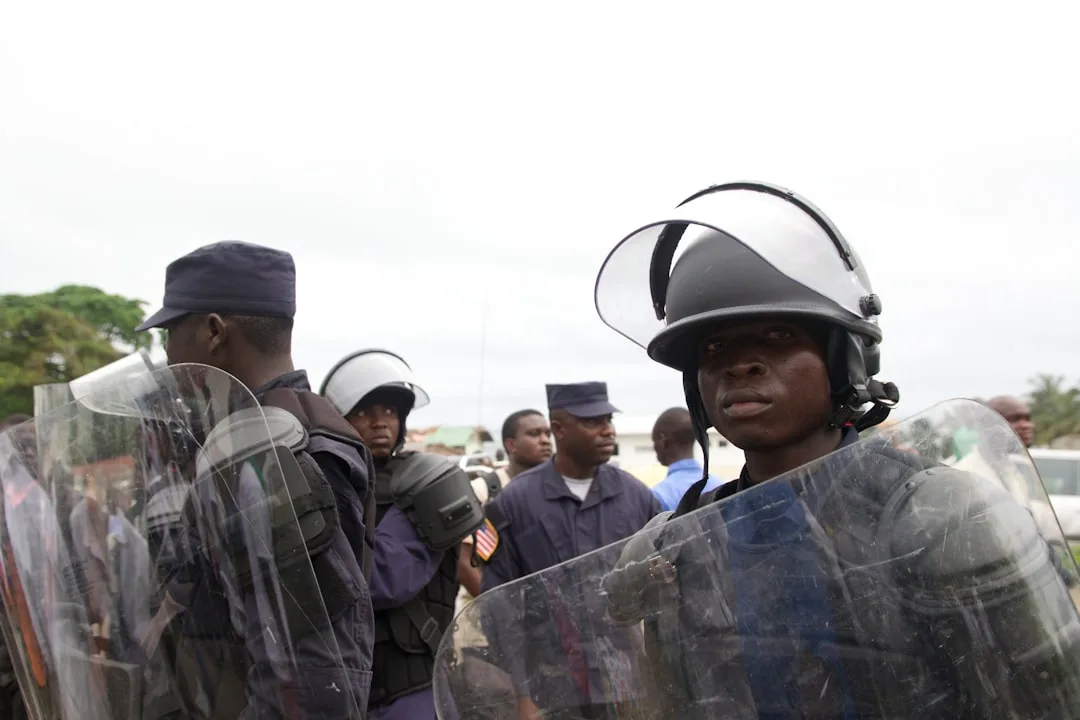
Liberia will accept up to 1,200 third-country deportees from the United States over the coming year, officials in Monrovia said Tuesday, August 18, in one of the largest such arrangements yet under the Trump administration's drive to remove migrants it cannot legally send to their own countries. An initial group of 20 landed at Roberts International Airport on Thursday, August 20, the Associated Press reported from Harbel.
Liberia's gesture is entirely humanitarian and in keeping with the country's longstanding traditions.
The deportees are third-country nationals, meaning Washington is not sending them back to the nations they came from. Liberia's government said the group would include Africans along with citizens of North American, South American and Caribbean countries. Information Minister Jerolinmek Piah delivered the announcement to reporters in the capital, Monrovia. The arrangement is set to run for one year.
What Monrovia agreed to accept
Washington pledged up to $124.4 million to Liberian health systems over five years in a memorandum signed in December 2025, and in October 2025 it extended the validity of B1/B2 visitor visas for Liberian citizens from 12 months to 36 months. Both predate this week's announcement. Liberia's government says the deportees are not being traded for either.
Piah said the arrivals are being received as guests of the republic and remain free to leave whenever they choose. Those who wish to may seek asylum in Liberia after they land. The United States, he said, will provide support to help the country manage the program and strengthen its migration system over the year ahead.
Most of them are people who had immigration violations and offenses.
Tweh told the Tuesday briefing that Liberia had screened the list of migrants before their arrival. In a written statement, the government said it intends to give the transferred people the support they need to seek protection in Liberia and to be safe during their stay. It added that all arrivals must be medically authorized to travel.
The migrants who cannot go home
A defining feature of these deals is that many of the migrants carry protection orders issued by U.S. immigration judges, which bar their return to their home countries on safety grounds. Reuters reported that in most cases the people covered by the Liberia agreement had won legal protection after judges found they risked torture or other abuses if they were sent back. Washington has defended the deals as lawful, while advocates say the arrangements are designed to sidestep those very protections.
Immigration lawyers say the administration uses third-country removals as a legal loophole to push asylum seekers back toward the homelands they fled. People are often sent to countries they have never visited, or where they face danger, leaving little option but to go home on their own. Rights groups and advocates say the details of the deals are opaque, even as Washington insists they are lawful.
| Country | What is publicly known about the deal |
|---|---|
| Sierra Leone | Diplomatic notes dated January 2026; 31 people transferred across three flights to July 31, 2026; a cap of 300 ECOWAS citizens a year; $1.5 million U.S. grant |
| Ghana | Has taken more than 100 third-country nationals across five flights; many were later sent to their home countries despite U.S. court protection |
| Equatorial Guinea | Has received 53 deportees across five flights; all 29 from the first two flights were later returned to their home countries |
| Congo and Central African Republic | Named among African governments that have accepted third-country deportees |
Source: Reuters, the Associated Press and U.S. State Department releases
The Trump administration has deported thousands of people to nearly two dozen countries that are not their own, advocacy groups tracking the deals told the Associated Press, under agreements that are frequently kept secret. Those groups count roughly 10 of the countries in Africa. Reuters listed the Democratic Republic of the Congo, the Central African Republic, Equatorial Guinea, Cameroon, Ghana and Sierra Leone among the earlier partners, and other reporting has named South Sudan, Rwanda, Uganda and Eswatini.
The Senate Foreign Relations Committee's minority staff estimated that the administration had likely spent more than $40 million on third-country deportations through January 2026. Details of most agreements remain private, which rights groups say makes it difficult to track what happens to people once they leave U.S. jurisdiction. Some receiving countries have been paid millions of dollars, according to documents the State Department has released.
Liberia's earlier role in the policy
Liberia's place in the program predates Tuesday's announcement. The administration had already pushed to deport Kilmar Abrego Garcia, a Salvadoran national whose earlier removal to El Salvador in March 2025 breached an immigration judge's 2019 withholding-of-removal order, to Liberia instead. He spent months in detention in El Salvador, including at the notorious CECOT mega-prison, before his case became a flashpoint in the national debate over Trump's hardline immigration policies.
Federal Defendants have received diplomatic assurances regarding the treatment of third country individuals removed to Liberia from the United States and are making the final necessary arrangements for Petitioner's removal.
In the Maryland court filing, government attorneys said Liberia had agreed to accept Abrego Garcia and described the country as a stable democracy and close U.S. ally. The State Department's human rights report covering 2024 documented arbitrary killings, torture and arbitrary detention in Liberia. The removal did not proceed: Justice Department lawyers acknowledged in court that sending him to Liberia would breach a federal injunction. The designation is still live. The Fourth Circuit rejected the government's appeal this month, and Abrego Garcia is living with his family in Maryland.
Liberia's foreign affairs minister, Sara Beysolow Nyanti, said at the time that her government was under no diplomatic pressure to receive Abrego Garcia and that the decision followed formal diplomatic consultations.
Advocates opposed the earlier plan, arguing it would strand a protected migrant far from home in a country he had no ties to. The August agreement applies that logic on a much larger scale, to as many as 1,200 people, in one of the largest such arrangements reported so far.
What rights groups warn
Refugees International and Human Rights First have called the third-country agreements opaque and accused governments of treating migrants as bargaining chips. The organizations warn that people can face arbitrary detention or other abuses once they are outside U.S. jurisdiction, and that host countries sometimes send them onward to the very places they fled. That risk, they say, defeats the protection a U.S. judge granted in the first place.
Rights groups frame that outcome as a breach of the principle of non-refoulement, which forbids returning people to countries where they risk persecution or torture. Liberia's own asylum system is small, a limitation it shares with other West African states that have signed similar deals. Some governments in the wider program, among them Eswatini, South Sudan and Equatorial Guinea, hold poor human rights records.
One of the largest African deals
Liberia's agreement to take up to 1,200 people ranks among the largest single arrangements struck under the administration's immigration crackdown. Deportees are expected to arrive over the coming year, beginning with the first group of 20. DHS Secretary Markwayne Mullin, in an August 13 department release, said Immigration and Customs Enforcement is arresting and deporting people it describes as illegal aliens every day.
Some governments have accepted deportees after being pressed with other levers. Advocacy trackers link Sierra Leone's agreement to a pause on immigrant visa issuance imposed in January 2026, though Foreign Minister Timothy Musa Kabba said the arrangement was not a direct quid pro quo and that Washington had requested his country's consideration. Several receiving states have also been offered U.S. health funding, and the deals with them have most often been kept out of public view.
A test case in Sierra Leone
Nine migrants deported from the United States landed in Sierra Leone on May 20, 2026, the closest precedent to the Liberia plan. Five were from Ghana, two from Guinea, one from Senegal and one from Nigeria. Sierra Leone's information ministry had said it expected 24; the immigration lawyer Alma David, of the U.S.-based Novo Legal Group, said several removals appeared to have been halted shortly before departure.
Sierra Leone's Ministry of Information said the arrivals had been checked into hosting facilities and were comfortable and receiving support. A health ministry official described them as traumatized after months in chains during detention in the United States. The nine were housed in a hotel and expected to return to their home countries within 14 days of arriving, or up to 30 days in exceptional cases.
That deal, structured as diplomatic notes dated January 2026, caps arrivals at 300 ECOWAS citizens a year, far fewer than Liberia's 1,200. Sierra Leone's foreign minister said the arrangement is supported by a $1.5 million U.S. grant. The diplomatic notes were made public on the State Department's website, one of the few such agreements to be released.
What happens after arrival is where advocates point to Ghana. Reuters documented the first group of more than 30 third-country nationals sent there by the United States, at least 22 of whom Ghana then returned to their home countries despite U.S. court orders meant to prevent it; more than 100 have since been transferred. Lawyers said those repatriations appeared systematic, and that none of their clients had a chance to raise legal objections before being sent home. Equatorial Guinea has returned deportees who held protection against repatriation as well.
The first flight landed on August 20
Liberia's justice minister said the screened list is set, and the government has pledged support for those who arrive. The first 20 landed on August 20. Whether the 1,200 will remain, seek asylum or eventually make their way home is unclear. It is the question rights groups say the pattern in Ghana and elsewhere has already begun to answer, and one that will follow each flight into Monrovia over the coming year.
Sources
- AP via WSLS: Liberia agrees to take 1,200 deportees from the United States
- AP via NBC News: Liberia agrees to take 1,200 third-country deportees from the U.S.
- NPR: Liberia agrees to take 1,200 third-country deportees from the U.S.
- Reuters via U.S. News: Liberia Agrees to Accept up to 1,200 Third-Country Deportees From US
- VisaVerge: Liberia to Accept 1,200 U.S. Third-Country Deportees in 2026
- AP via PBS NewsHour: 9 deportees from US arrive in Sierra Leone
- Reuters via Malay Mail: Ghana took in Trump's deported West Africans, then forced them home
- AllAfrica: Trump Pushes for Abrego Garcia Deportation to Liberia
- Third Country Deportation Watch: Sierra Leone