Colombia earthquake kills at least 281 as hope for survivors fades
Colombia's disaster agency counts 379 still missing as crews in Cali shift from rescue to clearing debris.
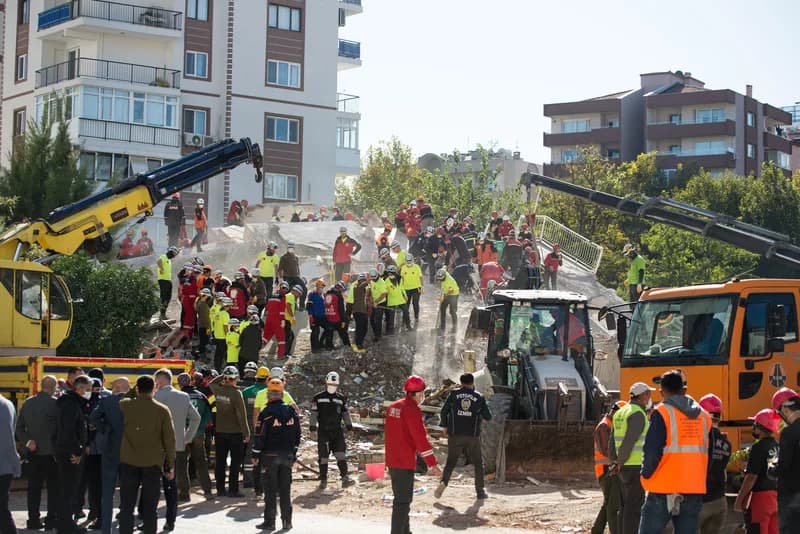
Colombia's death toll from the magnitude 7.4 earthquake that struck the country's west on August 10 had reached at least 281 by the evening of August 13, with 379 people still missing. Rescue crews in Cali and Pereira have begun shifting from the search for survivors to the removal of debris. Families are waiting beside the rubble for word on relatives.
- Magnitude: 7.4, with the epicenter about 5 kilometers from San José del Palmar in Chocó, according to the U.S. Geological Survey.
- Dead: at least 281 as of the evening of August 13, August 13, according to the Colombian government, up from an initial count of 111.
- Missing: 379 as of the evening of August 13, according to Colombia's disaster preparedness and response agency.
- Trapped: Cali Mayor Alejandro Eder said on August 11, August 11, that 239 people were believed trapped in that city alone, with 949 injured.
The quake was Colombia's strongest recorded this century, the country's Geological Service said, and nearly 100 aftershocks followed by the morning of August 11. Tremors reached Bogotá and were felt in Panama, Ecuador and Venezuela. The government declared a state of national disaster and deployed soldiers.
A remote epicenter that rescuers could not reach
The epicenter sat about 5 kilometers from San José del Palmar, a community of about 4,800 people in the northwestern department of Chocó, roughly 240 kilometers (150 miles) west of Bogotá. Chocó is remote and hard to reach, and the full extent of the damage there stayed unclear for days. Authorities deployed engineers, rescue workers and search dogs to the department, but only 30 Colombian Red Cross personnel had been sent there in the first push.
President Abelardo de la Espriella, Colombia's new head of state, travelled to the departmental capital, Quibdó, on the night of August 11 and said the government had mobilised the entire military and police apparatus. The disaster is an early test of his crisis management.
In Cali, Colombia's third-largest city, volunteers formed lines to pass large slabs of concrete hand to hand as crews sorted through the rubble. Rescuers worked through the night with cranes, excavators and, at times, their bare hands, cutting through twisted steel under heat that reached 30 degrees Celsius (86 degrees Fahrenheit).
A collapsed hospital and a full morgue in Cali in the first days
Mayor Alejandro Eder said on the morning of August 11 that 239 people were believed trapped in Cali alone and 949 were injured, and he appealed for more rescuers. Bogotá's mayor, Carlos Fernando Galán, sent 100 rescuers, and more than 220 rescue specialists were in the city by August 11.
Cali's University Hospital was among the hardest-hit buildings. The governor of Valle del Cauca, Dilian Francisca Toro, said sections had collapsed, including the pediatrics department. Hospital director Irne Torres Castro said about 30% of the hospital's infrastructure fell, including three floors reserved for pediatrics, internal medicine and part of the neonatal unit. At least four people were rescued from beneath the wreckage, and about 600 patients were treated on a street strewn with rubble, some later moved to a temporary facility in a school gymnasium.
In the first days after the quake, Cali's public health secretary, Germán Escobar, said the city's morgue was full and that authorities were bringing more bodies off the streets. Mayor Eder imposed a curfew running from 8 p.m. Monday, August 10, to 6 a.m. the following day.
A fire at a jail in Buenaventura, caused by the earthquake, killed at least four people and hospitalized two more. Seven airports suspended service, in Armenia, Cali, Manizales, Pereira, Quibdó, Buenaventura and Cartago, as authorities assessed damage. In Medellín, more than 260 firefighters and 40 engineers carried out building damage inspections.
Hope for survivors fades after 72 hours
By August 13, three days after the quake, crews in Cali had shifted from search and rescue to debris removal at most sites, a sign the response had entered a grimmer phase after the crucial first 72 hours. Lines of dump trucks hauled rubble to the city's dump after the mayor lifted normal traffic restrictions. Residents held protests at Cali's city hall, criticizing the absence of authorities.
David Tamayo, who heads Colombia's National Unit for Disaster Risk Management, described the changing odds even as searches continued.
Unfortunately, we are reaching a point where the likelihood of finding survivors is dwindling, but our mission is to keep searching and find all those people who are reported missing.
Emergency experts noted that survival past the golden window depends on whether trapped people can reach oxygen, water and food, and on their underlying health. Those with serious internal injuries or pre-existing conditions, unable to take their medication, face lower odds.
Estimates of the missing have varied sharply through the week. Civilian-run databases were listing more than 4,200 names by August 13, far ahead of the official count. Colombia's disaster agency, the single national authority counting consistently, put the figure at 379 that evening.
Outside the major cities, smaller towns reported little or no government presence. In Buenaventura, the International Rescue Committee said crews had not reached some areas until the night of August 12, leaving residents to dig with their bare hands. IRC workers said some neighborhoods remained inaccessible because armed groups blocked access, and that some of those groups seized food donations. The Norwegian Refugee Council's Colombia director, Giovanni Rizzo, said the earthquake had compounded an already severe humanitarian situation.
Aid arrives as the government limits offers
Regional partners began sending aid on August 12. El Salvador said it would dispatch two planes carrying 100 tons of humanitarian relief. Mexico offered its Topos de Tlatelolco rescue team, which had been assisting in Caracas after Venezuela's June earthquakes, but Colombia did not admit them; President Sheinbaum said a military brigade Mexico offered was not approved either. Starlink offered free internet service in Chocó, Caldas, Valle del Cauca, Risaralda and Quindío until September 12.
The government accepted rescue teams from only four countries, and the limits became a political flashpoint. El Salvador's President Nayib Bukele said Colombia had turned down offers of rescue teams and asked only for aid in the form of supplies. China's ambassador in Bogotá, Zhu Jingyang, cited difficulties coordinating assistance, and Colombia's opposition criticized de la Espriella over the refusals. Foreign Minister Omar Bula said Colombia had "not excluded absolutely any country in terms of the offers that have been made to us".
The scale of Colombia's strongest quake this century
The quake tore through Colombia's coffee-growing heartland, leaving apartment blocks, homes, schools and health centres cracked, leaning or flattened. Early counts recorded 61 buildings collapsed and 1,575 homes damaged, along with 18 health centres, 52 educational centres, 17 community centres and 18 roads. Children were among those trapped, UNICEF said, and the collapse of the hospital's paediatric wing was of deep concern.
Colombia is full of active fault lines.
León Loya said the probability of another earthquake of similar magnitude in the same area was low but would not rule out further seismic activity. The quake came just over a month after two earthquakes killed more than 6,000 people in neighboring Venezuela on June 24.
A rescue in Pereira after 36 hours
In Pereira, rescuers pulled a 32-year-old woman, Daniela Largo Sánchez, alive from a collapsed hotel after 36 hours in the debris. Bogotá firefighters said they had located her about 10 hours before they could reach her, because she was buried too deeply for immediate extraction.
Four heavy concrete slabs blocked direct access. Firefighters first dug a tunnel from above to pass her oxygen, then a second tunnel from below that let them free her. Her mother told AFP that a local resident had first heard Largo calling for help, after which crews used a small camera to find her. Largo's 12-year-old son was waiting at home.
President de la Espriella celebrated the rescue on social media, calling it news that fills the country with hope. In Pereira, rescuers said they were also in contact with a boy trapped beneath a bakery, while more than 500 people, including specialists and volunteers, searched the rubble there, at times without equipment. Authorities said 87 people had been rescued from the rubble in Cali.
Colombia weighs the cost of recovery
Finance Minister Miguel Gómez Martínez declared an economic emergency and announced a World Bank loan of up to US$450 million, along with a one-month extension on income tax payment deadlines. Aid groups said food donations were abundant but that mattresses, blankets and electrical generators were among the most critically lacking supplies, as tens of thousands of displaced people waited for word on missing relatives. Convoy of Hope said it had delivered nonperishable food, clean water and mattresses to displaced families.
Sources
- NPR: Magnitude 7.4 quake rocks western Colombia, killing at least 111 people
- ABC News: Colombia earthquake: At least 224 dead, people trapped in collapsed buildings
- CNN: Death toll rises to 132 following 7.4 magnitude earthquake in Colombia
- CNN: Rescuers unable to reach Colombia earthquake epicenter as more than 200 dead
- Al Jazeera: Frantic search for survivors as over 2,700 reported missing
- CNBC: Colombia quake death toll tops 250 as rescuers race to find survivors
- Euronews: Colombia quake rescuers save woman after 36 hours trapped in rubble
- NPR: Colombia's new government and rescuers race against the clock to find survivors
- US News: Hundreds Still Missing in Colombia as Desperation Grips Earthquake Rescue Effort
- CNN: Colombia says it will only accept rescue teams from four countries
- Convoy of Hope: Response Update, Colombia Earthquake 2026
- Wikipedia: 2026 Colombia earthquake