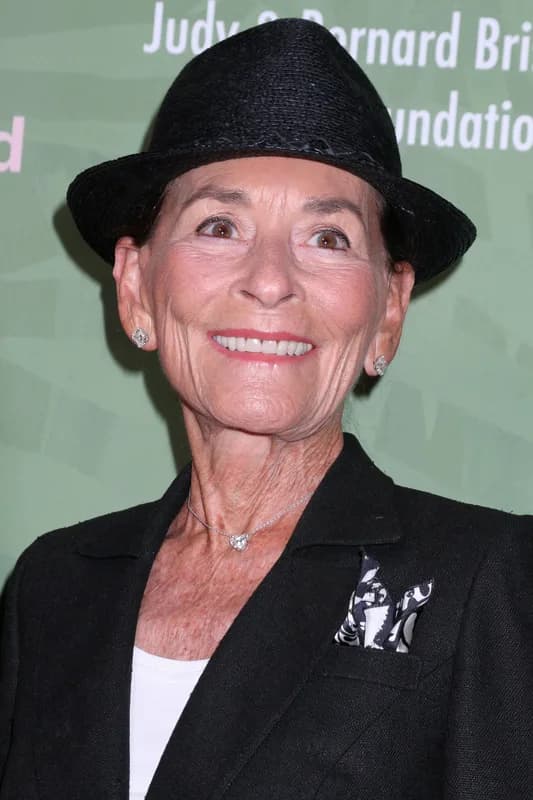
UEFA's Laura McAllister calls for a challenger to Infantino in 2027
Her call follows the collapse of a $20 billion World Cup investment plan and a letter accusing Infantino of deception.
Laura McAllister, a vice president of UEFA, told a run of broadcasters this month that FIFA needs a candidate to challenge Gianni Infantino before its next presidential election, and that the next president must be a custodian of the sport able to unite the whole world of football, not just Europe. Her intervention ranks among the sharpest yet from a senior official inside the game's own power structure.
The dispute traces back to the collapse of the FIFA Forward Enterprise, a plan to fold the World Cup and FIFA's other events into a commercial subsidiary valued at about 17.5 billion euros, or roughly $20 billion, with a minority, non-controlling stake of around 20 percent sold to private investors. Infantino scrapped the proposal on July 31, only days after it was made public.
McAllister has served as a UEFA vice president since April 2023 and is a former captain of the Wales women's national team, now Professor of Public Policy and the Governance of Wales at Cardiff University, credentials she has brought to the European body's push for reform. Speaking to talkSPORT, she said the opposition to Infantino needs a single figure it can rally around, and that the important thing is that such a candidate could unite the opposition to him across the world before members vote on 19 March 2027.
A challenger, and the trouble of finding one
Finding a credible opponent will not be simple, McAllister acknowledged. Any serious contender would need backing from associations across every continent, not just from Europe, and the confederations unhappy with Infantino's methods have not yet coalesced around a name. She has framed the task as larger than a single election, and as a test of whether the game can agree on what it wants from a leader.
To McAllister, the fix runs deeper than a ballot. She has called for far-reaching reforms to strengthen transparency and democratic governance across football's global administration, arguing that the way its leadership operates has to change at the level of culture rather than only at the level of who holds the top office, and that a new president alone would not be enough without that shift.
The next president, she said, must be a custodian of the sport, a unifying figure focused on the long-term health of the game rather than politics or personal influence.
McAllister is the first Welsh person to sit on UEFA's executive committee, appointed unopposed in 2023, and she has become one of the leading voices in the European body's response to the affair. UEFA has continued to lead the criticism of Infantino even as FIFA holds a defiant public line, and it was UEFA that first threatened to walk away from FIFA competitions if the plan advanced.
Two vice presidents turn on the president
On August 10, the presidents of the European, North American and Asian confederations signed a joint open letter to what they called the football family, accusing Infantino of deception over the failed plan. The signatories were UEFA's Aleksander Ceferin, CONCACAF's Victor Montagliani and the AFC's Sheikh Salman bin Ibrahim Al Khalifa, alongside the three bodies' general secretaries. All three presidents sit on the FIFA Council as vice presidents, and Sheikh Salman is its senior vice president.
When trust is broken through deception, when an individual places himself above the collective that entrusted him with authority, that duty has been abandoned.
The letter put it as a matter of duty, saying leadership in football is not a possession and not about holding or demanding power, but a duty of service to the football family that entrusts it, and that there is silence where there should be accountability and distance where there should be openness. The three bodies demanded an independent third-party review of the enterprise, calling the dispute more than an administrative or commercial disagreement and casting it as a fight over the concepts meant to govern the international game.
Before the joint letter, Sheikh Salman had written to the AFC's 47 member federations calling the lack of consultation totally unacceptable. He said the confederation noted with great concern and disappointment that it was not consulted by FIFA at any level before the public announcement, and that the current timeline allowed an extremely limited period to weigh a proposal of such significance, when such decisions should never be rushed.
What Infantino offered, and what fell apart
The proposal came with a deadline attached. Infantino told the associations each could access up to $40 million in total funding, about 35.12 million euros, if they agreed by September 19, a one-off payment on top of their existing Forward funding. The money, and the speed, are part of what alarmed the confederations, who watched a project of enormous scale move faster than the scrutiny it invited and asked their members to hold off on any decision until FIFA had answered for it.
- A commercial subsidiary valued at about 17.5 billion euros, roughly $20 billion, to run the World Cup and FIFA's other events
- A minority, non-controlling stake of around 20 percent sold to private investors
- An offer of $40 million to each of FIFA's 211 associations for agreement by September 19
- Reports that Joshua Kushner's firm, Thrive Eternal, would lead the proposed investor group
The plan came apart quickly. Carlos Cordeiro, a senior Infantino adviser, former U.S. Soccer president and Goldman Sachs banker who represented FIFA on the White House task force for the World Cup, resigned in protest and urged other senior officials to act. He called the enterprise a bad deal for football, and his exit gave the confederations a figure inside FIFA's own circle to point to.
UEFA voted unanimously to have its 55 member nations boycott the World Cup and every other FIFA competition if the plan went ahead, and CONCACAF's 41 associations rejected it at a meeting, though they stopped short of a boycott. The next morning UEFA said it could not keep going with secret schemes on fast track timescales, cooked up by faceless individuals and of dubious benefit to the game.
FIFA digs in and warns of sabotage
FIFA answered on August 8 by warning of a concerted and ongoing effort by some to undermine FIFA and its president, insisting that any challenge to his leadership follow the body's statutes and democratic procedures. It said those without the support of FIFA's member associations should not seek to achieve through allegation, insinuation or misinformation what they cannot achieve through FIFA's established democratic processes.
Reports in The Daily Telegraph about an exit package UEFA paid a former employee during Infantino's time as the European body's general secretary preceded that statement. UEFA confirmed a departure payment and said it was in line with the rules at the time. Infantino strongly denies the allegations as categorically untrue, and FIFA said the coverage carried unsubstantiated assertions and demonstrably false claims that it would challenge directly.
Not everyone lined up against the president. The Mexican Football Federation said it would neither recognize nor approve any process convened outside the institutional framework, backing Infantino. At the leadership meeting in Rabat, Morocco, FIFA reaffirmed its support for him, apologized to the 211 associations for mistakes around the plan, and promised a review of its processes.
The players' union rejects a process fix
FIFPRO, the global players' union, refused to accept FIFA's framing of the crisis as a matter of process and communication. In a statement responding to the Rabat update, the union said reaffirming support for the leadership while reducing a fundamental governance and constitutional failure to procedures to be improved missed the actual problem, and warned that the memorandum of understanding it had signed with FIFA only weeks earlier was now insufficient to protect players from unilateral exercises of power.
FIFA had defended the enterprise as done in full compliance with its own regulatory framework. If that were true, FIFPRO argued, it was not a defense but an indictment of the framework itself. A system that let a project of that magnitude be built behind closed doors and hidden from those it affects until it leaked, the union said, must be reformed, not defended, and no statement demanding trust could substitute for that.
What comes before March 2027
The dispute has been described widely as the gravest governance crisis at FIFA since the 2015 corruption scandal that forced out Sepp Blatter. What separates this one is the source of the dissent. Two sitting FIFA vice presidents, and the confederations that form the backbone of the world game, are the ones now demanding accountability from the president they helped elect.
- FIFA's leadership has apologized to its 211 member associations and promised a review of its processes
- UEFA, CONCACAF and the AFC are demanding an independent review of the FIFA Forward Enterprise and structural reform
- McAllister says the opposition needs a single, unifying candidate to challenge Infantino
- Members vote for the FIFA presidency in March 2027
For FIFPRO, the standoff is not one a statement can settle. No institution, it said, can restore confidence in a presidency that has itself dismantled the conditions on which confidence depends. Trust cannot be demanded, authority cannot be asserted and legitimacy cannot be proclaimed; each has to be earned, and each can be lost.
The financial stakes sharpen the fight. Coverage of the standoff put the sum FIFA hoped to raise from selling a stake in the commercial rights at about $4.2 billion, and Infantino had closed a $15 billion World Cup cycle only a month before the enterprise imploded. His allies point to that record and to the associations, among them the Mexican federation, that have rallied behind him; his critics point to how the deal was pursued.
McAllister has not softened her tone. She told the BBC the situation called for very clear action against a disastrous administration, and told Deutsche Welle that football needs a fundamental change in the culture of how its leadership operates.
A vote that will test the game
The election in March 2027 will show whether the anger of the past month hardens into an organized challenge or dissolves back into support for the incumbent. McAllister has said finding a credible opponent will be difficult, since any contender would need backing from associations across every continent. For now, the loudest voices inside football's governing structure are two of its own vice presidents, and they are asking the sport to choose a different kind of leader before the ballot arrives.
Sources
- UEFA vice president seeks 'custodian of the sport' after FIFA-Infantino furore (Al Jazeera)
- UEFA vice president: 'I think there has to be a candidate against Infantino now' (Africa Top Sports)
- Infantino Blasted For 'Deception' By FIFA Vice Presidents (Yahoo Sports)
- UEFA, AFC & Concacaf accuse Gianni Infantino of 'deception' over World Cup plan (Khel Now)
- AFC president doubles down on FIFA, calling World Cup plan 'unacceptable' (Al Jazeera)
- Concacaf and UEFA drop more hammers on FIFA president Gianni Infantino (The Philadelphia Inquirer)
- Soccer-FIFA Warns of Effort to Undermine Infantino as Leadership Crisis Deepens (U.S. News)
- FIFPRO Statement: FIFA Forward Enterprise (FIFPRO)