Greenland delays Trump-linked oil venture drilling to the 2027-28 winter
Greenland's mineral resources ministry issued a strong warning after equipment landed at Nerlerit Inaat without the required permit.
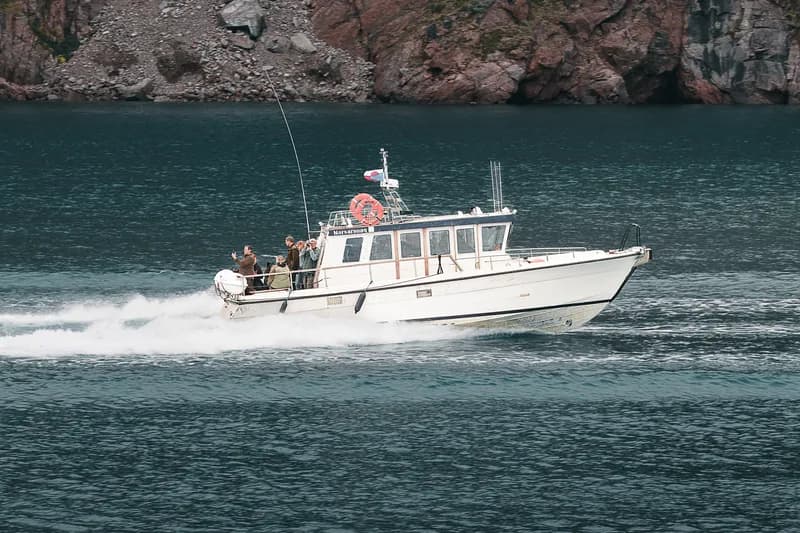
Greenland Energy Co. has postponed plans to drill for oil in East Greenland this coming winter, pushing its target for the necessary permits to the 2027-28 winter season after the island's government issued a strong warning to the venture's joint partner over drilling equipment brought ashore without permission.
| Item | Detail |
|---|---|
| Company | Greenland Energy Co. (NASDAQ: GLND) |
| Joint venture partner | 80 Mile plc, via subsidiary White Flame Energy A/S |
| Project | Jameson Land Basin, East Greenland |
| New permit target | The 2027-28 winter season |
| Estimated resource | 2.35 billion barrels of oil equivalent |
Source: Greenland Energy and 80 Mile statements; resource estimate from the Geological Survey of Denmark and Greenland
The Texas-based company announced the delay on August 11 and its London-listed partner, 80 Mile plc, followed with its own statement on August 12. Greenland Energy said 80 Mile had been told by the Government of Greenland that the project's complexity would require a more extensive review process. 80 Mile holds the exploration licenses and manages the permitting for the venture, and it confirmed the postponement after its own talks with Greenlandic authorities. It amounted to a public reversal of the timetable the company had been promoting to investors. Both companies say the project itself is unchanged.
The equipment that triggered the warning
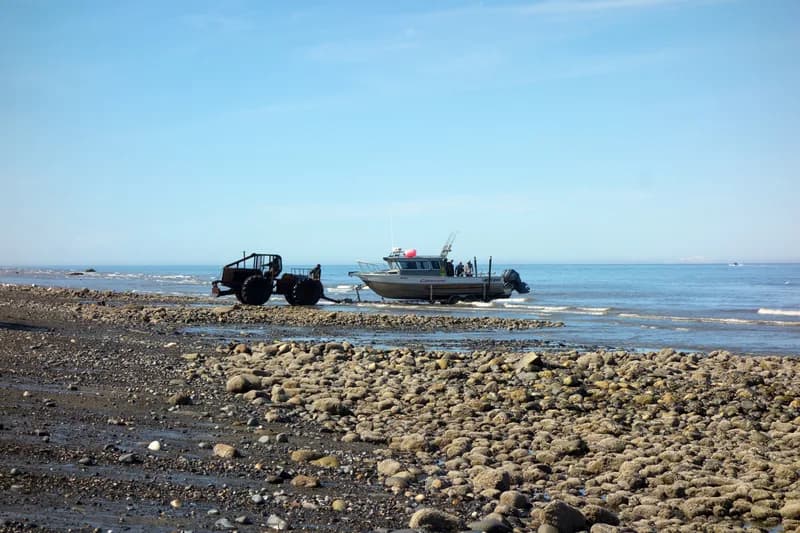
On July 29 and 30, a tugboat towed a barge carrying an excavator and more than a dozen shipping containers into the port of Nerlerit Inaat, a transport hub about 40 kilometers from the settlement of Ittoqqortoormiit and regarded as the gateway to northeast Greenland. The gear had come from 80 Mile's Dundas ilmenite project in the northwest and was stored under a lease with the state-owned operator Greenland Airports A/S. Local residents spotted the barge, and word of the landing reached the authorities soon after.
Operating in the Arctic requires patience, flexibility and a long-term perspective.
Greenland's Mineral Resources Authority issued its formal warning to White Flame Energy on July 30, saying the company had moved the equipment from Tasiilaq to Nerlerit Inaat without the required authorization. The earlier landing approval had expired in December 2025, and a new one was still being processed when the barge arrived. Greenland stopped issuing new oil and gas exploration permits in 2021 over climate and environmental concerns.
The partners said in a joint statement that they take the warning very seriously. They said they had held permission to lease storage space within an existing Greenland Airports area near the port, but had not realized the arrangement also required a separate permit from the mineral resources regulator before the equipment could be brought ashore.
Why the 2026 season was already lost
Jorgen Hammeken-Holm, head of department at Greenland's Ministry of Business and Mineral Resources, told the outlet Danwatch that Greenland Energy would not be drilling this winter, and said it should not expect approval before next summer at the earliest. Working from the government's own published consultation timetable, Danwatch calculated that a permit could not be issued before November 8. That timing falls past the point when heavy equipment can reach the site, because the machinery must arrive by barge while the fjord is free of ice during the summer. By the time any approval could be signed, the water would be closing over again, ruling out delivery for the season.
A wetlands designation under the Ramsar Convention restricts drilling in the basin to the winter months, when the ground is frozen and the surface can bear the weight of a rig. Combined with the November permit horizon, that left no realistic path to begin work during the 2026-2027 season, and the company acknowledged that its September equipment shipment would have to be turned around.
Greenland Energy had 300 containers of drilling equipment ready to ship from Canada in September and had engaged the Canadian shipping firm Desgagnes to move them. Halliburton, one of the largest oilfield services companies in the world, was contracted for drilling services and logistics support, with IPT Well Solutions as project manager, and plans were underway to build a road roughly 3 miles long to reach the drilling site. The company had described an ambitious sealift of bulldozers, trucks, loaders, generators and housing units.
The three licenses covering Jameson Land, known locally as Nunap Qeqqa, were issued to White Flame Energy in 2015 and 2018, before Greenland stopped granting new oil and gas permits in 2021. Officials have said existing licenses would stay valid given the legal difficulty of revoking them, which leaves these among the last active oil exploration licenses anywhere in the territory.
Who stands behind the venture
Greenland Energy reached the Nasdaq in March through a merger with Pelican Acquisition Corporation, a special purpose acquisition company, or SPAC. The combination closed on March 25, 2026, and the stock began trading the next day, with the merger consideration put at $215 million. A follow-on public offering priced on April 27 raised a further $70 million to fund the exploration effort.
- Chairman Larry Swets has been reported by the Guardian to be close to the Trump administration.
- Kenneth Griffin, the Citadel founder who gave $1 million to Trump's second inauguration, bought about 9% in April 2026; a Citadel filing in May put the holding at 9.2%.
- Board member Carol Craig, a US Navy veteran, founded a defense technology company involved in a Pentagon programme supporting Trump's Golden Dome missile defense effort, according to CNBC.
- The company signed a six-part documentary deal with Envoy Media, the production company of the television personality Phil McGraw, known as Dr. Phil.
Under the agreement with 80 Mile, Greenland Energy would fully fund a two-well drilling program and earn a 70% interest in the project, leaving 80 Mile with 30%, at an estimated cost of about $60 million for the two wells. The web of companies overlaps at the top. Roderick McIllree holds senior roles across the venture, sitting as a director at 80 Mile and chairman of White Flame Energy.
The Geological Survey of Denmark and Greenland estimates about 2.35 billion barrels of oil equivalent beneath the basin, while company executives have floated a figure as high as $1 trillion worth of crude. An analyst at Wood Mackenzie noted that 21 wells have been drilled in Greenland, most of them offshore, all of them unsuccessful, at a cost of hundreds of millions of dollars. The geology of Jameson Land appears genetically similar to the mid-Norwegian shelf, a comparison that has kept explorers interested.
Oil plans tangled with Trump's ambitions
Chairman Swets has repeatedly said the oil project is not related to American annexation. Critics point to the dense political network around the company and to the president's stated interest in acquiring Greenland. Two days after the warning to White Flame Energy, Trump posted an image on Truth Social depicting himself looming over a Greenlandic village, which sharpened suspicion that the drilling plan is bound up with his broader ambitions for the territory.
Where the project stands now
Greenland Energy said on August 13 that it is now working toward a targeted permit timeline for winter 2027, a delay of at least a full year. 80 Mile confirmed the postponement following its talks with Greenlandic authorities.
The Greenlandic government has said no permits have been granted to extract oil and that the project remains in the exploration phase. Technical approvals, environmental and social impact assessments, and public consultations must all still be completed before any drilling can be approved, a sequence the company had told shareholders was constructive and on track.
Regulators hold broad authority over the venture. Their formal powers include rejecting applications, issuing stop orders, and, in the most extreme case, withdrawing the underlying exploration licenses from 80 Mile entirely. The government has given no sign it intends to take those steps, but it has been explicit that any equipment delivered without authorization will not be permitted ashore.
A production forecast pushed out of reach
Jeff Landry, the Louisiana governor serving as U.S. special envoy to Greenland, had said in May that production could begin within a year. The permitting setback has pushed that forecast well out of reach, with a first exploration well now targeted no sooner than the winter of 2027. Even that date depends on the company clearing a review the government describes as more extensive than what it had first anticipated.
Greenland Energy remains committed to advancing its oil exploration program responsibly and in full compliance with Greenlandic authorities.
The company has stumbled on messaging before. After a representative told a June community meeting in Jameson Land that Greenland Energy had permission to land equipment, Swets said the enthusiasm for the project had led it to communicate in a way that created confusion. The company had also claimed that the government approved the mobilization and sealift landing of heavy machinery, a statement that proved premature and helped set up the current dispute.
Greenland is home to about 56,000 people, and the standoff has drawn attention far beyond the island. The open question is whether a Nasdaq-listed company backed by prominent Trump donors and advisers, with 300 containers of equipment already staged for shipment, can move faster than a regulator that has so far declined to bend. The government has stressed that future logistics requiring approval must be authorized in advance, and it has framed the July landing as exactly the kind of unauthorized step it will not accept.
For now, the barge has been turned back and the drilling rigs remain idle. Greenland Energy and 80 Mile say they will spend the coming months on the review the government has demanded, aiming for a single exploration well once the permits are in hand.
Sources
- CNBC: Trump-linked oil venture delays Greenland drilling plans after government warning
- Tech Times: Greenland Energy Told Investors Permits Were On Track: Government Source Said Otherwise
- ArcticToday: Greenland Energy postpones winter drilling after landing gear without permission
- Eye on the Arctic (RCI): Greenland issued 'strong warning' after drilling equipment moved despite expired approval
- UPI: Trump-Linked Oil Firm Prepares to Drill in Greenland but Lacks Permits