Widow says skipping Social Security at 62 cost her three years of checks
Social Security pays a widow the higher of two benefits, never both, and an early claim lowers it permanently.
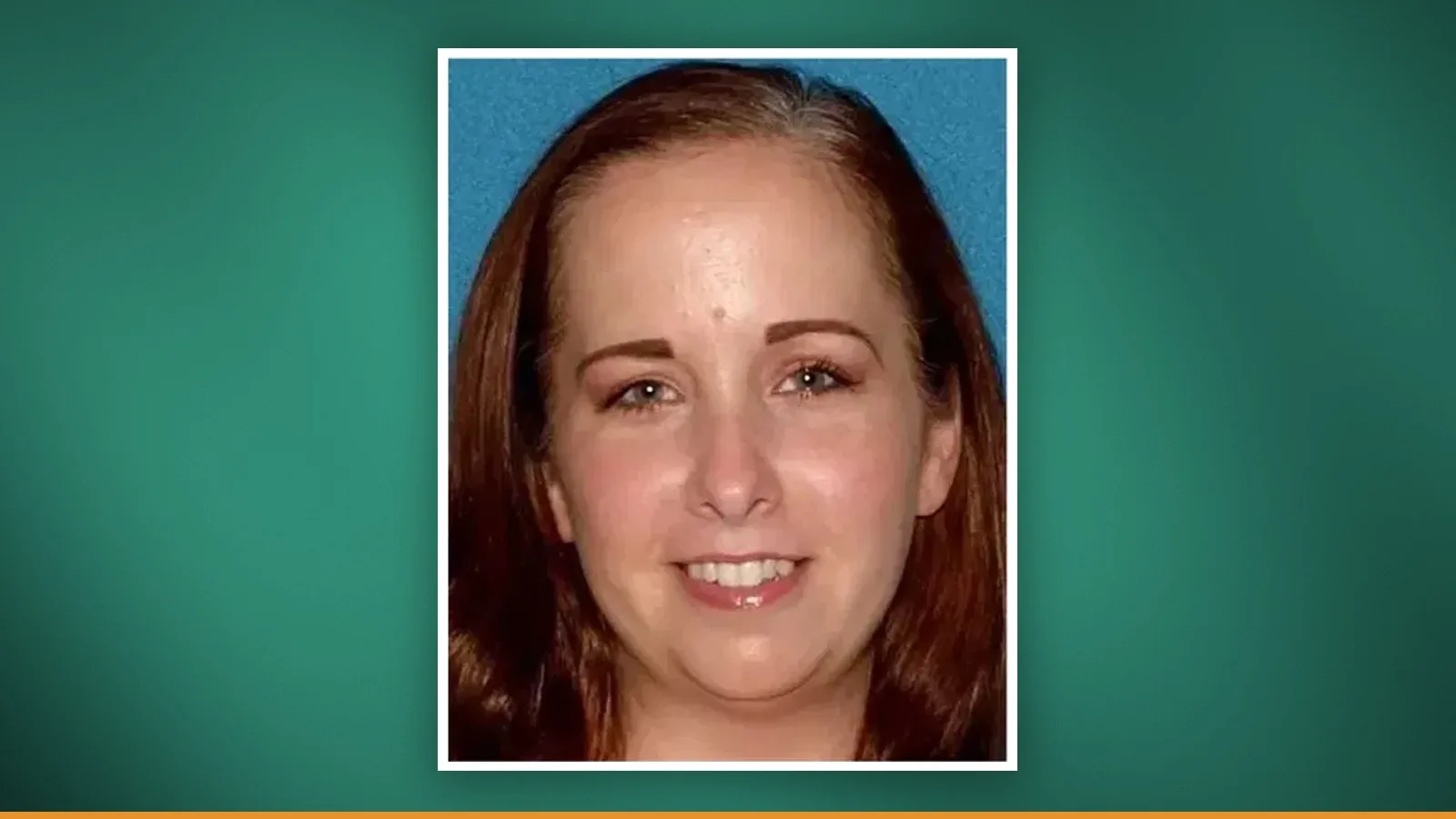
Lina Lambert, a retired California realtor, spent her early 60s planning to wait on Social Security so that she and her husband could draw both of their checks at once, building what she called a fairly good joint income later in retirement. Her husband was three and a half years older. Neither of them claimed at 62. Then he died, and the plan collapsed into a single monthly check.
We would've had a nice income with the two of us, and I would've been collecting for those three years that he lived.
Lambert was 65 and had not yet started her own benefit when her husband died, she told GOBankingRates. Social Security does not pay both a retirement benefit and a survivor benefit; a widow receives the higher of the two. Her own check at that point was about $1,200 a month by her recollection, against a survivor benefit of about $2,500 if she waited until 66.
A joint plan undone by one death
Had she filed at 62, Lambert reckons she would have received about $900 a month. Across the three years her husband was still alive, she says, that money could have gone into investments, retirement accounts or savings while both of them were around to use it. Social Security would have let her switch to the larger survivor benefit later: survivor benefits are exempt from the deemed filing rules, so a widow can take her own reduced benefit first and move across afterwards, or the reverse.
She rejects the idea that early claiming is a grab. Taking the money at 62, she says, would not have been greedy but a matter of collecting what she had earned. Her account tracks a pattern financial planners describe often, in which couples delay to maximise a future joint income and lose the wager when one spouse dies sooner than either expected.
The full retirement age falls between 66 and 67, depending on birth year, and reaches 67 for anyone born in 1960 or later. Filing at 62 does not simply move income earlier. It cuts the monthly amount permanently, by as much as 30 percent for those whose full retirement age is 67, according to the Social Security Administration.
The size of that cut is easy to underestimate. On a full retirement benefit of $2,000 a month, Social Security's own reduction table puts the age-62 check at $1,400. Cost-of-living adjustments raise the dollar figure over the years, but the percentage reduction is fixed for life, so an early filer never closes the gap on someone who waited.
Once an early claim is filed, reversing it is hard.
What the early check costs over time
Break-even math frames the trade-off in plainer terms. Claiming at 62 permanently reduces a benefit by 25 to 30 percent against the full retirement amount, and waiting until 70 raises it by 24 percent for anyone whose full retirement age is 67, or 32 percent for those at 66. Estimates of the break-even age, where the delayed checks finally overtake the early ones, generally land between 78 and 83.
U.S. News put the delay-to-70 break-even near age 82 and a half, using Social Security's estimated 2026 average retired-worker benefit of $2,071 a month after a 2.8 percent cost-of-living rise. Waiting from 67 to 70 means forgoing $74,556 in checks first, money a retiree recovers only by living well into their 80s. That average is not the same as a full retirement amount, so the illustration is a rough guide.
When someone is receiving Social Security, Medicare Part B premiums are typically deducted directly from their benefit check. For those delaying Social Security, premiums must be paid separately, which can impact cash flow planning in the early retirement years.
The standard Medicare Part B premium is $202.90 a month in 2026. Retirees who delay Social Security past 65 pay that out of pocket rather than having it netted from a benefit check, a cash-flow squeeze that some early claimers point to when they argue waiting cost more than the calculators suggested. The premiums do not go away; they simply have to be funded from savings during the gap years.
Why survivor benefits inherit the early cut
Survivor benefits are where Lambert's loss compounds. When a spouse who claimed at 62 dies, the reduced figure carries over: the survivor benefit inherits that permanent cut and never recovers it. A spouse who instead delayed to 70 passes on a benefit lifted by delayed retirement credits, giving the survivor a higher floor for life.
A widow can start survivor benefits as early as 60, two years before any other Social Security payment, but claiming at that age fixes the amount at 71.5 percent of the deceased's benefit for life, a cut of 28.5 percent. Survivor full retirement age runs from 66 to 67 and is not the same as retirement full retirement age; it reaches 67 only for those born in 1962 or later.
- A surviving spouse receives the higher of the two benefits, not both, but can claim one and switch to the other later
- Claiming survivor benefits at 60 reduces them 28.5 percent for life
- A late spouse's delay to 70 lifts the survivor benefit 24 percent above the full retirement amount, or 32 percent if the deceased's full retirement age was 66
- About 3.7 million widows and widowers were receiving survivor benefits in September 2025
The rules are easy to get wrong and expensive to get wrong. A widow who misreads them can permanently cut her monthly income by hundreds of dollars. A surviving divorced spouse can qualify as well, if the marriage lasted at least 10 years, she is 60 or older and did not remarry before 60. The age and duration tests are waived for someone caring for the deceased's child.
Lambert makes a related case for starting at least some income early rather than betting everything on a distant joint plan. Even where one spouse dying young is the unlikely outcome, she argues, a household that has already collected something is better off than one that deferred it all and lost the chance.
Early claims are rising again
About one in four people sign up for Social Security as soon as they qualify at 62, often driven by the everyday cost of living. Social Security's own award figures for 2024 put it at 22.0 percent of men and 23.3 percent of women, with an average claiming age of 65.2. For much of the past decade Americans trended towards claiming later, holding out for the larger checks. That pattern is turning back.
Claims rose about 13 percent in the first half of the 2025 fiscal year, an extra 276,000 filings, according to the Urban Institute's Jack Smalligan and Chantel Boyens, who projected roughly 15 percent for the full year. They tie the reversal to affordability pressure and to doubts about the programme's long-term finances.
Those doubts carry a date. The 2026 Trustees Report, published in June, projects the retirement trust fund's reserves running out in the final quarter of 2032, at which point scheduled benefits would fall to 78 percent without action from Congress. Counting the disability fund alongside it, the date is 2034 and the figure 83 percent. Most analysts still expect lawmakers to act first.
On the finances alone, research points to 70 as the best age to file. Kailey Hagen, a certified financial planner writing for The Motley Fool, argues that finances are only one part of the equation. Waiting is a bet on longevity, and on staying healthy enough first to keep working and then to enjoy the years that follow.
| Claiming age | Effect on monthly benefit | Note |
|---|---|---|
| 62 | Reduced by up to 30 percent | Earliest age a worker can claim |
| 67 | Full benefit, 100 percent | Full retirement age for those born in 1960 or later |
| 70 | Increased 24 to 32 percent | Delayed retirement credits stop accruing |
The right age depends on circumstances no table can capture: health, a physically demanding job, the size of a savings cushion, and whether a spouse will one day lean on a survivor benefit. The Motley Fool lists poor health, a short life expectancy and financial need as the situations where filing at 62 is the sound move rather than the regretted one.
Undoing a claim is possible but limited
Reversal exists within narrow bounds. Anyone who files can withdraw the application within 12 months, but must repay every dollar received, including money withheld for Medicare premiums and tax, and may do so only once in a lifetime. Past that window, a claimant who has reached full retirement age can suspend payments instead and earn 8 percent a year up to 70. Suspension carries no repayment and no limit on how often it is used.
For Lambert, none of those levers applied. The plan she and her husband made looked prudent while both were alive and working, and it came apart the instant one of them was gone. Her message now is blunt: taking at 62 what a person has earned is not greedy. Social Security publishes individual benefit estimates at ssa.gov, and the figures depend on earnings history, birth year and claiming age.
Sources
- GOBankingRates via Nasdaq: I'm Retired and Regret Not Taking Social Security at Age 62
- A Magical Mess: I'm Retired and Regret Claiming Social Security at 65
- Yahoo Finance: Regret Taking Social Security at 62? What to Do If the Decision Haunts You
- Capitol Skyline: Social Security at 62, The Filing Choice Many Retirees Wish They Reconsidered
- The Motley Fool: Why Some Retirees Should Claim Social Security at 62
- SeniorSimple: When to Claim Social Security, Age 62 vs 67 vs 70
- U.S. News: How to Calculate Your Social Security Break-Even Age (2026)
- Benefora: New Social Security Rules for Widows in 2026