TSA lets non-fliers reach the gate again at 13 airports
The Gateside by TSA PreCheck pilot requires an approved pass and still routes visitors through security screening.
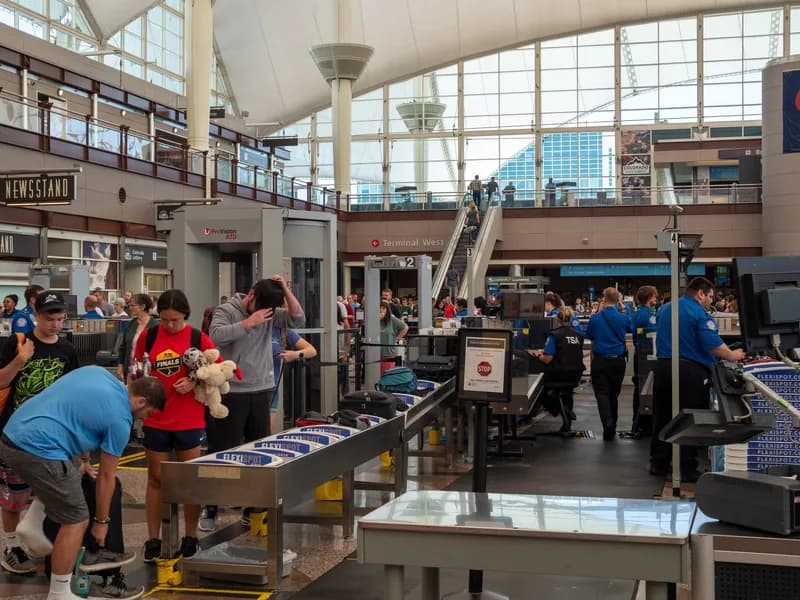
The Transportation Security Administration has begun letting some people without plane tickets walk back through airport security, launching a pilot program that gives approved non-travelers access to the gate area at 13 U.S. airports. The program, called Gateside by TSA PreCheck, started on September 2 and marks a rare loosening of restrictions that have defined air travel for more than two decades.
It is a limited reversal of one of the most visible security rules imposed after the September 11, 2001, attacks, when access beyond checkpoints became largely restricted to ticketed passengers and authorized people. The pilot does not apply at every airport, and it does not remove screening.
Approved visitors still clear TSA screening before entering the secure area, presenting identification and passing through the checkpoint the same way ticketed passengers do. What changed is who may go past the checkpoint, not what they must do to get there. The screening requirement is the core of the post-2001 system, and it stays intact.
A rule from after 9/11 eases
Before the 2001 attacks, people who were not flying could generally pass through airport checkpoints and spend time in gate areas alongside travelers. The attacks led to the creation of the TSA and far tighter restrictions on non-passengers, with narrow exceptions for those assisting unaccompanied children, passengers with disabilities and others with specific needs. Gateside loosens that access restriction while keeping the screening that came with it, giving a limited return to the pre-9/11 experience.
To take part, a visitor must have TSA PreCheck benefits or a Known Traveler Number and apply through the TSA website one to three days before a planned visit. There is no additional fee beyond the cost of TSA PreCheck, which is a paid membership. Those approved enter through the TSA PreCheck lane with an acceptable form of identification, the same dedicated lane that ticketed PreCheck members already use for faster screening, though officers can direct visitors to another lane depending on how the airport is running.
We have a lot of people, especially our passengers, that may have elderly parents or younger kids who are traveling. They want them to have that experience. They want to take them and be with them right to the end of the process, and be there at the gate to see them off.
Officials at Mesa Gateway Airport, one of the participating sites, said its relatively short security wait times make it well suited to testing the program, though availability can be restricted during particularly busy periods. The airport announced its selection on September 3.
Whether it's having lunch with a friend or loved one and walking them to their gate, or meeting them when they return home, this new program enhances the travel experience.
Once past the checkpoint, approved visitors can accompany passengers to their departure gates, meet arriving travelers, and spend time in the restaurants and shops located beyond security, including during a layover. TSA describes the pass as a way to bring back gate welcomes and send-offs, join a friend for lunch or dinner on a long layover, and greet service members returning from deployment.
Screening stays in place
Visitors go through the same TSA PreCheck screening lanes as ticketed passengers and must show an acceptable form of identification. The agency says Gateside is the only way non-travelers can reach the secure area using the PreCheck lanes. A gate pass issued by an airline or a separate airport visitor program still requires the standard screening lines, which are typically longer than the PreCheck lanes.
The pass does not function as a boarding pass, and it does not allow a visitor to board an aircraft.
The authorization covers a single calendar day, with re-entry allowed during it, and does not serve as a standing pass for repeated entry to the secure area. Visitors are held to the same airport code of conduct as ticketed passengers and must follow federal regulations under 49 C.F.R. Part 1540, and they can be asked to leave, have the pass revoked, or face civil or criminal penalties for violations.
Children can take part when they are added to an approved parent or guardian's reservation through an add-visitor option. TSA says a child must appear on the registration before the group reaches security, and the accompanying adult should be ready to log in and show approval status to the officer at the checkpoint. There is no separate application for the child beyond that registration step.
Airports have a business reason to welcome more foot traffic. Every additional person inside the secure area is a potential customer for the restaurants and shops beyond the checkpoint, where travelers already spend money before and between flights. TSA has promoted Gateside as an effort to bring back moments that once defined air travel, when meeting a plane at the gate was routine and the terminal was open to anyone.
Airports already ran their own passes
The pilot arrives as airports around the country experiment with ways to let non-ticketed visitors into secure areas while keeping screening in place. San Diego International Airport, one of the Gateside sites, already runs its own SAN Pass program for approved visitors in Terminals 1 and 2, though those visitors use the general screening line and cannot use TSA PreCheck or CLEAR. Ontario International Airport, John Wayne Airport and Palm Springs International Airport have introduced their own visitor-access programs as well.
At Salt Lake City International Airport, airlines can already issue passes for people accompanying minors, elderly travelers or passengers with accessibility needs who are flying alone, and in some cases to meet arriving passengers who need special assistance leaving the airport. Gateside is broader: a visitor does not need to be helping a passenger with a specific need to reach the gate.
The program could have a particular effect in Salt Lake City, where airport reunions and farewells are a familiar sight. Returning missionaries are among the travelers whose arrivals draw large groups of family and friends, who under Gateside could meet them at the gate rather than waiting in the public part of the terminal.
Gate goodbyes return at 13 airports
Gateside by TSA PreCheck lets approved non-travelers pass through security and reach the gate at 13 airports, something that has generally not been possible since airport security rules tightened after 9/11. It remains a pilot rather than a nationwide change to airport security. Taking part depends on being a TSA PreCheck member or holding a Known Traveler Number, not on knowing someone who is flying.
Where the pilot is available
TSA partnered with 13 airports for the initial launch and says the program will roll out to more locations across the country in the coming months. The agency has not committed to bringing it to every airport. The current list runs from large hubs such as Los Angeles, Dallas Fort Worth and Detroit to smaller fields in Wichita, Omaha and Little Rock.
The complete set of participating airports for the initial launch, with their three-letter airport codes, appears in the list below.
- Mesa Gateway Airport (AZA), Mesa, Arizona
- John Glenn Columbus International Airport (CMH), Columbus, Ohio
- Dallas Fort Worth International Airport (DFW), Texas
- Detroit Metropolitan Wayne County Airport (DTW), Michigan
- Wichita Dwight D. Eisenhower National Airport (ICT), Kansas
- Indianapolis International Airport (IND), Indiana
- Harry Reid International Airport (LAS), Las Vegas, Nevada
- Los Angeles International Airport (LAX), California
- Bill and Hillary Clinton National Airport (LIT), Little Rock, Arkansas
- Will Rogers World Airport (OKC), Oklahoma City, Oklahoma
- Eppley Airfield (OMA), Omaha, Nebraska
- San Diego International Airport (SAN), California
- Salt Lake City International Airport (SLC), Utah
Availability may be limited during peak times, TSA says. Visitors cannot simply arrive at the checkpoint and request access; they must apply online in advance and wait for approval before heading to the airport. Having a friend or relative with TSA PreCheck does not by itself grant access, because each visitor must qualify independently. Applications open one to three days before the planned visit.
What comes next
Applicants create or log in to a login.gov account, enter their personal information and Known Traveler Number in the application portal, submit the request and check their approval status on a dashboard. Those approved bring an acceptable form of ID to the TSA PreCheck lanes on the day of the visit, and parents traveling with children should be prepared to show their approval on the dashboard to the officer.
TSA has not said every airport will adopt Gateside, and it has framed the 13-airport rollout as a way to evaluate how the extra visitors affect checkpoints and airport operations before any wider expansion. The agency is initially limiting the pilot to a small group of airports for that reason. For now, the walk to the gate for people without a ticket is back only where the pilot is running.
Sources
- Newsweek: TSA Launches Major Airport Security Change, Loosening Post-9/11 Curbs
- theGrio: TSA Gateside program lets non-fliers visit airport gates
- Travel And Tour World: TSA Gateside Program Changes US Airport Experience
- TownLift: New TSA program allows non-ticketed visitors to go through security at SLC
- AZFamily: Mesa Gateway brings back gate-side goodbyes under new TSA program
- TSA: Gateside by TSA PreCheck (official page)