Trump says towns opposing data centers will be backwards and poor
A Gallup poll found 71% of Americans oppose data centers in their area, with strong support at just 7%.
President Donald Trump on Monday defended the construction of artificial intelligence data centers and warned that communities opposing them risk ending up backwards and poor, as Republicans confront a voter backlash over the projects ahead of November's midterm elections.
A Gallup poll conducted in March found that 71% of Americans oppose the construction of a data center in their area to support AI technology, with nearly half, 48%, strongly opposed. Strong support for the facilities has become almost non-existent, registering at just 7%.
'The only reason that communities throughout the U.S.A. should not want Data Centers is if they want to end up being backwards and poor,' Trump wrote in a Truth Social post. He added that if the country kills 'the Golden Goose, you will only have yourselves to blame,' and said China 'could not be happier with this anti Data Center movement.'
Opposition that crosses party lines
Three-quarters of Americans say they would oppose a new data center being built near where they live, and more than six in 10 say they would strongly oppose it, according to a Heatmap Pro poll released August 19. The survey of 2,045 registered voters was conducted by Embold Research from August 8 to 13, covering all 50 states and Washington, D.C., with a margin of sampling error of plus or minus 2.3 percentage points.
Heatmap has asked the same question four times in the past 12 months. In August 2025, respondents were roughly evenly divided, with about 43% in support and 42% opposed; by May, seven in 10 were opposed. Robinson Meyer, Heatmap's founding executive editor, wrote that Americans have moved 33 points against data centers over that period, a shift that runs across age, gender, income, party identification and the rural-urban divide. By his account, the facilities are underwater with every part of the electorate.
- 43 points underwater among Republicans
- 65 points underwater among independents
- 75 points underwater among Democrats
- 63 points underwater among rural voters
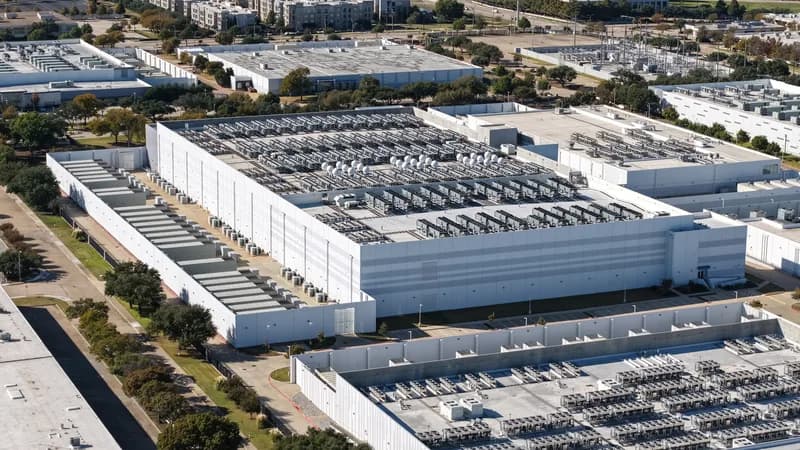
Opponents across the country have raised concerns about electricity costs, power demand, water use and other local impacts. The facilities cover large areas of land, require extensive amounts of electricity to operate and need substantial water to cool their equipment, feeding worries about the environment and local electric bills. AI data centers house the computing equipment used to train and operate models developed by companies including OpenAI and Anthropic.
The Gallup poll found more people oppose an AI data center in their area, 71%, than oppose a nuclear power plant, 53%. It also showed that 63% of Republicans are strongly or somewhat opposed to a data center where they live, a stance that does not match President Trump's argument that smaller communities will benefit from jobs, money and lower taxes.
Data centers become a midterm flashpoint
Data centers have become a hot-button issue ahead of November's elections, which will decide control of both chambers of Congress. In an August 18 memo, the National Republican Senatorial Committee warned that public perception of the facilities had turned negative and said the issue was hurting Republican Sen. Jon Husted in Ohio, where its own private polling showed him in a 'dead heat' with Democratic challenger Sherrod Brown. State legislatures have taken up the issue as well.
- Georgia's HB 1012, now dead, would have barred new permits until March 1, 2027
- Oklahoma's SB 1488, which did not pass, would have halted construction until November 1, 2029
- New Hampshire's HB 1265 was killed by the House on March 11
- Vermont's S.205 would run a moratorium through July 1, 2030 and is still in committee
New York's legislature passed the Responsible Data Center Development Act in June, though it has not been enacted; Governor Kathy Hochul instead issued Executive Order 62 on July 14, pausing state environmental permits for up to a year while the Department of Environmental Conservation prepares a generic environmental impact statement. Good Jobs First, which tracks state subsidy policy, counted at least 12 states with filed moratorium bills as of March 9. Heatmap Pro counted more than 530 local data center laws, across more than 500 counties and municipalities, as of July 30.
The scale of the backlash has caught the attention of Wall Street. In an August 28 report, Wolfe Research said investors have asked in nearly every meeting over the past month how the voter backlash against data centers will play out, and pointed to 60-point drops in net support for local construction across party lines over the past 12 months. Analysts called the pace of the shift unlike anything they had tracked before.
St. Louis becomes a battleground
In St. Louis, a stretch of old warehouse space has become the center of one of the country's most closely watched fights over the projects. David Daneshforooz, chief executive of TerraWatt, plans to develop a data center at the site and casts it as a chance to revive aging industrial property, describing much of the city's infrastructure as old and decaying.
Daneshforooz told CBS News that data centers, done responsibly, could bring industry back into decaying communities. He argued that storing Americans' information on U.S. soil is safer than housing it in a country the United States cannot regulate or control, a national-security case that developers across the industry have used.
For many in the community, the sales pitch has fallen flat. Kasey Fowler-Finn, a biologist at Saint Louis University, is a plaintiff in a lawsuit filed on Friday that seeks to halt the development. She has pointed to noise, water use and electricity use, and to what she calls a lack of transparency about the project's environmental and noise impacts, saying no environmental impact assessment or low-frequency sound study has been done.
Daneshforooz has attributed part of the resistance to fear of AI, telling CBS News that 'the AI side of it, I think, is just really out of fear' and that 'it's the unknown.' Fowler-Finn rejects that framing. 'It is not a baseless panic,' she said.
It is a worry that's based in real scientific evidence. We have to be very careful about where and how we install these large data centers.
The developers have promised to pay for their own electricity, use a closed system for water and invest hundreds of millions of dollars in the local school system. It is a playbook that has worked in other cities, according to CBS News, but so far it has not persuaded St. Louis, where the fight has drawn national attention.
Local leaders draft new zoning rules
City, county and state leaders around St. Louis have spent the past year trying to put guardrails on data center developments, St. Louis Public Radio reported. After news broke last September that a developer hoped to build a data center in the Armory building in Midtown, Mayor Cara Spencer issued an executive order directing planning staff to draft zoning rules, an effort led by City Planning Executive Miriam Keller.
The proposed rules classify data centers by size, set where they can be located and impose renewable energy requirements along with light and sound restrictions. Ward 1 Alderwoman Anne Schweitzer presented the bill to the Board of Aldermen. After the Planning Commission rejected an earlier set of amendments, aldermen returned in special session on August 28 and tightened the renewable energy and sustainability requirements. The Planning Commission will consider the rules a second time.
One large project is already moving forward, the Armory Innovation District, a $3 billion, 120 megawatt center near the Armory in Midtown. Because the zoning rules are unfinished, the city attached conditions to the project's permit, including a closed-loop cooling system to conserve water and a requirement that at least 50% of its energy come from renewable sources within five years.
Some local leaders who initially pushed for outright bans now say they are open to large data centers if the rules protect their communities. St. Louis County is weighing zoning for unincorporated areas that would sort the facilities by size and energy use, treating anything under 10,000 square feet and 3 megawatts as micro and defining developments larger than 250,000 square feet and using more than 50 megawatts as major data centers.
Who pays for the power
Who covers the cost of connecting the facilities to the electric grid runs through much of the debate. An analysis published by the Union of Concerned Scientists in September 2025 identified 130 transmission projects approved in 2024 by utilities in seven PJM states solely to connect private data centers, at a combined cost of about $4.3 billion. More than 95% of those projects were charged to general transmission rates recovered from all retail customers rather than billed to the companies requesting the connections.
Representative Josh Riley of New York introduced the Fair Data Act, H.R. 9655, in July. It would require data center developers and operators to pay for the power generation, transmission and distribution upgrades their facilities need rather than passing those costs to ratepayers. Riley pressed the case at an event in West Oneonta on August 20. Mike Jacobs, a senior energy manager at the Union of Concerned Scientists, conducted the transmission analysis.
The big tech companies rushing to build out massive data centers are worth trillions of dollars, yet they're successfully exploiting an outdated regulatory process to pawn billions of dollars of costs off on families who may never even use their products.
The NRSC memo framed the stakes in blunt terms. If Husted loses and data centers get the blame, it warned, politicians across the country would take notice and would not go near the next one. Republicans hold a 53-47 majority in the Senate heading into the vote.
Sources
- CNBC: Trump says U.S. communities opposing AI data centers could end up 'backwards and poor'
- NationofChange: Three-quarters of Americans would oppose a data center near their home, new polling finds
- Townhall: Americans Are United Against Data Centers
- CBS News: St. Louis becomes the latest battleground in fight over data centers
- St. Louis Public Radio: What you should know about data center regulations around St. Louis