Teens push back as school phone bans reach 39 states
Adults have swung the other way, with a majority backing bell-to-bell bans for the first time in Pew's polling.
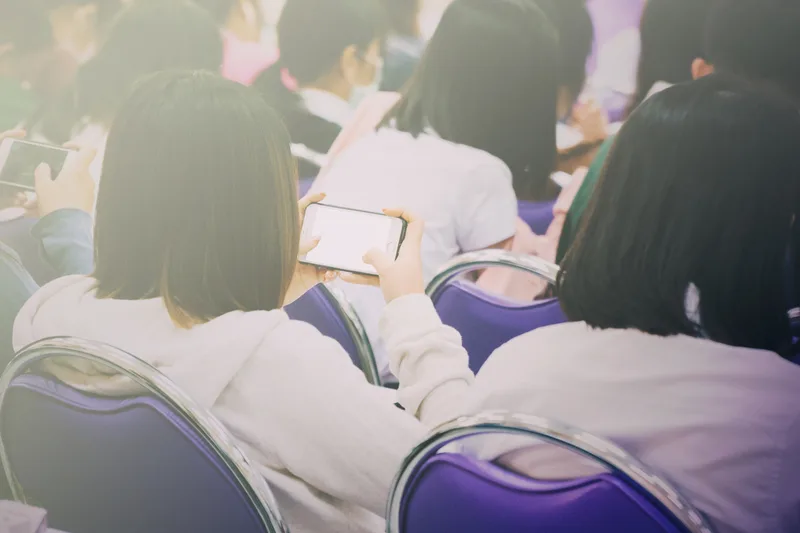
Cellphone bans in public schools have reached 39 states as of August 2026, and the students they target remain the group least convinced the rules will help. Bans that began in a scattering of districts a few years ago now govern tens of millions of children. Yet teen support for the policies sits far below the level adults have reached, and in several states students have organized against them.
- 39 U.S. states now bar student cellphone use during the school day as of August 2026, according to U.S. News.
- A Pew Research Center survey of 1,458 teens found 41 percent back classroom bans, while 73 percent oppose all-day restrictions.
- More than 100 Atholton High School students in Howard County, Maryland, walked out in March 2025 over a rule that bars phones even at lunch and between classes.
- Teens most often cite the ability to reach family in an emergency as their strongest objection to full-day bans.
The expansion has moved fast. Fewer than a dozen states had statewide rules at the start of 2025. Illinois took the total to 39 when it acted on July 28, and governors in Illinois, New Jersey, Vermont, Michigan and California have all signed or implemented statewide rules within the past two years.
What the surveys actually show
A Pew Research Center survey conducted in the autumn of 2025 found that only 41 percent of teens aged 13 to 17 support banning phones during class. Roughly half oppose even that limited rule, and 9 percent are unsure. Pew questioned 1,458 teens between September 25 and October 9, 2025.
Support falls sharply when the rule stretches across the whole day. About one in five teens back a bell-to-bell ban that also covers lunch and passing periods, while 73 percent oppose it. Adults read the same question differently, and have moved further since. In Pew's most recent adult survey, published on July 29, 2026, 77 percent supported banning phones during class and 48 percent backed a full-day ban, up from 36 percent in 2024. It was the first time more adults supported bell-to-bell than opposed it.
The gap between the groups is the clearest single finding in the recent research, and it has widened. Adults, and parents in particular, increasingly favour the rules, while teens stay resistant, above all to policies that cut phone access during non-instructional time. A separate University of Southern California survey, published by Brookings in January 2026, found half of teens saying their school's rules had changed from the previous year and about half saying enforcement had grown stricter.
Where the new laws stand
Vermont became the 29th state to restrict school phones when Gov. Phil Scott signed H.480, Act 72, on June 27, 2025. The bell-to-bell ban applies to all K-12 students for the 2026-27 school year. A handful of districts had adopted their own rules earlier, but the state law made them universal across every school.
New Jersey followed a similar path. Gov. Phil Murphy, in his final weeks in office, signed legislation on Jan. 8, 2026, requiring every public district to restrict phones and other internet-connected devices during the school day beginning in 2026-27. The law leaves room for emergencies and medical accommodations.
Illinois moved next. Gov. JB Pritzker signed SB 2427 on July 28, 2026, requiring bell-to-bell device bans in every district before the 2027-28 school year. The rule covers high schools as well as elementary and middle schools, though districts may opt to allow high school students their phones at lunch and passing periods. Districts with existing policies that differ may keep them until 2030-31. Pritzker said the goal was to remove the distractions that keep students and teachers from focusing on learning.
Michigan and California took narrower routes. Gov. Gretchen Whitmer signed House Bill 4141 of 2025, enacted as Public Act 2 of 2026, on Feb. 10, 2026, effective for 2026-27; it covers instructional time only, leaving passing periods and lunch to districts. California's Phone-Free School Act, AB 3216, was signed in September 2024 and set July 1, 2026 as the deadline for every district to have a policy in place. Both carry exemptions for special education plans, teacher-directed lessons, medical needs and emergencies.
A fight over trust
Much of the teen objection is less about the phones than about what the rules imply. Students in Vermont said the bans treat them as incapable of managing their own behaviour. Isa Harrington, then a rising 11th grader at South Burlington High School, told Seven Days that the state gave teens no chance to prove they could regulate themselves. Her complaint was about trust, not classroom focus.
Teens also describe the device as inseparable from their lives outside the classroom, which is why bans covering lunch and passing periods draw the sharpest objections.
You're coming in right out of the gate, and you're expecting that we won't be able to self-regulate.
There is an argument for that position. Bans, the case goes, forgo a chance to teach self-control and digital citizenship, and Pew found in December 2024 that 95 percent of teens have or can get to a smartphone, so whatever habits they form will follow them into adult workplaces.
Candice Breaux, career and technical education supervisor at West Baton Rouge Parish Schools in Louisiana, made the same point to Education Week in June 2024, asking what a ban accomplishes if students never learn when and how phone use is appropriate before they enter the workforce. Researchers add that the devices figure into how teens build identity and handle social situations with less adult support, part of a developmental process some experts warn against fighting with blanket rules.
The teen position is not blanket opposition. A University of Southern California survey, published by Brookings in January 2026, found 68 percent of teens preferred class-time-only rules while only 8 percent backed bell-to-bell. Pew's figure for teens opposing a full-day ban is 73 percent. Rebekah Munro, a 17-year-old at Santa Fe High School in Edmond, Oklahoma, is among the minority who support a full ban, saying it has left her reading more science fiction and less glued to a screen. Oklahoma's ban as passed in 2025 ran for one school year, with legislation pending to extend it.
The safety argument
Beyond trust, students return again and again to safety. Sam Snyder, a senior at Beloved Community Charter School in Jersey City, said access to a phone matters when a student needs to reach a parent or when something goes wrong during the day. In an era of school shootings, teens argue, cutting the line to family can be dangerous rather than merely inconvenient.
Parents share the worry even when they support academic limits. Around 90 percent say they want a guarantee they can reach their child in an emergency, a demand that pushes many districts to write exemptions into their policies.
Walkouts in Maryland
The most visible pushback came in Howard County, Maryland. Students at several schools staged peaceful walkouts in early 2025 over a policy that took effect March 3 and barred phone use at any point in the school day, including lunch and passing periods. The county Board of Education had approved the rule 7 to 1 in January 2025.
I think in these times of uncertainty, taking that away where a student in high school cannot check their phone during lunch and in between classes can be dangerous.
Mosely cast the lone dissenting vote. Under the policy, administrators can confiscate a phone until the end of the day, and repeat offenders have devices held until a parent or guardian collects them. Walkouts were organized at Atholton and Howard high schools, with additional actions planned at Long Reach and Mayfield Middle School. Students also lobbied board members directly, prompting Vice Chair Linfeng Chen to voice support for phone use at lunch and between classes.
Little proof the bans work
Whether any of this changes behavior is an open question. A nationally representative 2025 University of Southern California survey found that most teens attend schools with restrictions, yet estimated they still spent about 1.5 hours on their phones during the school day regardless of policy. Nearly half reported using phones in class.
Most parents and teens told researchers the policies had little effect on learning, relationships, bullying or well-being, though parents were more likely to see benefits. Supporters, including teachers, describe classrooms full of phones as chaotic, comparing the task to teaching at Disney World over a loudspeaker. Experts who study the bans say hard evidence that they achieve their stated goals remains scant.
- Teens estimated about 1.5 hours of phone use during the school day, whether or not their school had a ban.
- Nearly half of teens reported using a phone in class despite the restrictions.
- About 99.7 percent of U.S. public school principals say their schools have a smartphone policy.
- About 95 percent of teens have or can get to a smartphone, Pew found in December 2024.
Support patterns complicate the case for the strictest rules. The USC study found that backing for restrictions was highest among teens whose schools still allowed phone use during non-instructional periods, which suggests students accept classroom limits more readily when they keep some access during the day.
An expanding experiment
The rules keep spreading. Eight years after France enacted the first national ban in 2018, 106 countries now have them, according to UNESCO, and more than 900 million students worldwide will be covered as the year begins. Angela Duckworth, a University of Pennsylvania psychologist who co-authored a 2026 study on the U.S. bans, called the moment a reflection of profound concern about what technology is doing to people. For the teens living inside the policies, the argument is far from settled.
Sources
- pewresearch.org: About 4 in 10 teens support cellphone bans in classrooms; fewer back all-day restrictions
- patch.com: School Cellphone Bans Expand As Students Return To Class In 2026
- sevendaysvt.com: Students Sound Off on New Cellphone Ban for Schools
- chalkbeat.org: School cellphone bans: Teens open to moderate restrictions, research finds
- cbsnews.com: Students protest over new classroom cellphone policy in Howard County
- usnews.com: 39 U.S. States and 106 Countries Now Prohibit Phones in Class
- sliceofculture.com: New Jersey's Statewide Cell Phone Ban Is Coming To Schools. How Will It Work?
- nprillinois.org: Pritzker signs school cellphone ban to avoid student distractions
- britannica.com: Cell Phones in Schools, Pros, Cons, Debate