Students turn to smartwatches as 39 states ban school phones
Wearables and basic phones are filling the gap, with nearly 98% of students now attending a school that restricts devices.
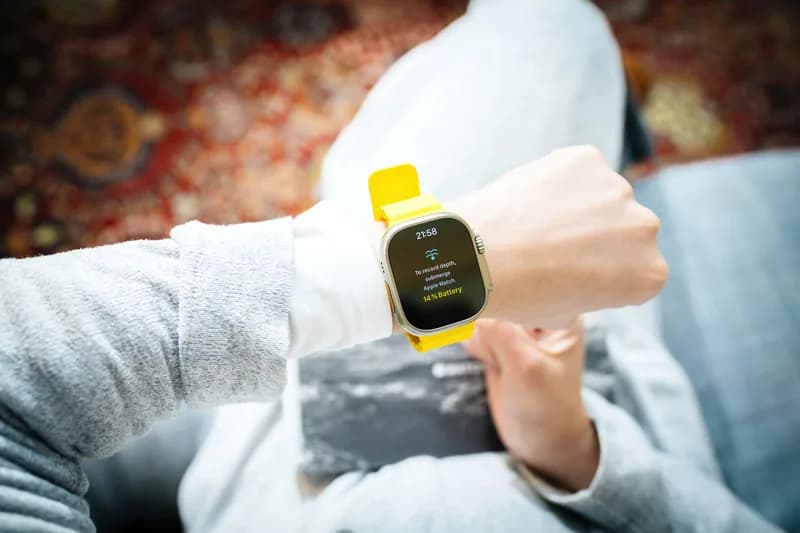
Once schools take away a student's phone, the wrist is the next place to look. Smartwatches are among the tactics educators describe when asked how children get around cellphone rules, and the rules are now nearly everywhere: at least 39 states and the District of Columbia require districts to ban or restrict phones, a count that rose again in late July when Illinois acted. Several states have already started writing smartwatches into the bans themselves.
Many current smartwatches connect to the internet and can receive texts, calls and app notifications, which lets students message one another without ever reaching for a phone. Teachers and administrators have singled out the watches, and some have noted that parents use them to reach children during the day.
The rules now touch nearly every classroom. A University of Southern California survey published by Brookings in January found that 98 percent of students attend a school with some restriction on phones: 55 percent bell to bell, just over 40 percent covering class time only. Two percent had no rules at all.
How students slip past the rules
Asked how students try to beat those policies, teachers, principals and district leaders offered a catalogue. Smartwatches came up, and so did slipping a calculator into a Yondr pouch and handing that over while the phone stays in a pocket. A Nevada high school teacher summed it up: students are sneaky.
The workarounds go further. The same Nevada teacher described students growing their hair long to hide wireless earbuds and starting music before dropping a phone into a pouch that does not block the signal. A Wisconsin teacher said many wedge phones between their legs to make it awkward for a teacher to intervene. A Texas science teacher said some route around the rules entirely, using messaging apps on school-issued classroom computers to reach the same social platforms the ban was meant to keep out.
Lockable pouches have not settled the question. One California middle school gave up after students broke the locks or cut the pouches open, and now simply asks for phones to be off and in backpacks. The pouches also cost money: roughly 25 to 30 dollars a student, plus unlocking bases and replacements for the ones lost or wrecked during the year.
A watch is a different problem. It sits in plain sight, feels like a normal accessory and cannot be dropped into a pouch at the classroom door.
Why the watch worries schools
Smartwatches carry the same distraction risks as phones and the same threat to academic integrity, because a student can read a message or look up an answer during a test. Screen size is the main limit; a watch does not match a phone's experience, but students can still text, open apps, visit websites and scroll social feeds. That is enough for schools that spent years trying to clear phones from desks.
District policies are catching up. A summer survey by the EdWeek Research Center found that 11% of district leaders reported a complete smartwatch ban, while 34% allowed the devices only under specific conditions, such as during recess and lunch. Ownership is still climbing: a 2021 Pew Research Center study found only 13% of teens owned a smartwatch, against 95% who had access to a cellphone.
I look at what parents are saying, and they are saying, 'pass whatever you want; not my kid.'
Parents are a big reason the watches stay on. Many rely on location-sharing to follow a child through the day, and that wish to keep a direct safety connection is a central reason families push back against bans on wearables. The friction between parental safety and the schools' goal of fewer distractions runs through nearly every policy fight, and it is why some administrators have written smartwatch rules before a single watch became a problem. How much teens themselves want the rules depends on the question. The USC survey found 76 percent expressing a preference for some restriction during the school day, but Pew, fielding over the same period, found only 41 percent supporting a ban during class and 73 percent opposing one that runs all day. Most teens want a limit; far fewer want a ban.
What students want instead
Two devices keep surfacing as the replacements students and parents gravitate toward once smartphones are gone: smartwatches built for children and basic 'dumb phones' that only call and text. Companies have moved quickly to serve both, redesigning hardware and features specifically for a school day that now treats any connected screen as a problem.
A market has grown up around the gap. Cosmo, a Denver company that makes the JrTrack line of children's smartwatches, says its new School-Fi system uses GPS to work out when a child arrives at or leaves a school and to change what the watch will do, without the parent or the child touching it. That is the company's account; nobody outside it has tested the claim.
Alongside it came the JrTrack 5 SE, a watch that clips to a backpack instead of sitting on the wrist, aimed squarely at away-for-the-day rules. It lists at $129.99, with a monthly membership on top. Whether a device built to satisfy a parent and a school policy at once manages either is another question.
A School Explorer Clip, a colorful silicone case that attaches to a backpack, sells for $15.99 through the company and on Amazon. Every membership plan includes calling, messaging, GPS tracking, parent-approved contacts and customizable controls.
Michigan opens the door to dumb phones
Michigan Gov. Gretchen Whitmer signed a law on February 10, 2026, that bars smartphones from public school classrooms starting in the 2026-27 school year. Students may still bring phones to school, but they cannot use smartphones during instructional time, and they will still be able to reach their phones between classes or at lunch. The law explicitly allows basic phones that send texts and make calls but cannot reach TikTok, Snapchat or other apps.
The measure leaves enforcement to local officials and carves out medically necessary tools that run through a phone, such as glucose monitors, along with district-owned devices used for instruction. A companion law from state Sen. Dayna Polehanki requires schools to set a protocol for phone use during an emergency, such as a bomb threat or an active-shooter situation.
When Whitmer first called for the ban in her 2025 State of the State address, only nine states had adopted school cellphone rules. The count has grown quickly since.
Where the bans are strictest
The strictest measures run bell to bell, keeping phones, earbuds and smartwatches out of a student's hands for the entire school day rather than only during class. In 22 states and the District of Columbia, such laws now cover the full day. Florida moved in stages, banning phones during instructional time in 2023 before upgrading to a full-day ban in elementary and middle schools in 2025.
Enforcement is not free. Pouches run $25 to $30 a student, and kitting out a school of a thousand costs somewhere between $30,000 and $50,000. District spending runs from $5,000 to more than $5 million depending on size. A policy alone costs nothing to adopt and everything to enforce, which is the part schools find hardest.
- Texas
- New York
- Virginia
- Louisiana
- Alabama
- Nebraska
The market around the bans is changing. Beyond pouches, districts are turning to phone lockers and locker charging stations, and a growing number pair the restrictions with digital wellness lessons rather than treating a ban as a stand-alone fix. Integration with broader student safety programs is also increasing as administrators look for approaches that outlast the novelty of a new rule.
- Lockable pouches, at $25 to $30 per student
- Phone lockers installed at school entrances
- Locker charging stations for stored devices
- Digital wellness lessons paired with the rules
Evidence on results is starting to arrive. Education Next published a study in May 2026 of one of the nation's 10 largest districts, in Florida, which barred phones, earbuds and smartwatches for the whole day. Researchers tracked test scores, attendance and discipline, and used geolocated phone-use data to watch behavior change. They found the policy improved the learning climate, at least after a period of transition.
A global debate with no settled answer
The United States is not alone. UNESCO's Global Education Monitoring Report team reported in March 2026 that 114 education systems, 58% of countries, now have a national ban on phones in schools. Fewer than one in four countries had such a ban in June 2023, a share that reached 40% by early 2025 before climbing again, a pace the report ties to concern over attention, cyberbullying and the pull of digital life on children.
New national bans have arrived since late 2025 in Bolivia, Costa Rica, Croatia, Georgia, the Maldives and Malta, and similar rules are spreading in Brazil and France. Supporters argue the limits guard students from online harms during the day. Critics counter that the rules do little to prepare teenagers for the digital world they will enter.
UNESCO's researchers make a related point: keeping phones out of class does not remove the need to teach children how to handle digital spaces, and school is one of the few places where they learn it. For now, the tension between safety and focus remains unresolved, and the search for the right replacement device is well underway. Students, for their part, have made their preference clear: if the phone has to go, the watch can stay.
Sources
- bark.us: School and Smart Watches: What Parents Need to Know
- brookings.edu: Survey: Parents and Teens Support School Cellphone Bans, and Most Don't Perceive Major Downsides
- edweek.org: Most Students Now Face Cellphone Limits at School. What Happens Next?
- edweek.org: How Students Are Dodging Cellphone Restrictions
- edweek.org: Why Schools Are Getting a Jump on Their Smartwatch Policies
- prnewswire.com: School-Fi by Cosmo Transforms Kids Smartwatches for the Phone Ban Era
- civiciq.com: School Cell Phone Bans: 26-State Policy Tracker 2026
- bridgemi.com: Gov. Gretchen Whitmer Signs Classroom Smartphone Ban for Michigan Schools. What to Know
- educationnext.org: Can Banning Cellphones Save Student Learning? Evidence from Florida Mandate
- unesco.org: Phone Bans in Schools Are Spreading Worldwide as the Policy Debate Rages On