Sarah Santiago, 17, charged with murder in San Diego mosque livestream
Forsyth County prosecutors say the North Carolina teenager recorded the attack, spread the shooters' manifesto and mailed a hate-symbol patch.
A North Carolina grand jury indicted a 17-year-old girl on murder charges Monday for what prosecutors describe as her role in the May attack on the Islamic Center of San Diego, in which two teenage gunmen killed three people before killing themselves.
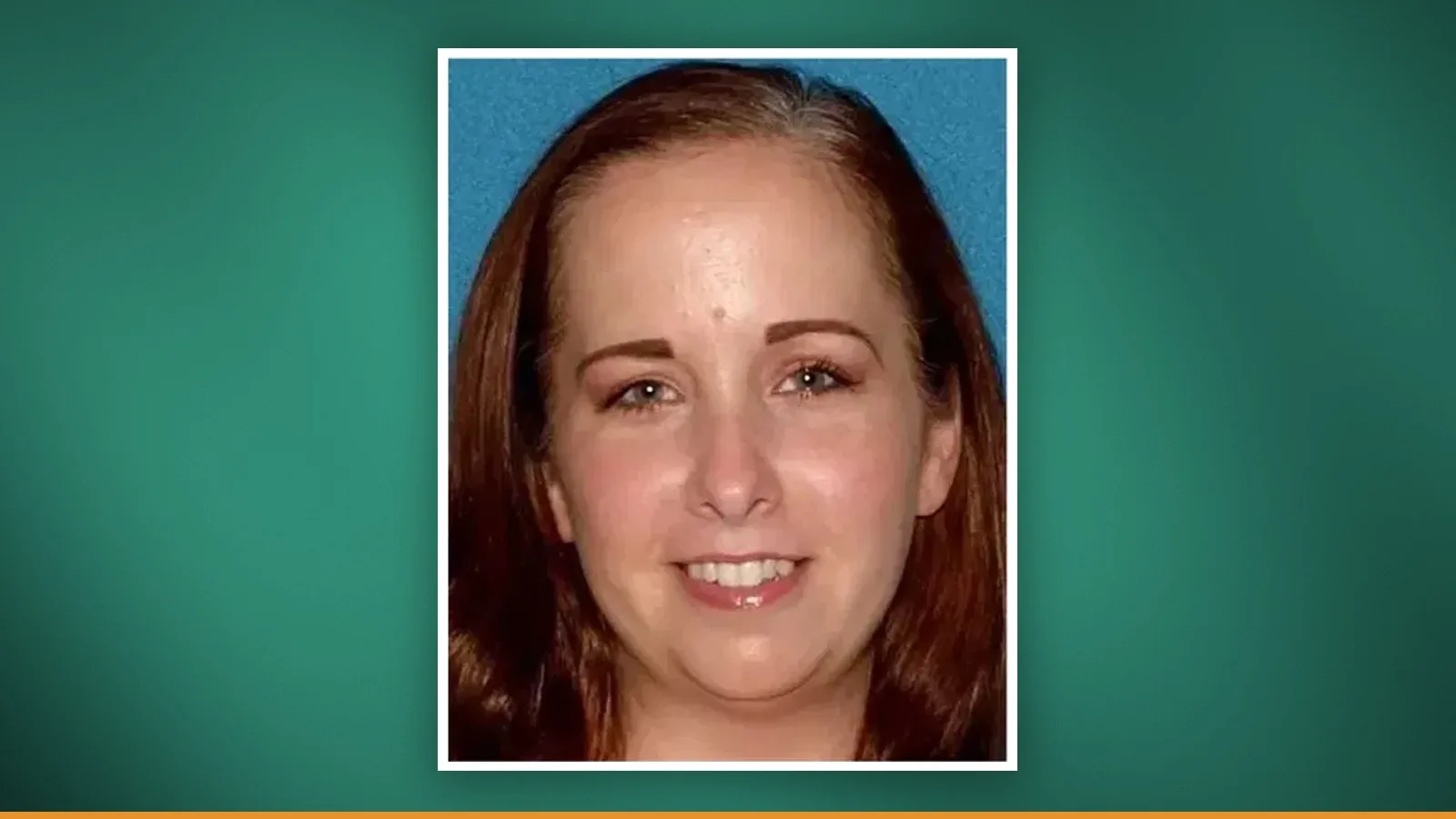
Sarah Lindsey Santiago, of Winston-Salem, was charged as an adult with three counts of first-degree murder and one count of conspiracy to commit first-degree murder, Forsyth County District Attorney Jim O'Neill said at a news conference in Winston-Salem. She was arrested last week and was being held without bond, he said.
Under North Carolina law, the aiding-and-abetting charges carry the same penalties as if Santiago had carried out the shooting herself, O'Neill said. According to the indictment, she agreed before the attack to record the gunmen's livestream, distribute the recording afterward and release a document the attackers wrote to justify the killings. Prosecutors say she completed each of those tasks.
The role prosecutors describe
Santiago was one of three people watching as the gunmen streamed the assault from GoPro cameras mounted on their helmets, O'Neill said. Investigators initially knew only that one of the viewers was a woman in the Eastern time zone. They later identified her as Santiago, a Winston-Salem teenager hundreds of miles from the mosque. The person recording locally disseminated that footage and published the attackers' manifesto, O'Neill said.
She also bought a patch bearing a white supremacist symbol and mailed it to Caleb Vazquez, who wore it during the attack, according to the indictment. The patch showed a Sonnenrad, or sunwheel, also called the Black Sun, which the Anti-Defamation League says is associated with white supremacy and was invented by the Nazis in the 1930s.
- Recorded the livestream as the gunmen filmed the attack
- Distributed the recording publicly afterward
- Released the manifesto the attackers wrote to justify the killings
- Bought and mailed a white supremacist patch worn by one gunman
Because aiding-and-abetting charges in North Carolina come with the same penalties as committing the crime, O'Neill said, Santiago did not have to be in California to be held responsible. He said a person can be guilty if they share the perpetrator's criminal intent and fail to render aid during the crime, even when not physically present. She was in his jurisdiction, and the grand jury held her responsible for her actions.
The attack on May 18
Cain Clark, 17, and Caleb Vazquez, 18, parked in the Islamic Center's lot in the Clairemont neighborhood, ran past security and opened fire at about 11:42 a.m. on May 18, according to police. The two fled after the shooting and were found dead of apparent self-inflicted gunshot wounds in a vehicle parked several blocks away.
- Amin Abdullah, 51, the mosque security guard who exchanged gunfire with the attackers
- Nadir Awad, 57, the husband of a teacher at the Islamic Center
- Mansour Kaziha, 78, a caretaker also known as Abu Ezz
Abdullah initiated a lockdown and traded fire with the gunmen, wounding Clark, before he was killed outside the building, authorities said. His actions helped protect 140 children who were on the premises. The attackers entered the mosque, then left through a back door into the parking lot, where they encountered Kaziha and Awad and shot them. Awad and Kaziha were later credited with drawing the gunmen's attention away from those gathered inside.
The gunmen fled and fired at a landscaper, who was struck on his helmet and suffered minor injuries, before killing themselves, prosecutors said. Searches of residences tied to the suspects turned up more than 30 guns and a crossbow, including rifles, along with ammunition, tactical gear and electronics, police said in May. The guns used in the attack were not registered to either shooter, and how they obtained them remains under investigation. The three men killed at the mosque were later hailed as heroes at a memorial service.
Clark's mother called San Diego police at 9:42 a.m. to report her son missing along with one of her firearms, a call the department logged as a runaway juvenile and which made no mention of suicidal or violent behavior. She called again at 10:41 a.m. to report a suicide note, hate-filled writings and more missing weapons, and told police her son and a companion were both dressed in camouflage. Officers were still trying to locate the teenagers when the first calls about the shooting at the mosque came in.
Inside the attackers' writings
Clark and Vazquez left behind rambling writings that opened with an antisemitic diatribe, called for a violent race war and referenced accelerationism, one of the most violent forms of white supremacist ideology, which advocates the destruction of society.
The document cited the gunman who killed 51 people at two mosques in Christchurch, New Zealand, in 2019 as a model for the violence. It embraced the idea that white people are being replaced by other populations and carried hateful rhetoric toward Jewish people, Muslims and Islam, the LGBTQ+ community, Black people, women and both the political left and right. The writers said they wanted to accelerate the collapse of society.
Vazquez wrote of having some mental health issues and of being rejected by women. In a written statement, his family said Caleb Vazquez was on the autism spectrum and had grown to resent parts of his identity. They said they believed that, combined with exposure to hateful online rhetoric, contributed to his radicalization.
O'Neill described the attackers as part of an underground subculture, an echo chamber of intense hate against different cultures and religions. He said its members listen to and talk with one another on encoded platforms, radicalizing each other to the point of carrying out violence, and that the manifesto showed contempt for people regardless of skin color, politics, religion or ethnicity.
Why North Carolina brought charges
O'Neill said his office pursued state charges because Santiago can be tried as an adult in North Carolina, where a conviction could bring life in prison without parole.
Santiago was arrested on Aug. 27 and indicted Monday, just before she was due to begin the school year, O'Neill said. Officials worried, with the weekend and holy days approaching, because they did not know what she was capable of, he said. Investigators moved to arrest her before the grand jury returned the indictment.
Defense says Santiago is innocent
Santiago's attorney, Alan Doorasamy Sr., said his client is innocent of all the charges. In an email to The Associated Press, he said he had not received evidence from law enforcement and did not elaborate on any connection between Santiago and the attackers. Although she was 17 at the time, she is being prosecuted as an adult.
The indictment did not specify on which platforms the livestream was recorded or shared. Three people watched the initial stream, O'Neill said, and he declined to say whether investigators had identified the other two viewers or whether they too would face charges in the case.
What the attackers planned next
The conspiracy charge stems from a plan that reached beyond the mosque, according to court documents. Prosecutors say Santiago, Clark and Vazquez agreed to kill worshippers at the Islamic Center of San Diego, worshippers at a Jewish temple and Black students at a public high school.
The site the indictment calls a Jewish temple was later identified in court documents as Kehilat Ariel Messianic Synagogue, a Messianic Jewish congregation also in San Diego, O'Neill said. The public high school was not named. Grand jurors found that Santiago conspired with Clark and Vazquez to murder people at all three sites.
| Intended target | Identified as |
|---|---|
| California mosque | Islamic Center of San Diego |
| Jewish temple | Kehilat Ariel Messianic Synagogue |
| Public high school | African American students, school not named |
The indictment drew support from Muslim civil rights advocates. Nihad Awad, national executive director of the Council on American-Islamic Relations, called it an important step toward holding accountable anyone who allegedly helped support the attack, and urged prosecutors to follow the evidence wherever it leads. He said the hatred the attackers expressed was eerily similar to how some political leaders talk about American Muslims.
American Muslims should never have to fear that attending a mosque, sending their children to Islamic school, or gathering with their community could make them targets of violence.
The San Diego County District Attorney's Office said its investigation into the killings includes identifying anyone who has potential criminal liability. In a statement Monday, it said it was aware of the North Carolina prosecution and grateful for the efforts of O'Neill's office.
The FBI's San Diego Field Office helped build the case. Its special agent in charge, Mark Remily, said in a statement that physical distance from an attack does not place someone beyond accountability for the role they allegedly played. He said law enforcement would aggressively investigate such connections and pursue accountability wherever the evidence leads, including when juveniles are involved. If you or someone you know is struggling, the 988 Suicide and Crisis Lifeline is available 24 hours a day by call or text.
Sources
- CBS News: 17-year-old girl indicted for murder in San Diego mosque shooting
- UPI: Grand jury indicts 17-year-old girl in fatal San Diego mosque attack
- NBC News (Associated Press): Teen girl who recorded San Diego mosque shooting livestream is charged with murder
- Anchorage Daily News (Associated Press): A 17-year-old who recorded California mosque shooting livestream has been charged with murder
- Reuters: North Carolina girl, 17, charged in role in California mosque attack
- 10News (KGTV): North Carolina teen charged for role in deadly San Diego mosque shooting