Pentagon fires Stars and Stripes publisher, editor and reporter over CBS interview
All three have five days to appeal. Publisher Max Lederer had already announced his retirement for Sept. 30.
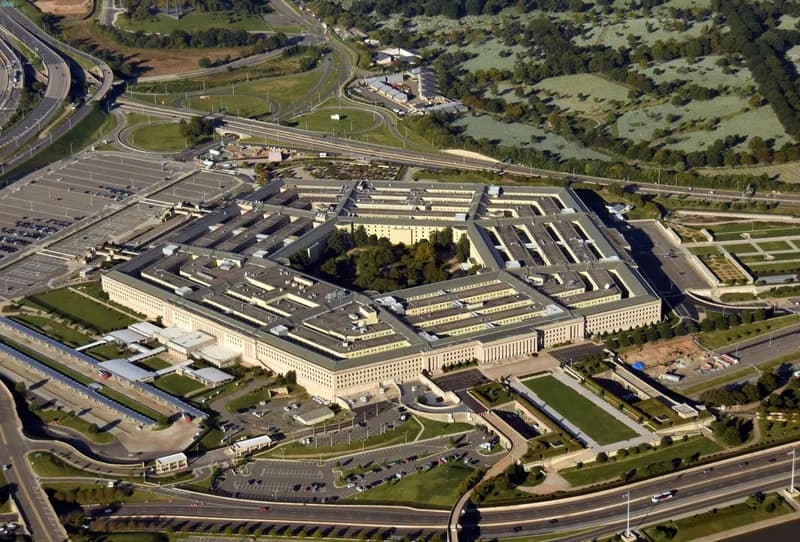
The Pentagon fired three staffers at Stars and Stripes, the military newspaper, on Aug. 21, citing insubordination tied to a CBS News interview in which two of them defended the outlet's editorial independence. Publisher Max Lederer, editor-in-chief Erik Slavin and Middle East reporter Lara Korte each received separation notices, the newspaper reported, and have five days to appeal.
- Publisher Max Lederer, editor Erik Slavin and reporter Lara Korte were dismissed.
- The Pentagon cited insubordination linked to a July CBS Sunday Morning segment.
- All three were given five days to appeal.
- Lederer had already announced his retirement for September 30.
The dismissals stem from a 'CBS Sunday Morning' segment that aired on July 5, in which Slavin and Korte discussed the newspaper's increasingly strained relationship with the Defense Department, and, according to people familiar with the dispute, from Lederer's refusal to fire the two journalists at the direction of Pentagon leadership. Korte confirmed her firing to CNN, and CBS News and The Washington Post first reported the separation notices.
The interview the Pentagon called insubordinate
The segment was reported by CBS national security correspondent David Martin, who interviewed Slavin and Korte about their efforts to keep reporting despite pressure from the Pentagon. It detailed concerns that the department was chipping away at the paper's independence, including the rescinding in January of a federal regulation directing that Stars and Stripes operate 'without news management or censorship.'
According to the notice, I am being fired for stating in a CBS interview that censorship of news for service members would constitute a red line. The Pentagon's public affairs office has charged me with insubordination.
Slavin told CNN's Erin Burnett that officials cited the interview and deemed him insubordinate for responding to a hypothetical about censorship. 'I didn't say I would disobey any sort of directive,' he said. He has maintained that Stars and Stripes must remain editorially independent, as required by law and by the department's own policies.
Korte said on X that she had been informed the Department of Defense was firing her for insubordination after she told a CBS reporter that she works for Stars and Stripes, not the Pentagon, not the administration and not any policy maker. In the segment she said: 'I'm working for Stars and Stripes. Not for the Pentagon, not for any administration, not for any policymaker. I'm here to cover the military community.'
Korte had spent recent months covering the protracted conflict in Iran and its effects on military families, work she said service members and their relatives had trusted her to carry out. One of her articles was titled 'Navy families evacuated from Bahrain face "uncharted territory" amid bureaucratic confusion,' and the paper also reported on worsening conditions for sailors aboard the USS Abraham Lincoln.
A publisher forced out before retiring
Lederer, an Army veteran who joined Stars and Stripes in 1992 and became publisher in 2007, had announced days earlier that he would retire on September 30, citing fundamental differences with Pentagon leadership. His dismissal cut short a tenure of more than three decades at the paper and denied him the departure on his own terms that he had planned.
His retirement came weeks after the Pentagon installed an active-duty Navy officer as his deputy without his prior knowledge, according to the newspaper's advisory board chairman. 'It has become clear that my philosophy of leadership, and my understanding of the value and mission of Stars and Stripes, differ in fundamental ways from the direction the leadership of the Department of Defense has for the organization,' Lederer said.
| Staffer | Role | Time at Stars and Stripes |
|---|---|---|
| Max Lederer | Publisher | At the paper since 1992, publisher from 2007 |
| Erik Slavin | Editor-in-chief | At the paper since 2005, editor from September 2025 |
| Lara Korte | Middle East reporter | At the paper since December 2024, covering the Middle East |
The officer installed above Lederer was Navy Capt. William Urban, a public affairs officer named 'military deputy to the publisher' earlier in August. Placing an active-duty officer in the newspaper's senior leadership is the arrangement the Pentagon regulations issued in 1994, and removed in January, were written to prevent.
Urban wrote in a notice posted on the Stars and Stripes website that he had received 'multiple assurances' from Pentagon leadership that it was committed to the newspaper's editorial independence. The Pentagon referred CNN to that open letter when asked to comment.
Senators Richard Blumenthal of Connecticut, Elizabeth Warren of Massachusetts and Jeanne Shaheen of New Hampshire, all Democrats, wrote to Defense Secretary Pete Hegseth the day before the firings, asking why Urban was installed and warning that placing an active-duty public affairs officer in senior leadership 'raises serious questions' about the newspaper's independence.
Independence never written into law
Stars and Stripes is a product of the U.S. military and is partly funded by the Pentagon, but it models itself after commercial newspapers and covers the news freely. Its independence has never been written into statute. It rests on a congressional mandate expressed through committee action since 1991 and on Defense Department regulations codified in the Code of Federal Regulations since 1994. Language to put it in law was added to the fiscal 2027 defense authorization bill in June and has not passed. Unlike private outlets, the paper cannot invoke the First Amendment against the Pentagon, because that protection shields the private press from government control, not a government-funded publication from the government that funds it.
The Pentagon removed those regulations from the Code of Federal Regulations on Jan. 15, 2026, without publishing a proposed rule in the Federal Register, without accepting public comments and without explaining its reasoning. A lawsuit filed in June alleges that skipped steps required by the Administrative Procedure Act of 1946. The department has said the rules were internal agency management and therefore exempt.
A memo signed by the deputy secretary of defense and dated March 9 followed, under the subject line 'Modernization of Stars and Stripes Operations.' The eight-page document asserted the paper's independence while limiting the use of paid wire services such as the Associated Press, barring comics and other syndicated features, and requiring that content be consistent with 'good order and discipline,' a phrase borrowed from the Uniform Code of Military Justice.
- Limited the use of paid wire services, including the Associated Press.
- Barred comics and other syndicated features.
- Required content consistent with 'good order and discipline.'
- Blocked reporters from filing Freedom of Information Act requests officially.
Chief Pentagon spokesman Sean Parnell foreshadowed the overhaul in January, posting on X that 'the Department of War is returning Stars & Stripes to its original mission: reporting for our warfighters.' He said the department would 'refocus its content away from woke distractions that syphon morale.'
The ombudsman fired first
Jacqueline Smith, the newspaper's ombudsman, was forced out in April, months before the reporters. Her role, monitoring the outlet's editorial independence and reporting concerns to Congress, was created by lawmakers and is congressionally mandated. She has said she was fired 10 days after publishing a column that criticized the Pentagon's removal of syndicated comics and its new press restrictions.
Congress created the ombudsman position in 1991, after military personnel in the late 1980s repeatedly tried to suppress unfavorable news about the Iran-Contra affair and other matters. Smith was removed eight months before her three-year term was set to expire in December 2026. She told CBS she worried 'the endgame is turning Stars and Stripes into a public affairs propaganda machine.'
Smith sued the Defense Department in federal court in Washington in June, alleging her firing was retaliatory and violated her First Amendment rights. Her complaint asserts that defense officials 'were working to undermine Stripes' editorial independence as part of a broader effort to control and neuter the mainstream media's ability to report on matters of national security and public interest.'
Two members of the newspaper's publisher advisory board, Pulitzer Prize-winning journalists Suki Dardarian and Bill Church, filed a separate suit the same month, asking a federal judge to block what they called the Pentagon's effort to exert unprecedented control over the outlet and to censor its content. Parnell called that lawsuit 'without merit' and said the department expected to prevail.
National Press Club President Mark Schoeff Jr. called Slavin's firing 'another brazen attempt by the Pentagon to dictate coverage of the military' and said it should be immediately reversed. PEN America accused the department in January of trying to turn the newsroom into 'a mouthpiece for the administration's political messaging,' and the Reporters Committee for Freedom of the Press said then that lawmakers must preserve the congressionally mandated editorial firewall.
What the paper is and who reads it
Stars and Stripes was first published during the Civil War and revived in World War I under General John Pershing, and it has appeared continuously since World War II. The paper says it reaches more than 1.4 million readers a day through print, its website and its mobile app, and it still prints an overseas edition for service members in remote places with unreliable internet. Roughly half of its $29 million annual budget comes from taxpayers, according to a person familiar with its operations, and the rest from advertising and subscriptions.
Stephen Miller, the White House deputy chief of staff for policy, defended the dismissals, telling CBS he was confident that 'if anybody was fired, it was for just cause.' He offered no detail beyond the insubordination charge. Parnell, responding in June to the advisory board members' lawsuit, said the department remained committed to 'a Stars and Stripes that is modern, mission-focused, and worthy of the servicemembers it serves.'
The dismissals deepen a year of conflict between the Pentagon and one of the military's own news outlets, and they raise the question of whether its staff can report on military affairs without risking their jobs. Urban told employees he had been assured of the paper's continued independence, even as the editor and reporter who publicly defended it were removed and the publisher who declined to fire them was pushed out weeks before he planned to leave.
Sources
- Fox News: Pentagon fires Stars and Stripes publisher, editor-in-chief and reporter over alleged insubordination
- CNN: Pentagon fires Stars and Stripes leaders amid Hegseth pressure campaign
- PBS NewsHour: Stars and Stripes editor, reporter fired for insubordination after doing CBS interview
- Deadline: Pentagon Fires Editor Of Stars And Stripes After CBS News Interview
- uPolitics: Pentagon Fires Stars & Stripes Leadership Following Negative Iran War Coverage
- Mediaite: Pentagon Raises Fears of Independent Newspaper Takeover After Top Editors Fired For CBS Interview
- Tech Times: Pentagon Moves to Fire Stars and Stripes Publisher Before He Can Leave
- CBS News Sunday Morning: The battle over Stars and Stripes
- The Hill: Former Stars and Stripes ombudsman sues Pentagon over firing
- NPR: Pentagon tightens controls over Stars and Stripes after calling it 'woke'