NOAA confirms July 2026 was hottest U.S. month on record
All 48 contiguous states ranked in their warmest third, with as many as 55 million under Western heat alerts.
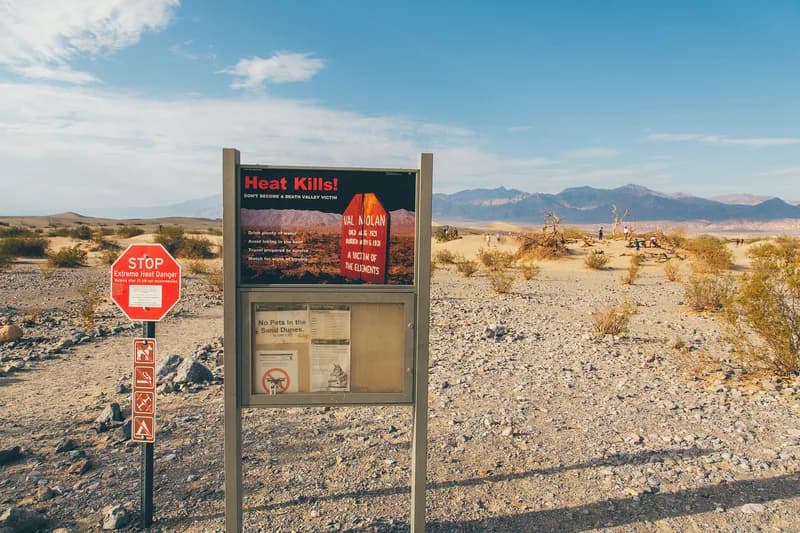
Extreme Heat Warnings covered parts of Arizona, California, Nevada and Utah over the weekend of August 8 and 9, the National Weather Service said, as a heat dome pushed temperatures across the Desert Southwest and Intermountain West well above normal. Forecasters expected readings from the upper 90s to above 110°F, about 7 to 12°F hotter than usual for early August. As many as 55 million people had been under heat alerts across the West at the start of the month, according to CNN.
It's not good when you're breaking records from the Dust Bowl, which we are in this case. ... If we're exceeding records from The Dust Bowl, that says that we're in deep trouble.
Masters was describing a summer NOAA has now measured against its entire record. July 2026 was the hottest month ever recorded in the contiguous United States, the agency said this week, averaging 76.9°F across the 48 states.
The hottest month in NOAA's record
That was 3.3°F above the 20th-century average, and it beat the previous record, July 1936, by a tenth or two of a degree. NOAA's temperature record runs back to 1895.
Above-average temperatures covered the entire contiguous United States. All 48 states ranked in the warmest third of their July temperature records, and not one ranked near or below average, according to NOAA. The heat ran hottest across the interior West, Southwest, Rockies, northern Plains and Upper Midwest, along with parts of the Gulf Coast and Southeast.
| Location | Temperature | Date | Record note |
|---|---|---|---|
| Billings, Montana | 111°F (44°C) | July 12 | All-time heat record |
| Atlantic City International Airport, N.J. | 106°F | July 4 | Tied all-time record from June 1969 |
| Reno, Nevada | 103°F (39.4°C) | August 7 | Broke 102°F daily record from 1990 |
| Salt Lake City, Utah | 103°F (39.4°C) | August 7 | Topped 100°F record set in 1994, 1995 and 2024 |
| Lake Charles, Louisiana | 121°F heat index | July 22, during Tropical Storm Bertha | Under storm and heat warnings at once |
Source: National Weather Service and NOAA station records, via AP and CNN, as of August 13, 2026
Individual stations set or tied records through the summer. In Billings, Montana, the 111°F reading on July 12 was an all-time high, beating 108°F set in July 2002 and the first reading in the 110s in 92 years of record. Reno-Tahoe International Airport reached 103°F on August 7, breaking a daily record of 102°F from 1990, and Salt Lake City hit the same 103°F, topping its August 7 record of 100°F set in 1994, 1995 and 2024.
How the heat spread across the country
The 2026 heat wave began in late June. CNN reported that 180 million people, more than half the country's population, were under a major or extreme heat risk from the National Weather Service starting June 28, when the first heat dome settled over the eastern United States and eastern Canada. Atlantic City International Airport reached 106°F on July 4, tying its all-time record from June 1969, at the peak of that dome; the Weather Prediction Center put the city's highest July reading at 105°F. Several rounds of severe thunderstorms broke the dome up between July 4 and 6 and left more than 1.3 million power outages in their wake.
Extreme Heat Warnings, Watches and Advisories reached portions of 31 states after the Weather Service issued a series of alerts on June 29, with peak heat index values forecast to 115°F. The Midwest, Northeast, Southeast and central United States were under some form of heat alert at the same time.
A second heat dome formed over the western half of the continent later in the summer. By the start of August, triple-digit heat stretched from Las Vegas to Montana, with cooler pockets in between, and heat alerts reached north to the Canadian border, CNN reported. Daytime temperatures pushed well above 110°F in Las Vegas and other desert communities, which were among the areas under the most intense alerts.
The August event was the fourth distinct heat dome to strike the country since late June, forecasters said. The first settled over the East from June 28, a second built over the West in mid-July, and a third crossed the central states in late July, when Rapid City set an all-time record of 112°F on July 26.
A deadly and strained few weeks
Heat remains the deadliest form of extreme weather in the United States, and the 2026 season has been among the most sustained on record. As of August 5, 70 deaths had been attributed to the heat wave. At least 44 people died during the July 1 to 4 stretch alone, including 29 in New Jersey, seven in Pennsylvania, four in Illinois, three in New York and one in Mississippi. Four more died as the thunderstorms that ended the first dome swept through.
The power grid buckled under demand. More than 200,000 customers lost power on the evening of July 2, and PJM, the grid operator covering 13 states and Washington, D.C., forecast demand of 166,147 MW for that day, above its all-time record of 165,563 MW set in 2006. Actual load ran higher still, an estimated 168,158 MW between 5 and 6 p.m. New Jersey storms knocked out about 250,000 customers the next day. The Department of Energy issued emergency orders on June 30 letting PJM direct large data centers and other users of 50 MW or more onto their own backup generation during grid stress.
- Fatigue and extreme thirst
- Nausea and headache
- Shortness of breath and rapid breathing
- Muscle cramping
- Dizziness or feeling lightheaded
Those are the warning signs of heat exhaustion, according to an NPR safety guide published July 2. Heatstroke is a far more serious emergency. It can cause multiple organ failure or kidney failure and can trigger a heart attack, and hundreds of people die of heat-related illness in the United States each year.
There is no single temperature at which heat becomes dangerous, said Lewis Halsey, a professor of environmental physiology at the University of Roehampton in Britain. The threshold depends on how acclimated a person is and how long they are exposed. Heat index figures are calibrated for the shade, and NPR notes that conditions in direct sunlight can run about 15°F hotter, which is part of why official readings understate what people actually feel.
Warm nights that never let up
Overnight temperatures are a defining feature of the 2026 crisis. July's mean minimum temperature across the contiguous states was 64.2°F, the warmest on record and 0.7°F above July 2022, according to NOAA's National Centers for Environmental Information. Scientists warn that the lack of cooling raises the risk of heat exhaustion and heatstroke because the body relies on cooler evenings to recover. When nights stay warm, heat stress compounds day by day.
More than 40 million people across the country remained under heat alerts through July, even as individual domes came and went. On August 8, heat at a festival in Colorado Springs left 72 people treated for heat illness and seven taken to hospital. Southern Louisiana was placed under a tropical storm warning and an extreme heat warning at the same time, the first such overlap in warning records that go back to 2005, as Lake Charles recorded a heat index of 121°F on July 22 during Tropical Storm Bertha.
What is driving the record heat
Two forces are working together, scientists say. Human-caused climate change, driven mainly by the burning of fossil fuels, is making extreme heat more common and more intense. A strengthening El Nino is adding to it. NOAA's Climate Prediction Center now puts the chance of a very strong event this coming fall and winter at better than 90 percent, and a historic one by December at 69 percent. The July reading for the benchmark Nino 3.4 region was 1.4C above average, still in the moderate band; strong begins at 1.5 and very strong at 2.0.
Researchers with the World Weather Attribution group examined the eastern heat of June 30 to July 4 and found that wet bulb globe temperatures that high would have been virtually impossible in a climate 1.4°C cooler. Air temperature alone was less unusual, roughly a one-in-six-year event. Berkeley Earth now puts the odds of 2026 overtaking 2024 as the hottest year on record at 69 percent, up from 12 percent a month ago, and expects 2027 to go higher still. NOAA is more cautious, favouring third or fourth warmest.
The heat is not expected to ease
NOAA's Climate Prediction Center favours above-average temperatures through August across the central and southern states, so the heat is not expected to break soon. Wildfire potential is above normal across the Northwest, the Great Basin, the central Rockies, parts of the Plains, the Lower Mississippi Valley, southern Florida and Puerto Rico.
Utilities and state officials moved to protect residents as demand climbed. Con Edison reduced voltage in parts of the Bronx and Manhattan to conserve energy during equipment repairs. New York's Public Service Commission had approved a policy in March barring utilities from cutting off service for non-payment during extreme heat events, and most utilities suspend disconnections during declared heat emergencies.
Nick Staub, the incident commander for extreme heat response in Maricopa County, Arizona, has cautioned that many heat deaths occur on days without an official warning in effect. NPR pointed residents to the Weather Service's HeatRisk tool, which factors in how far above normal the temperature is, how long the heat will last and humidity, rather than heat indices alone.
July 2026 opened with the heat wave gripping the densely populated eastern United States as the country marked its 250th anniversary and hosted the later stages of the FIFA World Cup. Alaska was the season's exception, recording its coldest July average since 2008 even as every one of the lower 48 states ran warm, and heavy rain brought flash flooding to the Texas Hill Country and eastern New York.
Staying safe as the heat continues
Health officials continue to point to hydration, shade and access to cooling centers as the core defenses against heat illness, along with checking on older neighbors and people without air conditioning. NOAA's full July climate report was scheduled for release on August 13, and the Climate Prediction Center's outlook offered little sign of relief before the end of the month.
Sources
- 2026 North American heat wave - Wikipedia
- US had hottest month on record in July - Phys.org
- Assessing the U.S. Temperature and Precipitation in July 2026 - NOAA NCEI
- July 2026 was hottest U.S. month on record - Axios
- Western US heat dome brings dangerously hot temperatures to tens of millions - CNN
- Record-breaking heatwave forecast to peak through August 8-9 - The Watchers
- Extreme heat alerts cover portions of 31 U.S. states - The Watchers
- Climate: Fighting Extreme Heat In 2026 - NPR 1A
- 7 tips to prevent heat exhaustion and heat stroke - NPR
- The Heat Wave Could Cause Power Outages This Holiday Weekend - Medical Daily