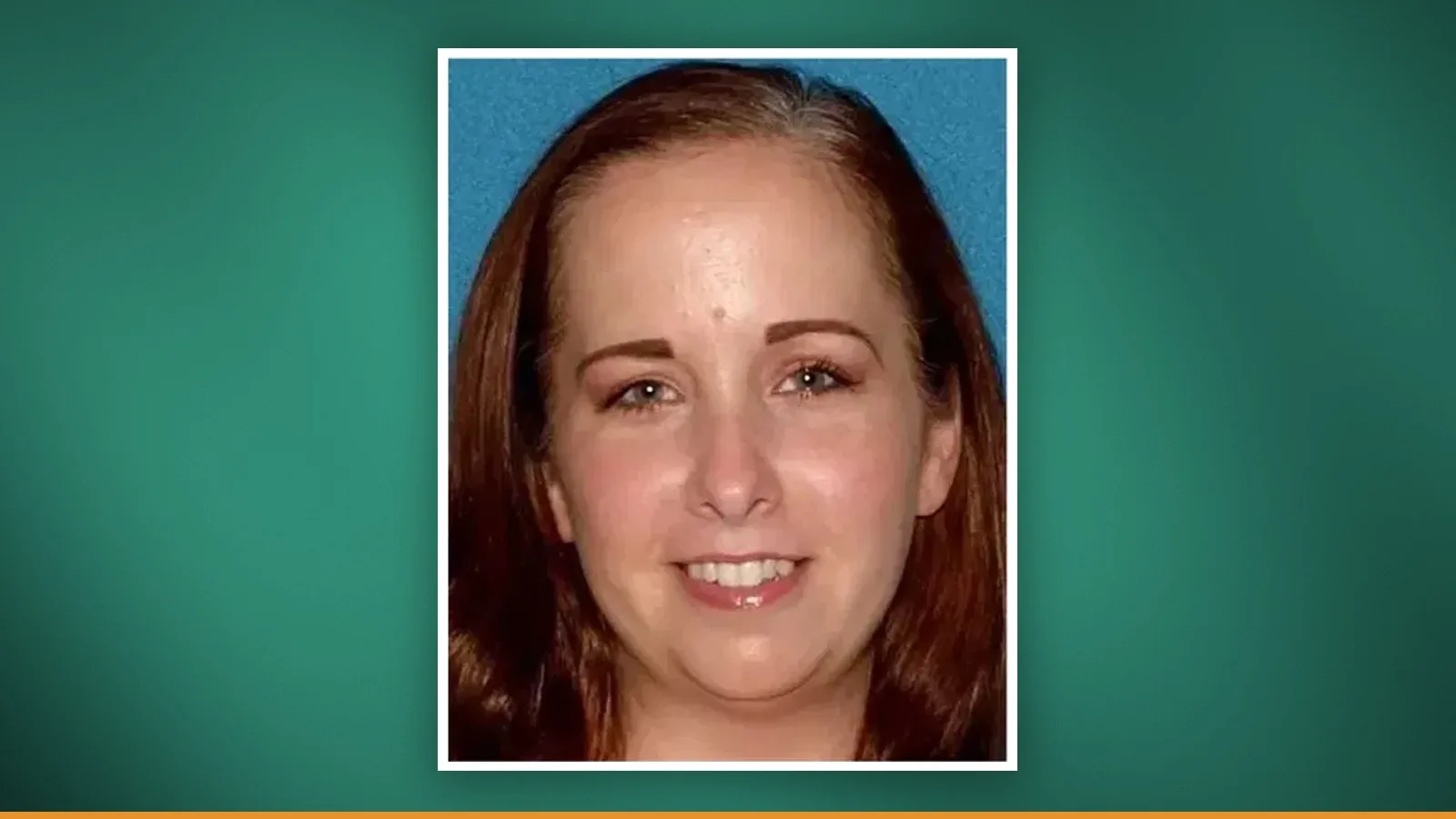
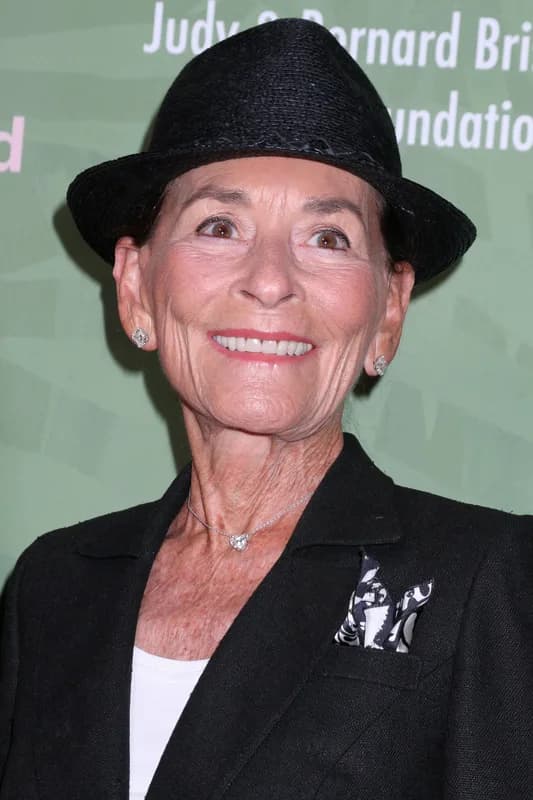
Nancy Kassebaum Baker, first woman elected to a full Senate term in her own right, dies at 94
The Kansas Republican, daughter of 1936 presidential nominee Alf Landon, served three terms and co-wrote the 1996 HIPAA health law.
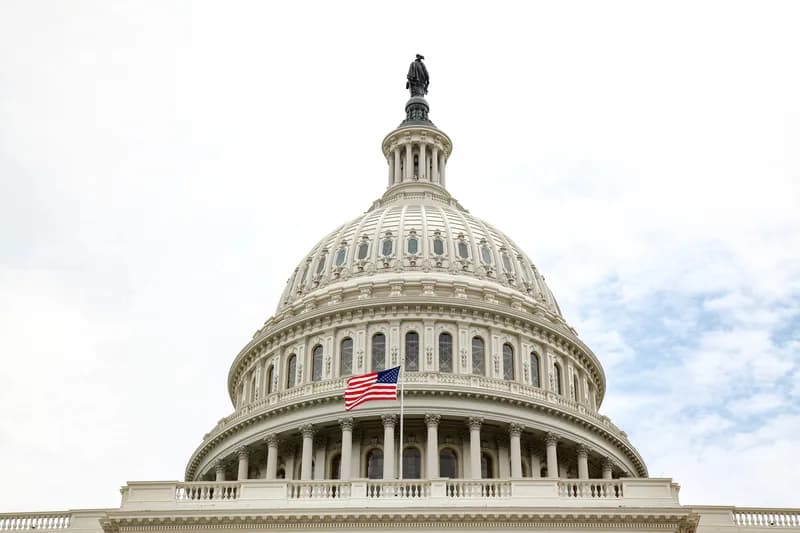
Nancy Kassebaum Baker, the first woman elected to a full term in the U.S. Senate whose husband had not served in Congress before her, died Aug. 21 in hospice care in Manhattan, Kansas. She was 94. Her son, Bill Kassebaum, said she died of natural causes and told The Associated Press that she had loved representing Kansas for 18 years.
- Kansas Republican, in the Senate from 1978 to 1997
- Only woman in the chamber when she was sworn in
- Chaired the Senate Labor and Human Resources Committee
- Co-authored the 1996 HIPAA health insurance law
The daughter of Alf Landon, the Kansas governor who was the Republican Party's unsuccessful 1936 presidential nominee, Kassebaum Baker built a reputation over three terms as a moderate willing to break with her party. She entered the Senate in 1978 as a political newcomer whose only prior office had been a seat on the school board in Maize, Kansas, and her arrival drew immediate national attention.
A newcomer wins a nine-candidate primary
Running as Nancy Landon Kassebaum, she entered the 1978 contest for the seat being vacated by Republican Sen. James B. Pearson, for whom she had briefly worked as a caseworker. She won a nine-candidate primary with less than 31 percent of the vote, then defeated Democratic former congressman Bill Roy in the general election with nearly 54 percent. Analysts at the time reckoned a competitive Senate campaign in Kansas required roughly $1 million, a large sum for the state's politics.
She was sworn in as the only woman in the Senate, arriving as the 14th woman to serve in the chamber's history. She first took her seat after being appointed to finish the final days of Pearson's term, following his resignation on Dec. 23, 1978. She remained the Senate's only woman until Florida Republican Paula Hawkins joined in early 1981, and she served alongside a slowly growing group of women through the years that followed.
| Election | Result |
|---|---|
| 1978 general | Nearly 54% against Bill Roy |
| 1984 re-election | 76% of the vote |
| 1990 re-election | 74% of the vote |
Kassebaum Baker remained one of the most popular figures in Kansas politics throughout her tenure, and her wide re-election margins reflected it. Those margins held even as she diverged from her party on gun control, abortion and other flashpoints, positions that at times drew sharp criticism from conservative Christian Republicans at home.
An independent streak in a partisan era
Her independence showed across the issues that defined the 1990s. She supported an assault weapons ban backed by President Bill Clinton, a vote she later said generated the angriest mail of her Senate career. She also broke with many Republicans by backing international family planning funding and abortion rights at home, positions that put her at odds with the party's growing social conservative wing.
After the 1994 elections handed Republicans control of Congress, Kassebaum voted with the bipartisan majorities that struck a mandatory family cap from the party's Contract With America agenda and rejected a bid to deny benefits to unmarried teenage mothers. The votes marked her out as a check on her own party's harder edges.
On other questions she held to more conservative positions. She voted against proposals to raise the minimum wage and to require businesses to provide unpaid family and medical leave, though she backed the compromise bills that raised the wage in 1989 and 1996.
During her three terms she worked on reducing the federal budget deficit, on international arms control and on sanctions against apartheid-era South Africa. She also pushed to reform liability laws affecting general aviation, an industry rooted in Kansas manufacturing. She brought a master's degree in diplomatic history to a Senate career known for its foreign-policy coalitions.
The health law that carries her name
Her most enduring measure was the Health Insurance Portability and Accountability Act of 1996, which she wrote with Democratic Sen. Edward M. Kennedy of Massachusetts. The law made it easier for workers to keep health coverage when they changed or lost jobs and limited the exclusions insurers could apply to certain pre-existing conditions. It remains the statute most closely associated with her name, and it was the achievement Biden cited decades later in honoring her.
Clinton signed the bill on the South Lawn of the White House on Aug. 21, 1996, with Kassebaum and Kennedy at his side. She died 30 years later to the day. The two senators had been the co-sponsors, an alliance across the aisle that became a template for how she preferred to legislate.
By then she was chairing the Senate Committee on Labor and Human Resources, having taken the gavel in January 1995 during the 104th Congress. She was the first woman to lead a modern Senate standing committee and only the second woman to chair a standing committee in the chamber's history, after Hattie Caraway.
When she announced her retirement in November 1995, she was one of eight women serving in the Senate and the only one chairing a committee. She left office in January 1997 after 18 years, closing a career that had begun with a single seat on a small-town school board. Her departure removed one of the chamber's most reliable brokers between the two parties.
Tributes from across the political spectrum
Memorials came from Kansas leaders of both parties, filling statements in the hours after her death was announced. Democratic Gov. Laura Kelly, whom Kassebaum Baker had endorsed twice, said the state had lost a defining figure.
Kansas lost part of its soul when Nancy Kassebaum died. Senator Kassebaum cared deeply about Kansas, about our country. No one worked harder, or smarter, to make our world a better place.
Republican Sen. Jerry Moran said her time in public service embodied the institution of the U.S. Senate at its best. Her son described her in plainer terms, as an independent-minded Republican who was willing to stand up for what she thought was right even when it meant going against the party.
A Kansas life shaped by politics
Nancy Josephine Landon was born July 29, 1932, in Topeka, into one of Kansas's best-known political families. Her father, Alf Landon, served as governor from 1933 to 1937 and carried the Republican banner against Franklin D. Roosevelt in 1936. She earned a bachelor's degree in political science from the University of Kansas and a master's in diplomatic history from the University of Michigan. The Landon Lecture Series at Kansas State University, begun in 1966, honors her father.
In 1956 she married John Philip Kassebaum, and the couple settled in Maize, where they raised four children. She worked as vice president of Kassebaum Communications, a family radio company, and served on the local school board. The couple separated in 1975 and divorced in 1979, the year she took her Senate seat.
Marriage to a fellow senator
In December 1996 she married Howard H. Baker Jr., the former Republican Senate majority leader from Tennessee, the first time a man and a woman who had both served in the Senate wed. The couple later lived in Japan, where Baker was U.S. ambassador under President George W. Bush, before splitting their time between Huntsville, Tennessee, and Burdick, Kansas.
Baker died in 2014. Kassebaum Baker outlived two of her four children: her son Richard, a filmmaker, died of a brain tumor in 2008 at the age of 47, and her daughter, Linda Johnson, died in 2020 at 61 of a degenerative neurological disease. Her son William, who confirmed her death, is a former member of the Kansas House of Representatives, extending the family's presence in Kansas politics into a third generation.
Nancy is her own woman. Her independence and her tenacity are matched only by her intelligence and integrity.
Her ties to the Republican Party frayed in her final years. She called for President Donald Trump's impeachment after the Jan. 6, 2021, attack on the Capitol, and she later endorsed several Democrats, including Kelly for governor and Kamala Harris for president. The breaks came from a lifelong Republican whose father had led the ticket in 1936.
Honors and a private farewell
In January 2025, President Joe Biden awarded her the Presidential Citizens Medal, generally described as the nation's second-highest civilian honor, citing her bipartisan work on health care reform. She was one of 20 recipients that day. The Native Sons and Daughters of Kansas had named her a Distinguished Kansan back in 1978, the year she first won her seat.
A private memorial service will be held at a later date. The family asked that donations be made in lieu of flowers to the Kansas 4-H Foundation or the Capper Foundation.
Sources
- UPI: Former U.S. Senator Nancy Kassebaum of Kansas dies at 94
- ABC News: Nancy Kassebaum Baker, former US senator from Kansas, dies at 94
- Roll Call: Former Kansas Sen. Nancy Kassebaum remembered as trailblazer
- Fox News: Nancy Kassebaum Baker, trailblazing GOP senator, dead at 94
- Voz: Nancy Kassebaum, Kansas' long-serving Republican senator, dies at 94
- IBTimes: Nancy Kassebaum Baker, Trailblazing Kansas Senator, Dies at 94
- KSN: Tributes pour in for former Sen. Nancy Kassebaum Baker
- Wikipedia: Nancy Kassebaum Baker