New database documents over 100 cases of police abusing Flock cameras
A tracker of more than 100 alleged abuses, from stalking ex-partners to searches tied to protests, went live this week.
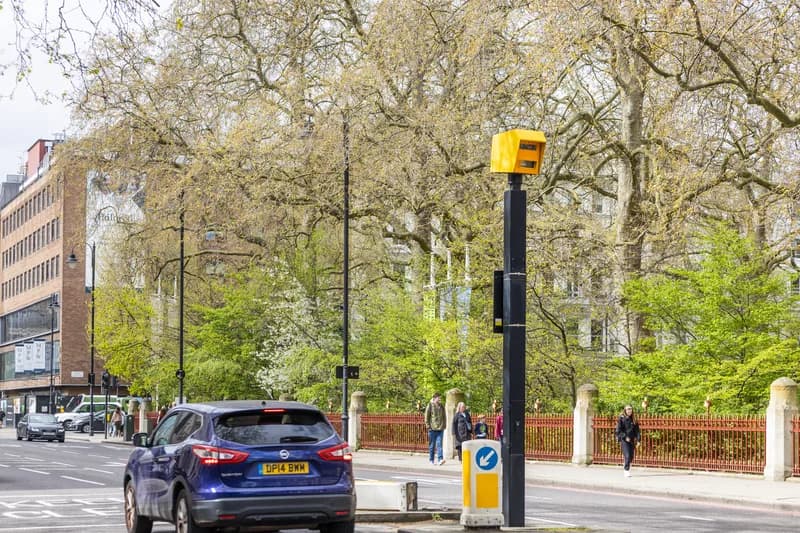
The Institute for Justice, a libertarian public interest law firm based in Arlington, Virginia, launched a public database on August 12 documenting more than 100 cases of alleged abuse by law enforcement officers using Flock Safety's nationwide license plate camera network. The catalog groups the incidents into categories that include romantic stalking, wrongful stops and detentions, non-law-enforcement use, and other misconduct by officers with access to the system.
At least 50 law enforcement officers have been charged with or accused of misusing Flock's system and similar tools, according to a Washington Post investigation published August 2 that grew out of an anonymous tip in May. Georgia has become the national flashpoint, with more than 20 officer arrests across multiple counties as of mid-August, and the cases have piled up week after week.
Flock's cameras log more than 20 billion data points every month, according to Reason, capturing the time and location of passing vehicles as they cross the country. The information is retained and compiled into a searchable database that officers can query to track a car, and by extension its driver, without a warrant. The Institute for Justice says that absence of oversight is precisely what invites the abuse now filling its tracker.
How the tracking works in practice
The pattern often starts with a personal grievance. Marci Bakely, a 50-year-old single mother from Jefferson, Georgia, could not understand how her ex-boyfriend, a police chief in a small Atlanta suburb, always seemed to know where she was. When she bought groceries, visited the doctor, or went on a date, he would text her about it within minutes, even though he worked 15 miles away.
The chief was Michael Steffman of Braselton, a town about 50 miles northeast of Atlanta. He was tracking her in real time, running roughly 600 lookups of her plate and her teenage daughter's. Bakely sought a restraining order in August 2025 after confronting him with audit logs pulled from the system; the judge called his conduct concerning but denied the order, finding she had no evidence of ongoing stalking. The Georgia Bureau of Investigation arrested him that November on stalking, harassment and plate-reader misuse charges. He had resigned days earlier. Steffman was found dead at his home in April, before the case came to trial. Her case became the thread reporters followed into dozens more.
The arrests have arrived in clusters through the summer. The Georgia Bureau of Investigation arrested five former Albany Police Department officers on July 6 after an internal audit found repeated non-law-enforcement searches, and similar cases surfaced in Cherokee County, Fayetteville, Richmond County, Greene County, and Conyers. Nearly all of the accused officers were flagged for the same conduct: querying the network to find people they knew personally, rather than in connection with any active investigation.
| Officer or agency | Location | Action |
|---|---|---|
| Five former Albany Police officers | Albany, Georgia | Arrested July 6, 2026 by the GBI |
| Sgt. Kabiru Salawu | DeKalb County, Georgia | Fired and arrested July 17, 2026 |
| Officer Seth Elliott | Charlotte-Mecklenburg, North Carolina | Arrested July 29, 2026 |
| Deputy Christian Brewer | Habersham County, Georgia | Fired and arrested July 31, 2026 |
| Three former deputies | Bibb County, Georgia | Arrested August 10, 2026 |
Source: Institute for Justice tracker, Washington Post and local reporting, as of August 14, 2026. All charges are pending and none of those named has entered a plea.
Three former Bibb County sheriff's deputies, Coznavian Stubbs, Joseph Callaway and Toni Lewis, were arrested on August 10 after an internal audit flagged searches tied to people they knew. The sheriff's office said the three cases were separate and each involved someone with whom the deputy had a personal relationship. Callaway is charged with three counts of stalking; Stubbs and Lewis with one each. Stubbs and Lewis resigned during the investigation and Callaway shortly after his arrest. All three have been released on bond and none has entered a plea.
A sheriff on the responsibility of access
Bibb County Sheriff David Davis said his agency opened its internal audit after Flock Safety alerted officials to possible irregularities in how the technology was being used. The Atlanta Police Department is separately conducting a proactive review of how its own officers use license plate reader technology, an examination that remains underway as more agencies scrutinize their logs.
Davis framed the arrests as a violation of public trust rather than a failure of the technology. He said the cases showed why access to sensitive data must stay tied to legitimate police work.
The public entrusts law enforcement with access to powerful technology and sensitive information, and with that trust comes an absolute responsibility to use those resources only for legitimate law enforcement purposes.
Other departments have moved to fire and charge officers as their own audits surfaced problems. In North Carolina, Charlotte-Mecklenburg Officer Seth Elliott was arrested July 29 and charged with illegally accessing a government computer after allegedly running an unauthorized query on a license plate. In Georgia, Habersham County Deputy Christian Brewer was fired and arrested July 31 on a felony count of violating his oath of office and two misdemeanor counts of misusing plate data, after an audit tied his searches to a personal relationship.
Surveillance reaching beyond romantic targets
The romantic stalking cases dominate the tracker, but the abuses reach further. Lee Nygaard, then police chief of Sedgwick, Kansas, used plate readers to look up his ex-girlfriend 164 times and her new boyfriend 64 more over four months in 2023. He resigned, and his state certification was later revoked. In Florida, a Monroe County sheriff's deputy, Lamar Eliseo Roman, allegedly added a young actress to a hot list on a rival reader system, got an automatic alert when her car appeared, then sped to intercept her and nearly caused a head-on collision. He was fired and charged in March, and has since entered a pre-trial agreement under which the charge is to be dropped.
The Electronic Frontier Foundation documented broader patterns in datasets covering more than 12 million searches logged by more than 3,900 agencies between December 2024 and October 2025. Agencies logged hundreds of searches tied to political demonstrations, including the No Kings protests, and 19 agencies conducted dozens of searches connected to those events alone. Some searches explicitly referenced protest activity, while others used vague terms to obscure it.
The fundamental problem with these systems is that they place private information about people's movements over time in the hands of every officer.
Soyfer argues that a warrant requirement would make officers show probable cause before searching the database, weeding out bad actors before the misconduct rather than after it. No court has imposed one yet. A federal judge in Virginia sided with the city of Norfolk this year, holding that a 21-day retention window does not reveal the whole of a person's movements; that case is on appeal. Flock's own chief legal officer has said publicly that a warrant requirement is a day that is out there.
The numbers behind one city's network
The volume of searches can be staggering within a single city. In a lawsuit filed against San Jose, California, the Institute for Justice alleged that the city's 474 Flock cameras were searched nearly 2.5 million times in the last six months of 2025, which the firm puts at more than 15,000 searches a day, with almost no oversight from anyone outside the department.
Public opposition has been crossing partisan lines. The advocacy group Ban Flock Cameras counts 82 contracts terminated across 28 states since 2021, 39 of them in the first five months of this year alone. Roughly 23 local councils have cancelled in 2026, out of about 98 since the cameras started going up.
Public opposition has been crossing partisan lines. The advocacy group Ban Flock Cameras counted 82 contracts terminated across 28 states between August 2021 and May 2026, including 39 cancellations in the first five months of 2026 alone. Roughly 23 local councils have cancelled Flock contracts in 2026, out of about 98 since 2021.
Flock Safety announced new data security policies on August 13 in response to the mounting scandals. The reforms lower the default retention window from 30 days to seven unless data is tagged for preservation, make the company's auditing tools mandatory for all customers, require case codes for every law enforcement search from January 1, and let customers restrict which offence types outside agencies may search on. Flock has described the changes as a direct answer to the misuse reports.
Civil liberties advocates say the changes fall short of the problem. Soyfer is skeptical the auditing tool will curb abuse, arguing that agencies conduct so many warrantless searches it would be impossible to find all the misuse. The company's current approach, he notes, catches problems only after the privacy violation has already occurred, not before.
The concern extends to security as well as misuse. In a November 3, 2025 letter to Federal Trade Commission Chair Andrew Ferguson, Senator Ron Wyden and Representative Raja Krishnamoorthi asked the agency to investigate Flock for negligent cybersecurity practices, noting that the company did not require multi-factor authentication to protect law enforcement accounts. Wyden wrote that the data can reveal trips to doctors, therapists, addiction support meetings, places of worship, and protests.
The push for a warrant requirement
Privacy and police accountability groups have coalesced around a set of demands aimed at the systems themselves rather than individual officers. The Institute for Justice, which calls its own tally almost certainly an undercount, points to several fixes it says would prevent abuse rather than merely record it after the fact.
- A warrant requirement forcing officers to show probable cause before searching license plate data.
- Mandatory auditing that flags searches before misconduct occurs, not only after the fact.
- Multi-factor authentication and stronger security controls on law enforcement accounts.
- Shorter data retention so movement histories are not stored for weeks.
Some of those measures echo Flock's own announcements, but advocates say voluntary corporate policy is no substitute for a legal limit that an agency cannot quietly reverse once the attention fades. Soyfer described what has surfaced in Georgia as just the tip of the iceberg, saying there are almost certainly more cases lurking than any audit has yet exposed.
For victims like Bakely, the reforms arrive after the fact. She confronted a police chief with the audit logs that showed how she had been followed, and a court still declined to grant the protection she asked for. The records that expose the abuse are held by the very systems that enabled it, and reporting it means going back through law enforcement.
The Institute for Justice database went live August 13 and is expected to grow as new cases are confirmed. Ohio State University professor Viet Trinh, testifying during a public safety audit in Columbus, called Flock a dystopian violation of rights that inverts how policing is supposed to work, with suspects identified before any crime has occurred rather than after a crime is investigated.
Sources
- Washington Post: How rogue officers turned a nationwide camera network into a tool for stalking
- Common Dreams: New Database Documents Over 100 Cases of Cops Abusing Flock Surveillance Cameras
- Reason: Georgia cops keep getting arrested for misusing Flock surveillance data
- Townhall: How Flock Safety cameras have been abused
- Institute for Justice: The IJ Database of ALPR Abuse
- TechTimes: Police Used Flock's License Plate Network to Stalk Women in at Least 50 Cases
- Reason: Flock Safety's new privacy rules do little to ease concerns over ALPR surveillance
- CBS News: 3 Georgia deputies arrested after allegedly using Flock cameras to stalk people they knew
- EFF (via Harvard tagteam): EFF's Investigations Expose Flock Safety's Surveillance Abuses
- Senator Wyden Letter to FTC on Flock Safety Cybersecurity