FDA upgrades 19 million egg recall to highest risk level
Two Texas farms are the source; check cartons for the code P-1950 and a sell-by date up to August 17.
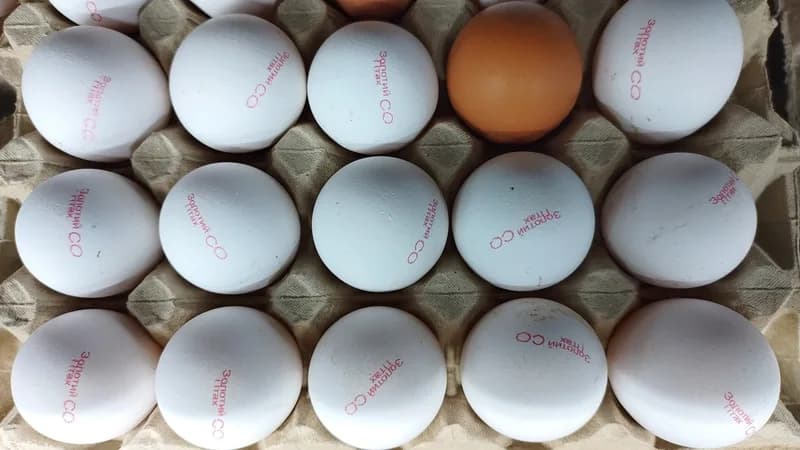
The Food and Drug Administration on Wednesday, August 12, raised a recall of more than 19 million eggs to Class I, its most serious classification, warning that eating the eggs could cause salmonella infections serious enough to threaten some people's lives. The eggs were pulled by Midwest Poultry Services L.P., of North Manchester, Indiana, from two of its Texas farms, in a voluntary recall first posted on the FDA website on July 22.
There is a reasonable probability that the use of or exposure to a violative product will cause serious adverse health consequences or death.
The recall covers 1,589,577 dozen eggs, a little over 19 million, white shell and brown cage-free, produced at two Texas farms between June 6 and July 3. Midwest Poultry Services says it found possible Salmonella Enteritidis contamination through its own environmental monitoring, and has halted fresh egg shipments from both farms while it looks for the source.
What the recall covers
The eggs went to Kroger stores in Texas and Louisiana and to Brookshire Grocery stores in Texas, Oklahoma, Arkansas, Louisiana, Mississippi and New Mexico. Smaller retail and foodservice outlets in the same states took deliveries too.
The FDA has confirmed distribution in those six states and warns the eggs may have travelled further. It is telling consumers not to eat any egg covered by the recall, whatever brand is on the carton.
- Kroger
- Simple Truth
- Brookshire's
- Country Morning
- Sunups, a Cal-Maine brand
The eggs were sold in package sizes of 6, 12, 18, 24, 30, 36 and 60, in both bulk and retail formats, and in medium, large, extra-large and jumbo grades. No other Midwest Poultry Services eggs are affected by the recall.
How to identify the recalled eggs
The code is printed on the left or right side of the carton, in date-coding ink and nowhere else on the packaging, which makes it easy to miss. Cartons marked P-1950 are recalled. So are seven Kroger lines carrying a second code, 0840962, which the FDA also prints as 840962; either form means the same thing.
Each recalled carton also carries a Julian date between 157 and 184, along with a sell-by or best-by date between July 20 and August 17, 2026. Cartons that fall outside those codes and dates are not covered by the recall.
| Identifier | Recall detail |
|---|---|
| Carton code | P-1950, or 0840962 on some Kroger lines |
| Julian date | 157 through 184 |
| Sell-by or best-by date | July 20 to August 17, 2026 |
| Egg types | White shell and brown cage-free |
Source: FDA recall notice of July 22, 2026 and FDA outbreak page, as of August 14, 2026
The company sent third-party test results to the FDA on July 21 and started the voluntary recall the next day.
For questions about the recall, Midwest Poultry Services listed a consumer phone line at 574-405-9531, staffed Monday to Friday, 8 a.m. to 4.30 p.m. Eastern. The company said shoppers who bought the eggs should avoid eating them and return the product to its original place of purchase for a full refund, or throw the eggs away if returning them is not practical. The FDA adds that anyone who has moved eggs out of the original carton and cannot tell whether they are affected should throw them away, and that surfaces and containers the eggs touched should be cleaned and sanitised.
The outbreak behind the recall
The recall is tied to a multistate Salmonella Enteritidis outbreak that the FDA and the Centers for Disease Control and Prevention are investigating with state and local health departments. The CDC has counted 98 infections with the outbreak strain across 17 states, and 26 hospitalisations among the 72 patients whose records were available, as of July 24. No deaths have been reported. Laboratory, epidemiological and traceback evidence pointed investigators to the two farms.
The true number of sick people in this outbreak is likely much higher than the number reported, and this outbreak may not be limited to the states with known illnesses.
Illnesses began on dates ranging from November 21, 2025, to June 30, 2026, according to the CDC. Among 44 people interviewed who had information available, 40, or 91%, reported eating eggs before they became ill. The FDA's traceback investigation, based on where sick people said they bought or ate eggs, identified Midwest Poultry Services as a common source for some of the cases, though the agency said other sources are still being examined.
Whole genome sequencing of samples from the patients predicted nonsusceptibility to ciprofloxacin and resistance to nalidixic acid, the CDC said, and the strain is related to one found in chicken, eggs and backyard poultry. Most people recover without antibiotics, though the CDC notes some illnesses in this outbreak may not be treatable with certain commonly recommended drugs and may need a different choice.
The reported case count likely understates the true size of the outbreak, the CDC cautioned, because many people recover without medical care and are never tested for salmonella. Recent illnesses may also still be missing from the tally, since it usually takes three to four weeks to determine whether a newly sick person is part of an outbreak.
Why salmonella is a concern
Salmonella is a leading cause of foodborne illness in the United States, and a contaminated egg looks and smells entirely normal. A hen can be infected without any outward sign, so there is no way to pick out a tainted egg by eye. Illness usually begins 12 to 72 hours after eating contaminated food.
Healthy people infected with salmonella often develop fever, diarrhea that may be bloody, nausea, vomiting and abdominal pain, according to Midwest Poultry Services' recall notice. In rare cases the bacteria can move into the bloodstream and produce more severe illness, the notice said, including arterial infections such as infected aneurysms, along with endocarditis and arthritis.
Who faces the greatest risk
Children younger than 5, adults 65 and older, and people with weakened immune systems are the most likely to develop severe illness that requires medical treatment or hospitalization, the CDC said. In those groups, salmonella can cause serious and sometimes fatal infections, which is part of why the FDA moved the recall to its highest tier.
Most cases clear up on their own within about three to seven days, according to the Cleveland Clinic. People can usually manage symptoms at home by drinking plenty of fluids, including water and rehydration solutions, to avoid becoming dehydrated while the infection runs its course.
What consumers should do
Anyone who still has recalled eggs at home or at a business should throw them out or return them to the place of purchase for a refund, the FDA and CDC said. Consumers should not eat the eggs even if some from the same carton have already been used without making anyone sick, because the bacteria may be present without any change in appearance.
After handling the recalled eggs, the FDA advises washing and sanitizing any refrigerators, countertops, containers and utensils the eggs may have touched, a step meant to keep the bacteria from spreading to other food.
People who develop severe symptoms should contact a health care provider, the Cleveland Clinic said, and should seek emergency care for signs of serious illness or dehydration. Those at higher risk, including young children, older adults and people with compromised immune systems, are advised to reach out sooner rather than waiting to see if symptoms pass.
The FDA's Class I designation, issued August 13, is the agency's most serious recall category and is reserved for products with a reasonable probability of causing severe injury or death. The recall began three weeks earlier, on July 22, when Midwest Poultry Services announced it was pulling the eggs on its own.
Where the eggs were sold
Kroger stores carrying the recalled eggs were located in Texas and Louisiana, while Brookshire Grocery stores stocked them in Texas, Oklahoma, Arkansas, Louisiana, Mississippi and New Mexico. Smaller retail and foodservice outlets in those states also handled the eggs, according to the FDA, and the agency has not ruled out that the product traveled beyond the states where distribution has been confirmed. Officials are urging shoppers across the region to check the codes on any cartons they still have before cooking with them.
Sources
- today.com: FDA Declares Class 1 Recall as 19 Million Eggs Pulled Over Salmonella Risk
- fda.gov: Outbreak Investigation of Salmonella: Eggs (July 2026)
- fda.gov: Midwest Poultry Services, L.P. Recalls Shell Eggs Due to Possible Salmonella Enteritidis Contamination
- abcnews.com: Egg recall linked to salmonella upgraded to highest risk level by FDA
- cdc.gov: Investigation Update: Salmonella Outbreak, July 2026
- cdc.gov: Salmonella Outbreak Linked to Shell Eggs
- hollywoodlife.com: Egg Recall 2026: See the Full List of Affected Brands and States
- thehill.com: Nearly 1.6M eggs recalled over possible salmonella contamination
- topclassactions.com: Midwest Poultry recalls more than 1.5M dozen eggs over Salmonella concerns
- my.clevelandclinic.org: Salmonella: Outbreaks, Causes, Symptoms & Treatment