Democrats Divided on Whether Opposing Trump Can Flip the House
Strategists split three ways over affordability, resistance and simply being normal, as primaries from Michigan to Maine expose the divide.
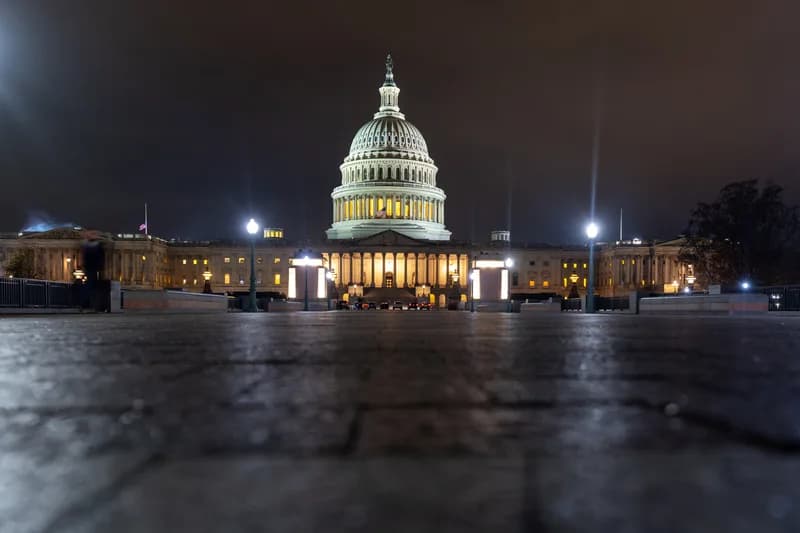
Democratic candidates and strategists are entering the 2026 midterms without agreement on the single question that will shape their fall campaigns: whether opposition to President Donald Trump is enough to win, or whether the party needs a concrete agenda of its own. The argument has surfaced in primary fights, donor retreats and closed-door strategy sessions, and it has divided lawmakers who otherwise share the goal of flipping Congress.
Democrats are debating tactics instead of presenting a unified governing brand.
The disagreement reflects a broader identity crisis for a party still recovering after Republicans swept the White House and Congress in 2024, according to Newsweek. Recent polls have shown voter dissatisfaction with Democrats even as Trump's own approval numbers sag, including a decline in his support among Asian, Black and Hispanic voters that had risen sharply in 2024. The party is targeting battleground races from the Texas Senate contest to House and governor's races nationwide.
The fight over whether anti-Trump is enough
On one side are Democrats who believe passionate resistance to Trump drives turnout, the approach that carried the party through much of his first term. On the other are lawmakers and strategists who fear that pure opposition, absent a constructive plan, loses the swing voters most focused on inflation and housing costs. Some progressives have gone further, pushing impeachment as a rallying cry that leadership worries speaks only to the base.
The Democratic party must stop relying on backlash to win campaigns. It will likely work for this midterm cycle but is unlikely to carry over to 2028 because Trump will not be on the ballot.
Matt Klink told Newsweek that impeachment messaging 'caters to the most progressive elements in the party and is a process argument, not a kitchen-table argument.' The distinction captures the central tension of the year: whether to speak in language that fires up committed activists or in words that reach households worried about the price of groceries, rent and a tank of gas.
Sen. John Fetterman of Pennsylvania, who often breaks with his party, delivered the sharpest version of the complaint on the 'All-In' podcast. Asked who leads the Democrats, he said the party is governed by what he called 'Trump Derangement Syndrome,' making it 'virtually impossible, without being punished as a Democrat, to agree something's good or agree with the other side.'
Affordability becomes the search for a slogan
House Democrats spent three days at their annual issues conference in Leesburg, Virginia, hunting for the 2026 equivalent of the 'Six for '06' message that helped them seize the House exactly two decades ago. Leadership wants specific, tangible policies to anchor the campaign rather than opposition alone, and the Democratic Congressional Campaign Committee has been promoting affordability as a frame meant to appeal to both the base and swing voters at once.
Rep. Lauren Underwood of Illinois, a vice-chair of the party's messaging arm, told reporters at the retreat, 'Affordability is the message.' Rep. Greg Stanton of Arizona framed the same idea as a break from reflexive opposition, saying the cycle 'isn't just about what we're up against.'
Democratic leaders have tried to connect their attacks on Trump to the cost of living, arguing that his tariffs are costing households thousands of dollars and that energy prices have climbed alongside the conflict with Iran. The party has also backed proposals to extend health care subsidies, cut taxes for families and make housing more affordable, hoping to turn frustration at the pump into support at the ballot box.
Others in the party favor a good-governance platform built around voting rights, a ban on stock trading by government officials, new campaign finance rules and an end to the revolving door for lobbyists. Sen. Chris Murphy of Connecticut said those items 'are all going to be a much more important piece of our platform this year.' Sen. Martin Heinrich of New Mexico argued that any candidate, and eventually any 2028 nominee, needs a full agenda that is not simply a reaction to Trump.
A civil war between socialists and moderates
The strategic argument has spilled into open primary fights across the country. In Wisconsin, a progressive candidate battled an establishment Democrat for the governor's nomination on August 11, a contest that longtime liberal activist Scot Ross warned could hand the office to a Trump ally if the party fractured; David Crowley beat Francesca Hong by less than half a point. Adam Green, co-founder of the Progressive Change Campaign Committee, argues that 'bold, shake-up-the system economic fighters' are more electable than what he dismisses as 'stale, status quo corporate-aligned Democrats.'
Michigan's Senate primary was the clearest test of the divide. Left-wing populist Abdul El-Sayed ran against the more pragmatic establishment candidate Haley Stevens, and the two largely agreed on economics, from health care to housing, but clashed on style and on issues like Israel and immigration enforcement. El-Sayed won the primary on August 4. Polling before the vote was contradictory: campaign-sponsored surveys put him double digits ahead of Stevens, while a Glengariff poll had Stevens leading and showed El-Sayed trailing Republican Mike Rogers by about seven points in the general.
NPR's Mara Liasson called it 'a big experiment on the part of Democrats.' Murphy took a calmer view of the same infighting, saying, 'A healthy party is a party that has arguments,' and that Democrats should be debating ideas through hotly contested primaries rather than papering over their differences.
A third lane built on being normal
A separate approach has taken hold in competitive House districts, distinct from both resistance and progressive policy. Candidates there are trying to prove they are ordinary, relatable and stable, betting that the promise of competent, unremarkable governance will win over voters worn out by the chaos of the Trump era but not yet sold on the Democratic brand. The target is a bloc of 'double haters,' voters disappointed with both Trump and the party itself.
Moderates warn the left could cost 2028
At a two-day invite-only Third Way conference called 'Winning the Middle' in Charleston, South Carolina, in March, moderate leaders warned that progressive energy could backfire in the midterms and in the choice of the next presidential nominee. Their advice was to be plainspoken rather than academic, to stay authentic on social media without living online, and to embrace patriotic symbols like the American flag and the Pledge of Allegiance without ceding them to conservatives.
Matt Bennett, co-founder of the group Third Way, said it plans to meet repeatedly as the next presidential campaign approaches. 'We're doing it early, and we're doing it much, much more aggressively than we did last time,' he said. Gallup found in early 2025 that 45 percent of Democrats and Democratic leaners wanted the party to become more moderate, against 29 percent who wanted it more liberal.
Jim Messina, who managed Barack Obama's reelection campaign in 2012, offered the bluntest forecast in the room. 'In 2026, we're going to win, because we have one great nominee, and his name is Donald Trump,' he said. He then warned that the party would lose the presidential election in 2028 without an economic message that identifies with most people.
Structural problems beyond the message fight
The messaging debate is not the party's only obstacle heading into November. Republicans hold a large financial advantage and have redrawn House districts to favor their own candidates. The Democratic National Committee has lost trust among donors and voters, Liasson said, describing an organization that has failed at what she called the one job of a national party in an election year, raising money, and now carries debt.
- Resistance: keep the focus on Trump, whose approval has sagged, to energize the base and drive turnout in November.
- Affordability: anchor the campaign in specific policies on housing, health care and the rising cost of living.
- Be normal: field relatable, low-drama candidates to win over 'double haters' in swing House districts.
- Moderation: block progressive nominees that strategists fear could win primaries but lose winnable general elections.
The stakes differ by chamber. Democrats are favored to win the House but are slight underdogs in the fight for the Senate, according to the latest forecast from Decision Desk HQ. In South Dakota, Idaho and Nebraska, the party's nominee has stepped aside for an independent candidate seen as a stronger bet in places where the Democratic label itself has become a liability.
In Maine, where Democrats hope to defeat Republican Sen. Susan Collins, primary winner Graham Platner, an oyster farmer and political outsider, rode grassroots energy to a record 150,000 votes before withdrawing in July over a rape allegation from a former partner, which he denies. Supporters had hoped he would draw white working-class voters back to the party. State Democrats held a replacement nominating convention in Bangor on July 25.
Beneath the primaries and the slogans sits a single unresolved question. Whether a wave of anti-Trump sentiment strong enough to flip the House this year can be converted into a durable governing message for 2028, when Trump himself will not be on the ballot, is the fight the party has yet to settle. For now, the argument is the strategy.
Sources
- Newsweek: Democrats Still Don't Know What Their Message Is
- Fortune: Democrats decide 2026 midterm elections are the perfect time for a civil war
- NOTUS: Democrats' New Plan to Win in November: Just Be Normal
- The Hill: Democrats seek a campaign message that goes beyond anti-Trump and touts affordability
- Semafor: Democrats wrestle over campaign agenda: 'You can't just be anti-Trump'
- NewsChannel9: Democrats debate whether opposing Trump is enough for midterms
- Yahoo/AP: Democratic moderates warn that leaning too far left in midterms sets up presidential loss in 2028
- CNN: The midterms are taking shape. So are the problems for both parties
- NPR: Politics chat: Will Democrats use the war and high prices for their midterm strategy?