Gibney documentary says Musk may have collected data on millions
The Oscar-winning director's four-hour film 'Musk' premieres at the Venice Film Festival on September 8 before an October theatrical release.
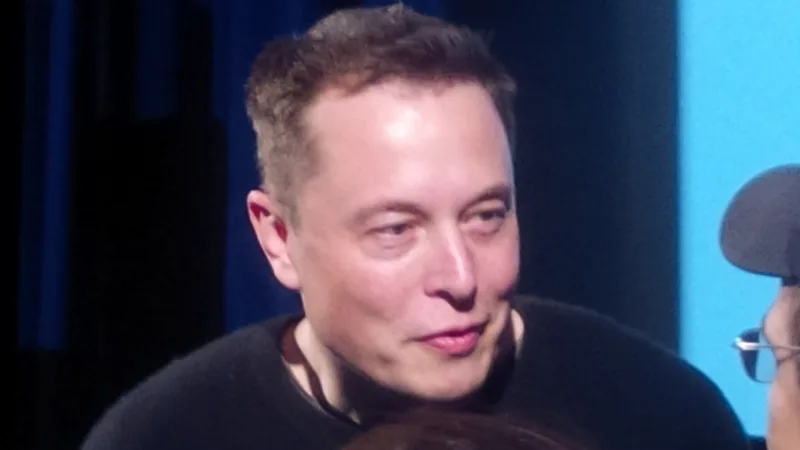
Alex Gibney's four-hour documentary 'Musk' arrives at the Venice Film Festival on Tuesday, Sept. 8, with a portrait of Elon Musk as a danger to American democracy. The Oscar-winning filmmaker argues the billionaire is no longer interested in checking his worst impulses and is positioned to help President Donald Trump subvert the coming midterm elections. He also contends that Musk's brief command of the Department of Government Efficiency gave him access to sensitive data on tens of millions of Americans.
The film's central allegation comes from Ashley St. Clair, the mother of one of Musk's children, who says he displayed a "degree of certainty" about the 2024 result before the votes were counted that "I had never seen before." Musk, she says, told her he was going to "unleash the 'anomaly in the matrix.'" The documentary stops short of claiming he manipulated the election, and presents no evidence that he did.
Musk did not take part in the documentary and has dismissed it as a "hit piece" since it was announced in 2023, according to Gibney. He renewed the attack in August 2026 as the premiere approached, saying the director was incapable of making anything else and mocking the film's near-four-hour running time. Gibney has said Musk appears throughout the film despite declining to sit for an interview.
A years-long project reshaped by DOGE
Gibney, 72, has spent the years since late 2022 trying to take a measure of Musk. He completed what he thought was a two-hour HBO documentary in late 2024, tracing Musk's childhood, his early forays into Silicon Valley, and his building of SpaceX, Tesla, Starlink and Neuralink, along with his takeover of Twitter.
Then Musk poured money into electing Trump, HBO executives asked for more, and the story gained another chapter. Gibney kept shooting for nearly two more years, reaching a six-hour cut that went deep on Musk's 2025 DOGE tenure, before the film was trimmed. Over a decorated career, he has taken on Scientology, Enron, the U.S. military, Vladimir Putin, the Catholic Church and Wall Street.
Gibney did not set out to make a conventional biography. He reframes Musk, who at 55 is believed to be the world's richest person, as what he calls the "21st century reincarnation of the confidence man," recasting the visionary-genius image associated with Tesla and SpaceX. The Venice Film Festival describes the film as an "incisive look behind the legend of Elon Musk."
We are living in a world where one person's psychopathology and neuropsychological dysregulation is translating into massive consequence in our politics, in our economy, in our geopolitics.
After Venice, the documentary screens at the Toronto Film Festival in September, opens in U.S. theaters through Bleecker Street on Oct. 16, and reaches HBO in 2027. The festival and theatrical version runs three hours and 45 minutes, while the HBO cut runs four hours. Bleecker Street is planning a wide theatrical release. Musk declined repeated requests to take part in the production.
DOGE and access to federal data
The documentary details Musk's disorderly stewardship of DOGE, the short-lived body Trump created to cut bureaucracy. The film says it cost 270,000 federal employees their jobs and eliminated billions of dollars in lifesaving aid by defunding the U.S. Agency for International Development. The federal payroll did fall by about that many over 2025, though much of the drop came from deferred resignations that took effect months after Musk left. Gibney's larger claim is that the real aim was to gather data.
Gibney told The Hollywood Reporter that personnel tied to DOGE held "Super Admin" status on federal IT systems, which he argues could have made large-scale copying of government records easy. He has stressed that he does not know what, if anything, was done with the data. The characterization has not been independently verified, and the film provides no technical documentation of such access.
If you wanted to corrupt those midterm elections and you wanted to use AI, all you needed to do was get detailed information on U.S. citizens. And what DOGE did looked like just what you would do.
The film raises the scenario as a hypothetical and does not document any instance of Musk personally accessing or using such data. Its argument is that, combined with the information he already gathers through his ownership of X, the access made him an inescapable force in American politics. The Social Security Administration's chief data officer, Charles Borges, filed a whistleblower complaint in 2025 alleging DOGE put a live copy of the agency's main identity database on a vulnerable cloud server.
The 2024 election and Ashley St. Clair
Musk spent more than $290 million to help secure Trump's 2024 win, according to year-end federal filings, hosting town halls in swing states and running a daily $1 million giveaway across seven battleground states for voters who had signed a petition backing a political action committee he created. His own lawyer later told a Philadelphia court the winners were preselected rather than chosen at random. St. Clair, described by The Hollywood Reporter as a central figure in the film, says his confidence about the outcome unsettled her in a way she had not witnessed before.
He had told me [before the election] he was going to unleash the 'anomaly in the matrix.'
As she speaks, a text exchange appears on screen in which Musk writes, "I have ten thousand lasers in space." Asked off camera by Gibney whether Musk meant Starlink, St. Clair replies that she does not know where else he keeps space lasers. The Hollywood Reporter said the film leaves viewers to decide whether the messages amounted to "a troll or a confession."
St. Clair, 28, is a former conservative influencer who has since publicly broken with the hard right. Musk questioned in public whether her second child, Romulus, born in September 2024, was his; a paternity test later confirmed it. After she apologised for her own past anti-transgender activism, he said he would file for full custody of the younger child. Musk's transgender daughter, Vivian Wilson, is 22.
Musk calls the film a hit piece
Musk began attacking the project soon after it was announced in 2023, declaring it would be a hit piece. When Gibney asked how he could know that, given that the film was still in production and Musk had not participated, the exchange played out on social media rather than on camera. In 2024, Gibney said his team was still reaching out but had received no direct cooperation after that first public back-and-forth.
In August 2026, as the premiere neared, Musk again called the film a hit piece, said Gibney was incapable of making anything else, and mocked its running time by asking whether the director was trying to bore audiences to death. Gibney replied that Musk might actually enjoy it, given how much screen time he receives.
What the documentary sets out to show
Gibney says he approached Musk's public image from different angles until the "master shot" of the technological visionary began to look like an illusion. He leans on "The Wizard of Oz" as a central metaphor, comparing his own perspective to Toto pulling back the curtain to reveal an ordinary man working the machinery. The film also draws on Musk's interest in video games and simulations to examine his approach to power.
- Justine Musk, Musk's former wife
- Ashley St. Clair, a former partner and mother of one of his children
- Kara Swisher, journalist
- Martin Eberhard, Tesla co-founder
- Zoe Schiffer, technology journalist
- Geoffrey Hinton, artificial-intelligence researcher
With Musk absent, the film relies on extensive archival material and interviews with people who have known, worked with or studied him. Sam Harris, a former friend, is among the voices, as is Errol Musk, the billionaire's father. The documentary also examines Musk's control of Starlink, the government's reliance on SpaceX, and his use of X as a political and business platform.
A portrait of the man himself
For all the political argument, Gibney places a single insider's line at the film's emotional center. Someone who worked closely with Musk told the director, "He's the most miserable man I've ever met," Gibney has said, and he concluded that Musk is therefore inflicting that misery on everyone else.
Gibney also includes an incident from Musk's childhood recounted by Errol Musk. On a road trip in the family's native South Africa, a family friend suffered a medical emergency and died despite efforts to save him. According to his father, Elon read a comic book and showed no reaction throughout.
Gibney frames the stakes plainly. "People assume because he's very rich that he's not crazy," he told The Hollywood Reporter. "But the terrifying thing might be that he's crazy and he's very rich and powerful. That's the warning bell the film sounds." The Hollywood Reporter noted the film is also attempting something rare, becoming a hit documentary in an era that has cooled on the form.
Premiere set for Sept. 8
The world premiere is set for Tuesday, Sept. 8, at Venice, ahead of the U.S. theatrical opening on Oct. 16. A spokesperson for SpaceX did not respond to a request for comment.
Sources
- The Hollywood Reporter: Elon Musk Unmasked in Alex Gibney Documentary
- The Daily Beast: Elon Musk Named in Bombshell Election Meddling Claim in Alex Gibney Documentary
- San Francisco Chronicle: Elon Musk documentary warns he could help Trump subvert the midterms
- OliverWillis.com: Alex Gibney's Elon Musk Documentary Controversy Explained
- Raw Story: Elon Musk's cryptic 'anomaly in the matrix' texts exposed in new documentary
- IBTimes UK: Musk May Have Collected Intimate Data on Millions of Americans, Documentary Claims